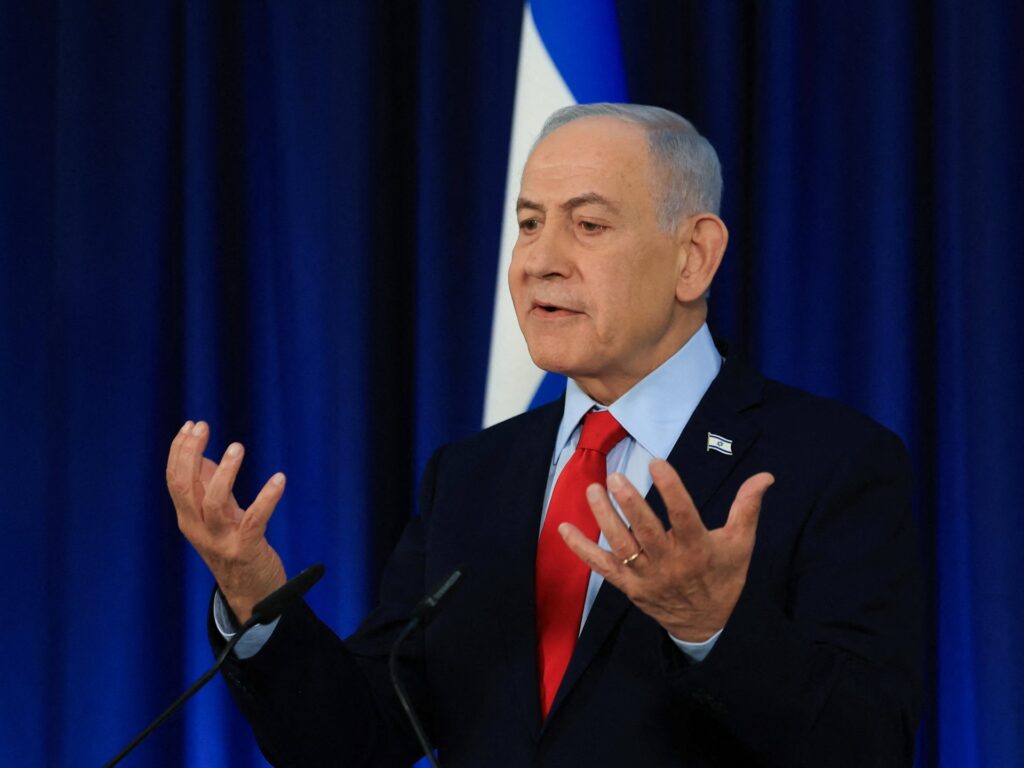
In a dramatic turn of events in Middle Eastern geopolitics, Israel’s recent conflict with Iran has sparked widespread debate over the effectiveness and consequences of Prime Minister Benjamin Netanyahu’s strategy. While the declared aim of Israel’s action was to counteract the threat posed by Tehran’s nuclear ambitions and regional influence, critics argue that Netanyahu’s approach has backfired, somehow strengthening Iran, straining Israel’s crucial ties with the United States, and ultimately leaving Israel in a more precarious position.
At the heart of the criticism lies the notion that engaging Iran militarily has galvanized Tehran’s resolve rather than undermining it. Instead of isolating Iran internationally, Netanyahu’s actions may have catalyzed a nationalist surge within Iran, consolidating domestic support for its government and its nuclear program. This phenomenon often observed in international conflict—where external aggression can unify a country’s population around its leadership—appears to have played out in Iran’s case.
Moreover, the war led by Netanyahu reportedly placed considerable strain on the relationship between Israel and the United States. The U.S. has traditionally played the role of Israel’s principal ally and supporter, but Washington’s approach to Iran has at times diverged from Netanyahu’s more hawkish stance. American officials have shown caution about escalating conflict in the region due to broader geopolitical concerns, including efforts to engage with Iran diplomatically. Netanyahu’s unilateral actions arguably complicated these efforts, prompting some diplomatic friction and debate on the appropriate approach to Iran’s nuclear threat.
Critics further contend that the war left Israel exposed and weakened on multiple fronts. The conflict consumed significant military resources and attention at a time when Israel faces other persistent security challenges, such as tensions with Hezbollah in Lebanon and ongoing unrest in Palestinian territories. This diversion may have left Israel vulnerable in other strategic areas.
Domestically, Netanyahu’s decision to engage Iran aggressively has sparked intense political debate. Supporters applaud his commitment to thwarting what they see as an existential threat, arguing that preemptive strikes and maintaining a strong military posture are necessary for national security. However, critics warn that Netanyahu’s emphasis on military confrontation with Iran has overshadowed other pressing issues within Israel and risks entangling the nation in a prolonged and costly conflict.
The war has also disrupted the broader regional balance of power. Iran’s increasing influence in neighboring countries and support for proxy groups poses ongoing challenges, but the recent escalation has intensified regional instability. Neighboring states express concern about the potential for wider conflict, which could further destabilize an already volatile Middle East landscape.
Internationally, the conflict has drawn various responses. Some nations have supported Israel’s right to defend itself, viewing Iran’s nuclear program as a dangerous provocation that needs to be countered decisively. Others have called for renewed diplomacy and restraint, warning that military conflict may spiral beyond control, affecting global security.
In conclusion, while Netanyahu’s decision to wage war against Iran was motivated by a desire to enhance Israel’s security, the outcomes appear to contradict those goals. Strengthening Tehran’s position, complicating vital U.S.-Israel relations, and leaving Israel vulnerable to multifaceted threats have led many analysts and observers to view Netanyahu as potentially the ultimate loser in this conflict. The developing situation underscores the complex challenges facing Israel’s leadership as it navigates an increasingly volatile regional environment and strives to balance military action with diplomatic strategy.