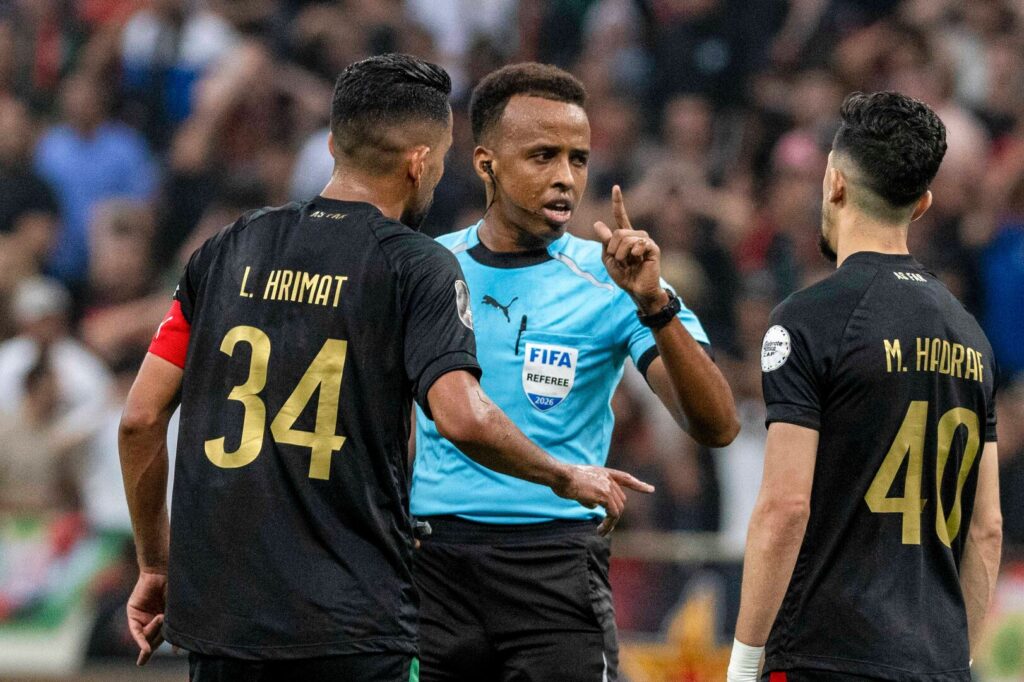
Referee Omar Artan, center, of Somalia, is confronted by players after calling a penalty kick during the CAF Champions League final soccer match between AS FAR Rabat and Mamelodi Sundowns, in Rabat, Morocco, Sunday, May 24, 2026. (AP Photo/Mosa'ab Elshamy)
Somalia’s Football Federation has expressed strong criticism towards the United States government’s decision to deny entry to Omar Abdulkadir Artan, an award-winning Somali football referee scheduled to officiate at the forthcoming World Cup. This decision has sparked outrage and disappointment among Somali sports authorities and fans alike. Omar Abdulkadir Artan is highly respected within the international football community for his skill and professionalism. His exclusion from participating in the global sporting event due to denied US entry has raised concerns over fairness and inclusivity in international football tournaments.
The Somali Football Federation released a statement condemning the US decision, calling it unjust and discriminatory. They emphasized Artan’s credentials and dedication to the sport, highlighting his achievements and the honor he brings to Somalia by representing the nation on the world stage. The Federation argued that such a move undermines the spirit of sportsmanship and contradicts the values upheld by football’s global governing bodies.
Football enthusiasts in Somalia and beyond have voiced their disappointment, noting that political issues should not interfere with sports. This incident has also reignited debate about visa policies affecting athletes and officials from countries with complex diplomatic relations with the United States. Critics argue that restricting access to sports professionals from certain nations hinders the development of football globally and deprives the tournament of diverse talent.
Omar Abdulkadir Artan’s case is emblematic of wider challenges faced by referees and players from less politically favored countries. It highlights the intersection of sports and international politics, raising important questions about the impartiality of major sporting events.
The US government, while maintaining that its visa decisions are based on national security and immigration policies, has not provided a detailed explanation regarding Artan’s specific case. Meanwhile, FIFA and other football organizations have not publicly condemned the decision but remain focused on ensuring the tournament proceeds smoothly.
Supporters of Artan have called on FIFA and international sports authorities to advocate for fair treatment of all referees and participants, urging for mechanisms that prevent political bias in sports access. They stress the importance of inclusivity and equal opportunity for all involved in football, regardless of nationality or political background.
The Somali Football Federation continues to lobby for a reversal of the US decision or alternative arrangements that would allow Artan to fulfill his role at the World Cup. The Federation views this issue as not only a personal injustice to Artan but also a setback for Somali sports diplomacy and representation on the global sporting stage.
This incident may prompt broader discussions on how international sports events can better navigate political sensitivities while upholding principles of fairness and global cooperation. The football community watches closely as this story unfolds, hoping for a resolution that honors the integrity of the sport and respects the invaluable contributions of referees like Omar Abdulkadir Artan.