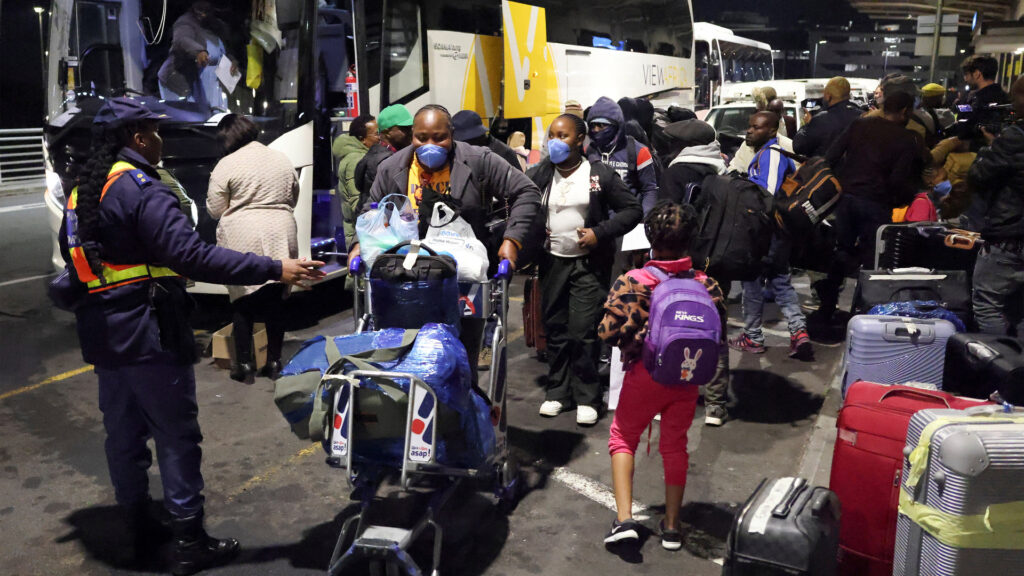
In recent weeks, a troubling spike in xenophobic protests in South Africa has led to a mass exodus of Nigerian migrants who say they are living in fear. The unrest comes as groups have issued deadlines demanding that people living illegally in South Africa leave the country immediately, creating an atmosphere of tension and insecurity among migrant communities.
Nigerian migrants, who form a significant part of the immigrant population in South Africa, have reported increasing incidents of harassment, violence, and intimidation. Many recount stories of threats, property damage, and attacks that have forced them to consider fleeing for their safety.
The protests appear to be fueled by a combination of economic frustrations, social tensions, and political rhetoric that has marginalized foreign nationals, particularly those perceived as taking jobs or resources from locals. Some groups have explicitly called for the removal of foreigners living without legal documentation, setting rigid deadlines that many migrants feel pressured to meet.
Local authorities have struggled to contain the violence and provide adequate protection to vulnerable communities. Some migrant leaders have appealed for international attention and intervention to help ensure their safety and rights are respected.
The Nigerian government has also expressed concern about the wellbeing of its citizens abroad, urging South African officials to take serious action against xenophobic attacks. Diplomatic efforts are reportedly underway to address the crisis and provide support to those affected.
Human rights organizations have condemned the violence and called for urgent measures to foster peaceful coexistence and respect for diversity. They emphasize that xenophobia undermines social cohesion and economic progress.
Meanwhile, many Nigerian migrants are forced to leave their homes, livelihoods, and communities behind as they seek refuge in safer areas or head back to Nigeria. This movement has created humanitarian challenges, including the need for shelter, food, and medical care for displaced individuals and families.
The spike in xenophobic protests in South Africa highlights the complex challenges faced by migrants in the region. It underscores the importance of promoting understanding, protecting human rights, and creating inclusive policies that address the root causes of social unrest.
As the situation develops, the international community watches closely, hoping for a resolution that safeguards the dignity and safety of all individuals, regardless of nationality. The plight of Nigerian migrants fleeing violence in South Africa serves as a somber reminder of the ongoing global struggle against xenophobia and discrimination.