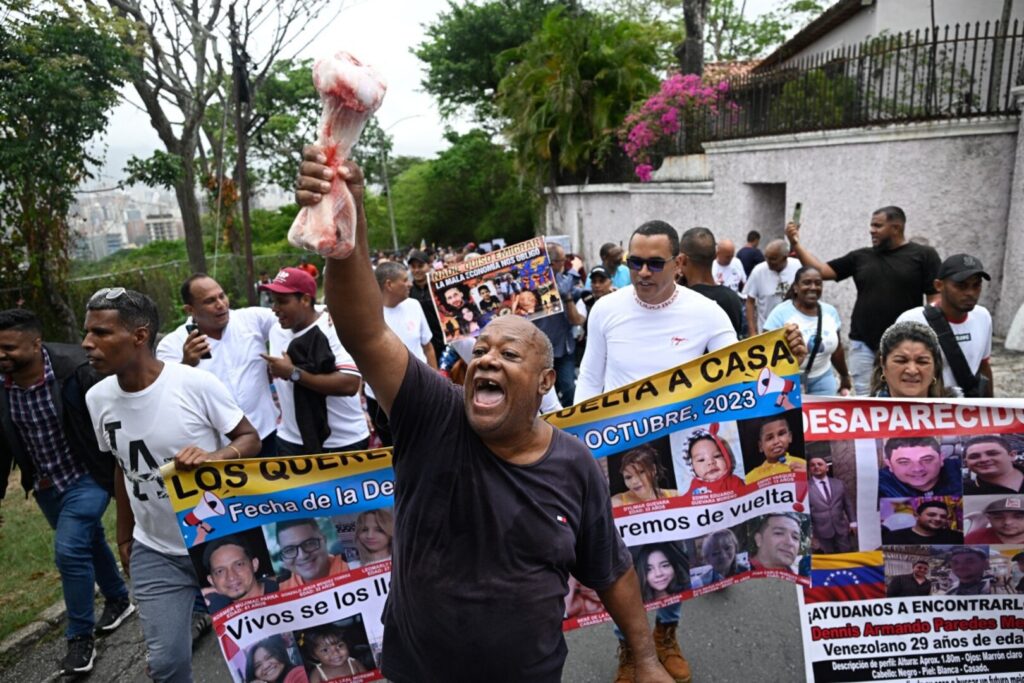
A demonstrator shouts slogans while holding a cow bone as workers and pensioners take part in a march demanding better working conditions and a political transition, in Caracas on June 3, 2026. (Photo by Federico PARRA / AFP)
Thousands of Venezuelan workers, students, and members of opposition parties have taken to the streets of Caracas in a powerful display of public dissent, demanding free and fair elections. The large-scale march culminated in a peaceful demonstration at the US Embassy in the capital city, underscoring the growing frustration among Venezuelans over the country’s political climate.
The protesters, representing diverse sectors of society, voiced their dissatisfaction with the current government, calling for transparency, democratic reforms, and international support to ensure electoral fairness. The movement reflects a widespread desire for political change and a return to democratic principles in Venezuela.
Among the demonstrators were labor union leaders and student activists who articulated concerns regarding economic instability, human rights violations, and the erosion of democratic institutions. Their collective demand is centered on the organization of free elections, which they argue are essential for national reconciliation and for restoring Venezuela’s political legitimacy.
The march towards the US Embassy was symbolic, highlighting the opposition’s call for international attention and assistance in addressing Venezuela’s political crisis. While the Venezuelan government has maintained tight control over the electoral process, opposition groups and civil society organizations continue to push for genuine democratic participation.
The ongoing unrest in Caracas is part of a broader wave of protests sweeping Latin America, where citizens are increasingly challenging authoritarian practices and demanding accountable governance. Observers note that Venezuela’s political turmoil has significant implications not only for the country but also for the stability of the region.
In response to the protests, security forces maintained a restrained presence, avoiding confrontation, but authorities have warned against potential escalations. Meanwhile, international human rights organizations have called for the protection of peaceful demonstrators and urged the Venezuelan government to facilitate inclusive dialogue.
The demonstrators’ call for free elections is seen as a critical step toward resolving Venezuela’s prolonged political impasse and addressing the deep social and economic challenges facing the nation. As the movement gains momentum, it remains to be seen how the government will respond to mounting demands for democratic reform.
This grassroots mobilization underscores the resilience and determination of Venezuelans who seek a future grounded in democratic values, human rights, and political inclusivity. The world watches closely as Caracas becomes a focal point of hope and struggle for democracy in Venezuela.