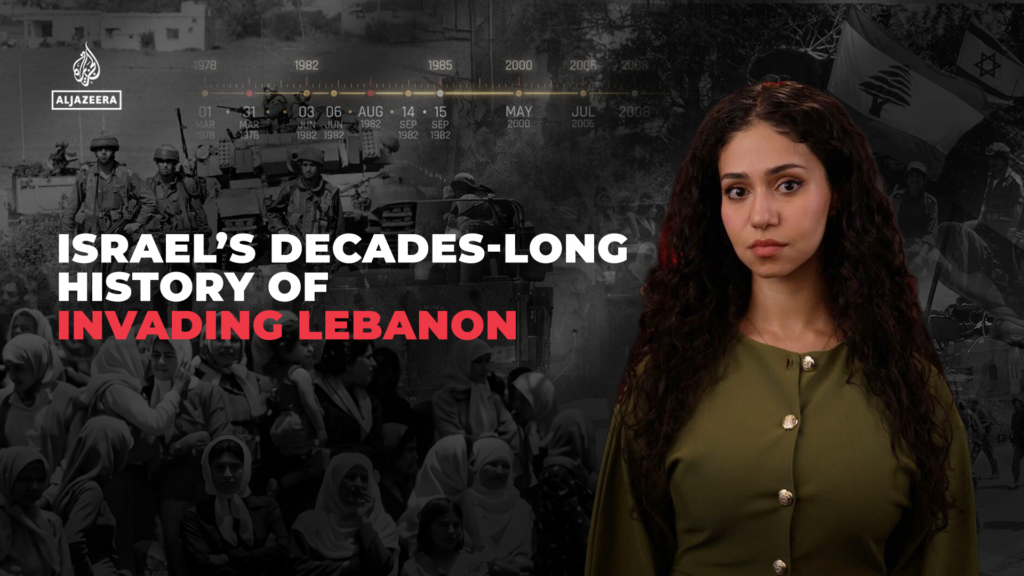
Israel has invaded Lebanon six times over the past 48 years, marking a persistent and complex chapter in Middle Eastern history. Each incursion reflects a combination of strategic, military, and political motives, shaped by the evolving regional dynamics.
The first major Israeli invasion occurred in 1978, under Operation Litani, aimed at pushing the Palestine Liberation Organization (PLO) forces away from Israel’s northern border.
In 1982, Israel launched a large-scale invasion known as the Lebanon War or Operation Peace for Galilee. This campaign aimed to destroy PLO strongholds in southern Lebanon and attempt to reshape Lebanon’s political landscape by supporting allied Christian militias. The invasion escalated into a prolonged military presence, sparking widespread resistance and international controversy.
Following the 1982 invasion, Israel maintained a security zone in southern Lebanon until 2000, conducting numerous military operations to counter Hezbollah, the Shiite militant group that emerged from the conflict.
In 1993 and 1996, Israel conducted major military operations, namely Operation Accountability and Operation Grapes of Wrath, respectively. These operations targeted Hezbollah positions in southern Lebanon, aiming to curb rocket attacks into northern Israel. Both campaigns caused significant civilian casualties and damage, drawing international criticism.
In 2006, the conflict escalated dramatically with the Second Lebanon War following a Hezbollah cross-border raid. Israel launched a large-scale military offensive into Lebanon targeting Hezbollah’s infrastructure, but the war resulted in heavy casualties on both sides and significant destruction in Lebanon, reinforcing the enduring cycle of violence.
Most recently, the 2023 invasion reiterates the ongoing tensions and unresolved conflict between Israel and Lebanon, particularly with Hezbollah. Each invasion exemplifies the persistent instability and the deep-seated grievances that fuel the Israeli-Lebanese conflict.
Throughout these decades, Israel’s invasions have evolved from targeting Palestinian factions to focusing primarily on Hezbollah’s influence in Lebanon. The repeated conflicts have left profound humanitarian, political, and social scars on Lebanon and have drawn international attention to the fragile state of peace in the Middle East.
The legacy of Israel’s invasions of Lebanon underscores the challenges of regional security, the complexities of Lebanese politics, and the enduring impact of armed conflict on civilian populations. As tensions persist, understanding this history is crucial for any future efforts toward peace and stability in the region.