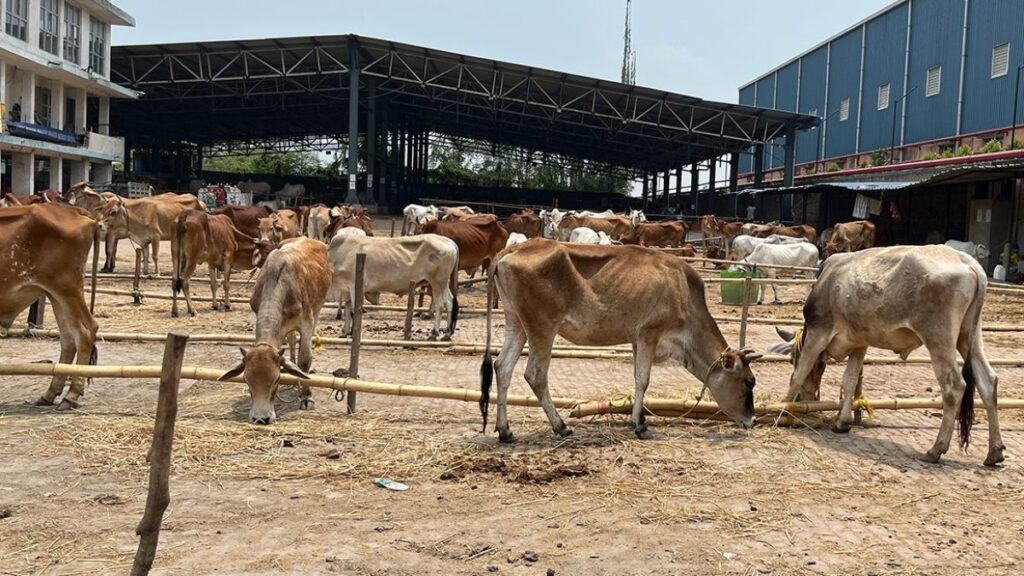
In West Bengal, India, the traditionally bustling cattle markets are witnessing an unusual emptiness ahead of the Eid al-Adha celebrations, a significant festival for the Muslim community. This abrupt change comes amid rising tensions and growing fear over the state’s recent political transformation, which saw the Bharatiya Janata Party (BJP) win in this key region for the first time.
Eid al-Adha, also known as the Festival of Sacrifice, is marked by buying cattle which are offered as sacrifices to commemorate the willingness of Prophet Ibrahim to sacrifice his son. This festival garners substantial economic activity in cattle markets, and the empty markets this season are causing concern among traders, devotees, and vendors alike.
The political shift in West Bengal has intensified social and communal divides, creating an atmosphere of uncertainty and fear particularly among Muslim communities who are central to the Eid al-Adha festivities. The BJP’s recent electoral victory has led to heightened political competition and increased polarization in a state long dominated by the Trinamool Congress (TMC).
Authorities and local leaders report that many cattle traders have refrained from setting up their businesses in fear of unrest or violence. Families are also cautious, limiting their participation in traditional Eid market visits. The lack of crowd at the cattle markets not only disrupts religious ceremonies but also impacts livelihoods dependent on these trade activities.
Analysts suggest that the new political realities have brought a shift in local governance and law enforcement approaches, which some perceive as less favorable or secure for minority populations, contributing to their apprehension. There are calls from various civil society groups for peace and reassurance from political leaders to ensure that religious freedoms and community practices can proceed unhindered.
The BJP, while emphasizing law and order and development, faces the challenge of managing a diverse and pluralistic population during this sensitive period. The Eid al-Adha festival is more than a religious observance; it signifies community bonding, economic exchange, and cultural expression.
Community leaders and several advocacy groups are urging calm and dialogue to mitigate fears and restore the traditional vibrancy of the markets. They stress that preserving the secular fabric and respecting all religious customs is essential for peace and development in West Bengal.
As Eid al-Adha approaches, the emptiness of the cattle markets in West Bengal reflects not just a disruption in tradition but also the broader social implications of a political shift in a diverse society. The coming days will be crucial in determining whether tension subsides and normalcy is restored during this important festival season.