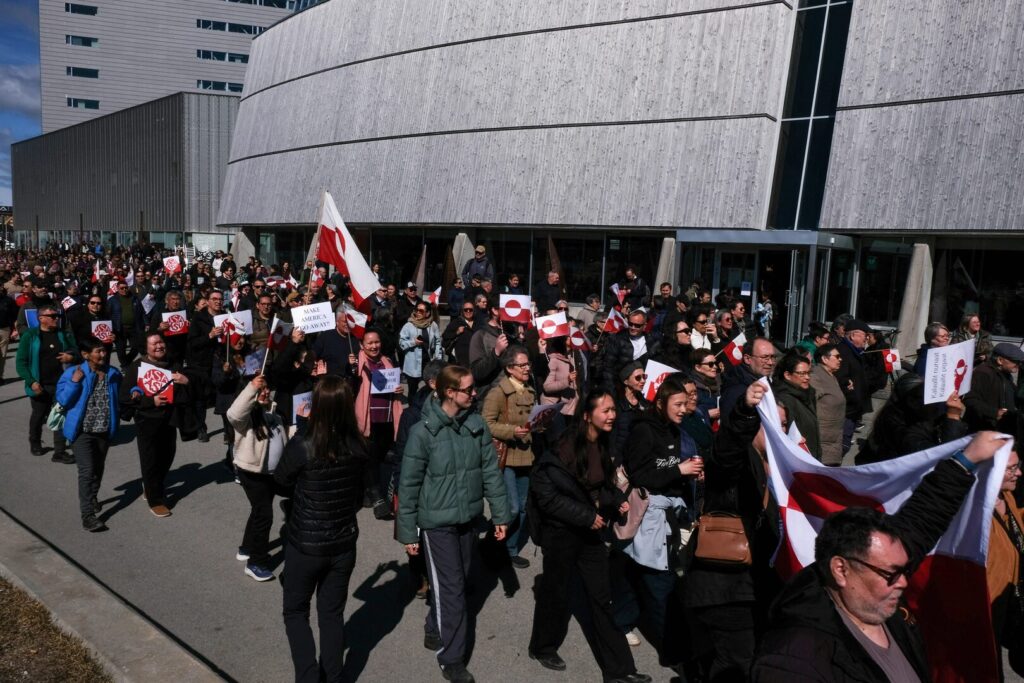
People gather to protest on the day of the opening of a new U.S. consulate in Nuuk, Greenland, May 21, 2026. REUTERS/Tim Barsoe
In a significant geopolitical development, the United States inaugurated a new consulate in Nuuk, the capital of Greenland, drawing hundreds of protesters to the streets. The opening marks an intensification of American diplomatic presence in the Arctic region, underscoring the strategic importance of Greenland amid growing international interest.
The demonstration saw a large crowd of Greenlanders voicing their opposition against the opening of the consulate. Many protesters expressed concerns over sovereignty, potential environmental impacts, and broader geopolitical consequences. Greenland, an autonomous territory within the Kingdom of Denmark, possesses vast natural resources and a strategic location that has attracted attention from global powers in recent years.
The U.S. government’s decision to establish the consulate is viewed by many analysts as an attempt to strengthen ties in the Arctic, counterbalance increasing Chinese and Russian influence, and facilitate collaboration on scientific research, security, and economic development.
However, local activists and citizens argue that the move could undermine Greenland’s autonomy and lead to increased militarization of the region. Environmental groups are particularly worried about the potential consequences of expanding foreign diplomatic and economic interests on Greenland’s fragile ecosystem.
Despite the protests, the U.S. Embassy emphasized the consulate’s role in enhancing cooperation on issues such as climate change, regional security, and sustainable development. American officials stated that the consulate will also serve as a hub to support American citizens and businesses operating in or with Greenland.
The opening ceremony was attended by high-ranking diplomats and officials from both the United States and Greenlandic authorities. While the event marked a step forward in U.S.-Greenland relations, it also highlighted tensions within the local population and among political groups concerning the direction of Greenland’s foreign policy.
The protest in Nuuk reflects broader debates over Greenland’s future. As climate change reshapes the Arctic landscape, new shipping routes are emerging, and access to untapped natural resources is becoming more feasible. These changes have increased global interest in the region, placing Greenland at the center of international strategic calculations.
Skeptics of the American consulate argue that increased foreign presence could escalate geopolitical rivalries and heighten the risk of conflict in a previously less contentious region. They call for increased transparency, stronger local governance in decision-making, and protection of Greenlandic lands and culture.
In response to the protest, Greenlandic leaders have pledged to continue dialogue with the United States and other international partners to safeguard the territory’s interests. Meanwhile, discussions about balancing development, environmental stewardship, and national sovereignty remain at the forefront of Greenland’s political discourse.
The situation in Nuuk will be closely monitored by global observers, as it symbolizes the delicate balance between international cooperation and local autonomy in an evolving Arctic context. The outcome could influence future diplomatic, environmental, and security policies in the wider region.
As the United States consolidates its footprint in Greenland with its new consulate, local reactions underscore the complex dynamics and competing priorities that define Arctic geopolitics today. The unfolding story in Nuuk is a reminder that while strategic interests drive international moves, they must be carefully balanced with respect for indigenous rights and environmental sustainability.