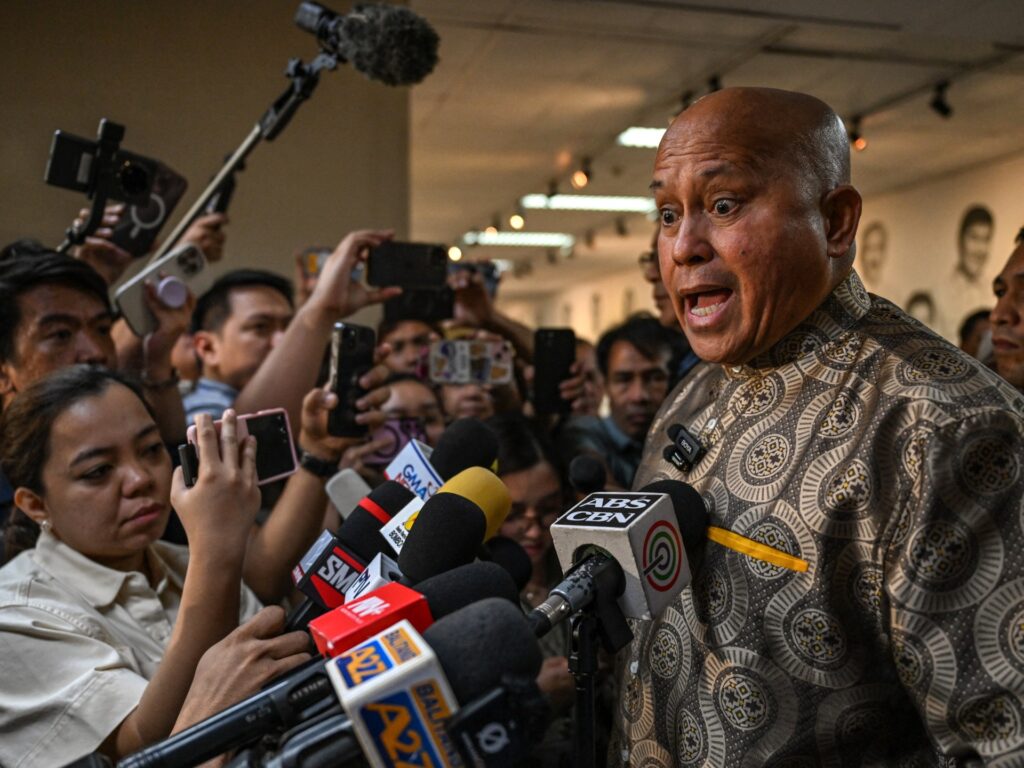
The Philippines’ Supreme Court has rejected a bid to stop the arrest of Senator Ronald dela Rosa, who is currently wanted by the International Criminal Court (ICC). Senator dela Rosa’s current whereabouts remain unknown, adding to the uncertainty surrounding the case. He is accused of involvement in the former President Rodrigo Duterte’s controversial and brutal “war on drugs,” which has drawn international condemnation due to alleged human rights violations.
The ICC has issued a warrant for Senator dela Rosa’s arrest, holding him accountable for his role during the anti-drug campaign implemented under Duterte’s administration. The campaign, which began in 2016, reportedly led to thousands of deaths, stirring significant controversy both domestically and internationally.
The senator, a former police chief who led the police force during the height of the drug war, has been criticized for allegedly endorsing and perpetuating the campaign’s deadly tactics. Despite these accusations, Senator dela Rosa has maintained his innocence, denying involvement in extrajudicial killings and other human rights abuses attributed to the police force under his command.
The Supreme Court’s decision to reject the bid to block Senator dela Rosa’s arrest effectively paves the way for authorities to carry out the ICC’s warrant. This ruling marks a significant development in the ongoing legal battle, highlighting the increasing pressure on Philippine officials and politicians implicated in the drug war to face international justice.
The decision also reflects the judiciary’s stance on cooperating with international legal mechanisms, emphasizing that no individual is above the law regardless of their political stature. This case sets a precedent for future prosecutions related to the drug war and reinforces the Philippines’ commitment to uphold human rights standards.
Human rights advocates and international observers have welcomed the Supreme Court’s ruling, viewing it as a crucial step toward accountability for the alleged abuses during the drug war. However, supporters of Senator dela Rosa and some political allies have expressed concerns over potential political motivations behind the ICC’s pursuit of charges and the domestic legal proceedings.
As the situation unfolds, the Philippines continues to grapple with the legacy of its drug war, balancing between national sovereignty and international legal obligations. The case of Senator dela Rosa remains a focal point in this complex dynamic, symbolizing the broader struggle for justice and reconciliation in the country. The international community watches closely, anticipating how Philippine authorities will proceed in executing the ICC’s warrant and addressing allegations of past human rights violations.
In summary, the Supreme Court’s rejection to block the arrest of Senator Ronald dela Rosa sought by the ICC underscores a pivotal moment in the Philippines’ pursuit of justice for victims of the drug war. Regardless of political ramifications, this decision highlights the growing influence of international law in national matters and reiterates the principle that accountability is essential for lasting peace and human rights protection in the country.