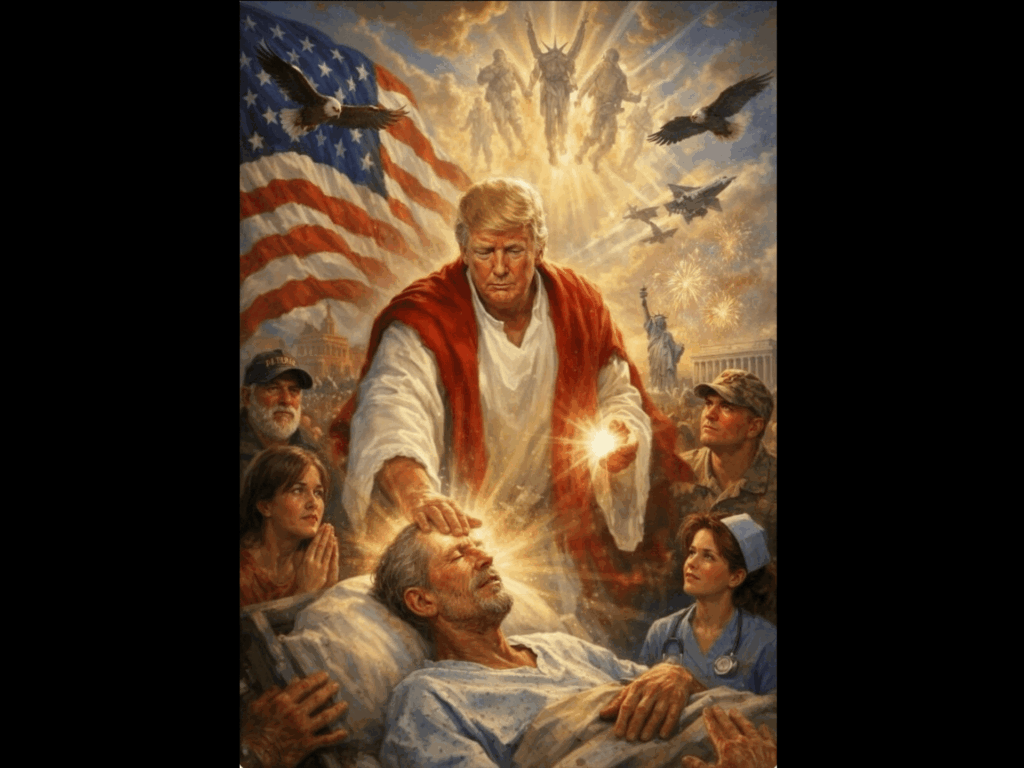
In a recent controversy, US President Donald Trump found himself at the center of public backlash after an AI-generated image portraying him as a Jesus-like figure was posted and subsequently deleted. The image, which depicted Trump in a manner reminiscent of religious iconography associated with Jesus Christ, sparked significant outrage among various groups and individuals who saw it as controversial and inappropriate.
The image was created using artificial intelligence technology, which has increasingly been used to generate visual content by manipulating and blending images in novel ways. This particular image aimed to present Trump in a grandiose and symbolic fashion, likely as a form of political messaging, but it quickly drew criticism for crossing sensitive cultural and religious boundaries.
Following the backlash, Trump removed the image from his social media platforms and did not issue a detailed public explanation for its deletion. However, the incident has reignited discussions about the use of AI in political messaging and the ethical implications of employing such imagery.
Experts in digital ethics have weighed in on this event, highlighting the potential for AI to be used in ways that may unintentionally offend or alienate parts of the population. The blending of political figures with revered religious symbols can lead to misunderstandings and erode public trust.
This episode also underscores the challenges faced by public figures and their teams in managing digital content in the age of rapid AI content generation. While AI offers new creative possibilities, it also demands careful consideration of the cultural and societal impacts of the images produced.
As AI technology continues to evolve, the incident involving Donald Trump’s AI-generated image serves as a cautionary tale about the need for sensitivity and responsibility in digital content creation, particularly when it involves figures of significant public interest and the fusion of political and religious symbols.