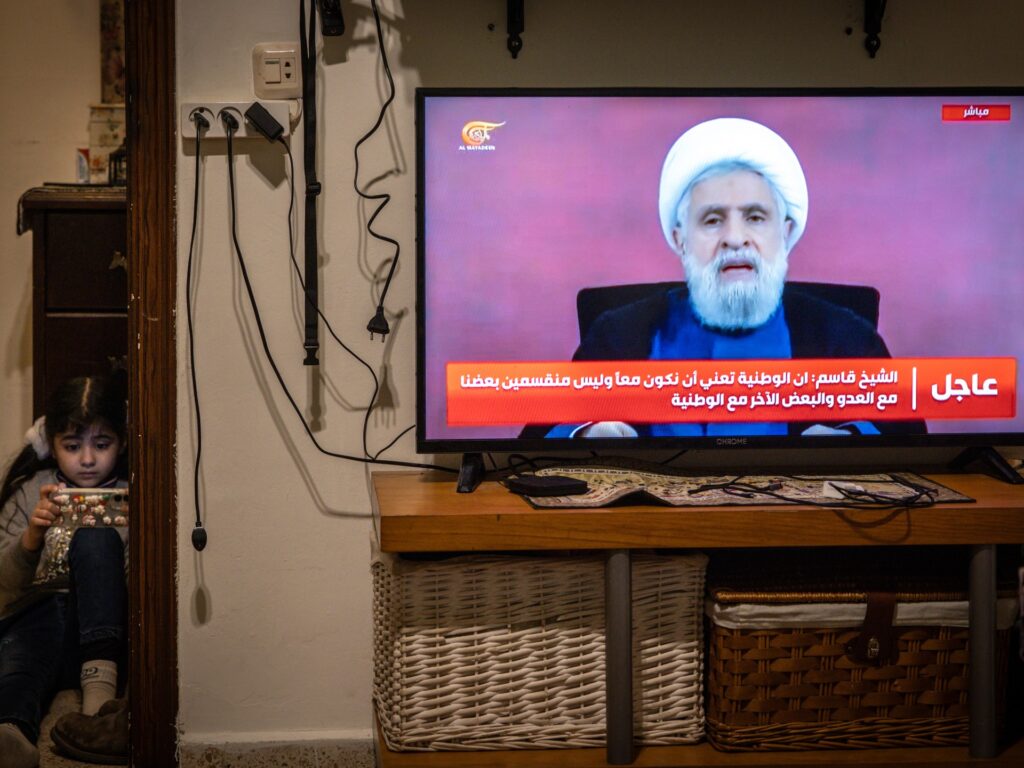
Hezbollah’s deputy leader, Naim Qassem, has publicly urged the Lebanese government to withdraw from the planned talks with Israel scheduled to take place in Washington, DC. Qassem claims these negotiations are a strategic ploy aiming to pressure Hezbollah into disarmament and giving up its weaponry.
The talks are part of ongoing attempts to address tensions and disputes between Lebanon and Israel, particularly concerning border issues and security concerns. Lebanon’s government has been engaging in diplomatic efforts to manage these conflicts and seek a peaceful resolution.
Qassem’s statement reflects the ongoing internal divides within Lebanon about how to approach relations with Israel and the future of Hezbollah’s military strength. Hezbollah maintains that its arsenal is necessary for defending Lebanon against Israeli aggression and insists it will not relinquish its weapons.
The Washington talks are seen by some as a critical diplomatic initiative to ease tensions, but Hezbollah’s leadership perceives them as an attempt to marginalize their influence and force disarmament under international pressure.
Lebanese officials have not yet publicly responded to Qassem’s objections but face the difficult task of balancing international diplomacy with the deeply entrenched positions of powerful factions like Hezbollah.
This development highlights the complex geopolitical dynamics in the region, where negotiations with Israel often provoke sharp internal disagreements and wider regional implications. The outcome of the planned talks could significantly impact Lebanon’s security landscape and its political stability.
Observers note that the Lebanese government’s participation in such discussions is essential for any long-term peace efforts but must be carefully managed to avoid exacerbating internal conflicts. Hezbollah, as a prominent political and military force in Lebanon, remains a crucial player in determining the country’s trajectory amid regional pressures.
The situation remains fluid, with future steps depending on the reactions from Lebanese political leaders, Hezbollah’s stance, and international diplomatic engagements. The upcoming talks in Washington will be closely watched by all parties involved as a potential turning point in Lebanon-Israel relations.