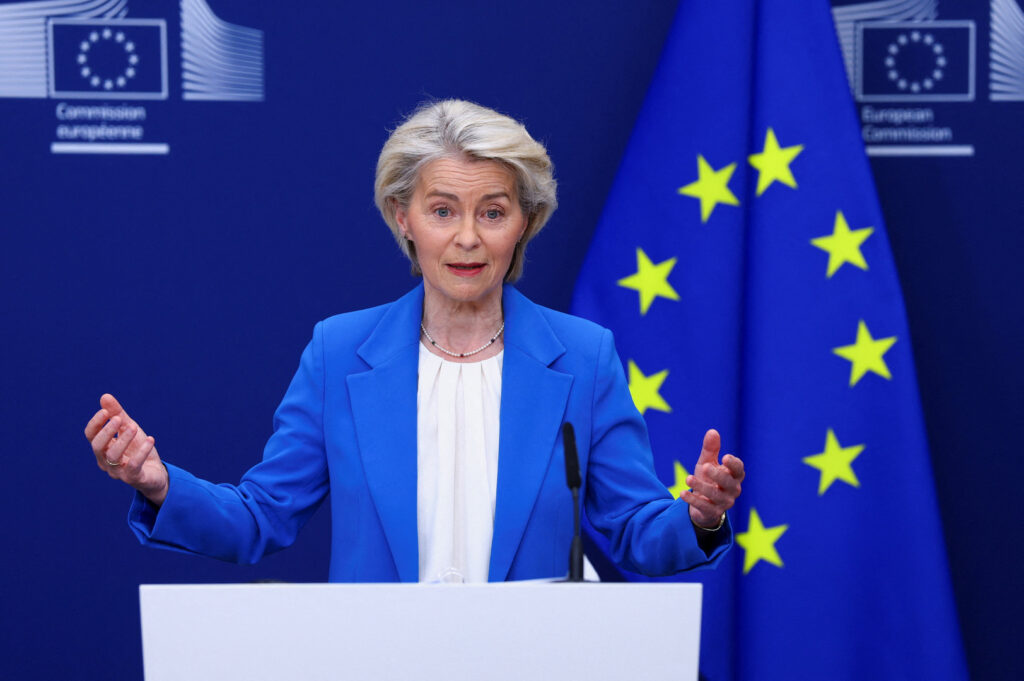
European Commission President Ursula von der Leyen speaks at a press conference in Brussels, Belgium, April 13, 2026. REUTERS/Yves Herman
The European Union has issued a stern warning about the ongoing instability in Lebanon, describing the situation as a country “in flames.” EU Commission President Ursula von der Leyen emphasized that no peace is achievable while Lebanon continues to experience severe internal conflicts and external pressures.
Von der Leyen highlighted significant threats to regional stability, particularly pointing to recent Israeli strikes on Lebanon. These military actions have further exacerbated tensions in the already fragile region, raising concerns about potential wider conflict.
Additionally, the EU expressed alarm over the possible closure of the Strait of Hormuz, a critical chokepoint in global maritime trade. Such a closure could have devastating implications for international energy supplies and increase geopolitical tensions significantly.
The EU’s statement comes amidst growing worries about the security of Lebanon, which has been struggling with political instability, economic collapse, and social unrest for several years. The combination of domestic turmoil and external military threats poses a serious challenge to peace efforts.
Von der Leyen called for immediate diplomatic engagement to de-escalate tensions and restore stability in Lebanon. The EU remains committed to supporting initiatives aimed at peaceful resolution and urges all parties to refrain from actions that could further destabilize the region.
The situation in Lebanon has drawn international attention, with various global actors expressing concern over the humanitarian and security implications of renewed conflict. The EU’s warning underscores the urgency of concerted efforts to prevent a broader regional crisis.
In conclusion, the EU strongly asserts that lasting peace cannot be realized while Lebanon remains engulfed in conflict. The interplay between local unrest and external military actions, including the threat to strategic maritime routes, calls for a coordinated response to safeguard regional security and promote stability.