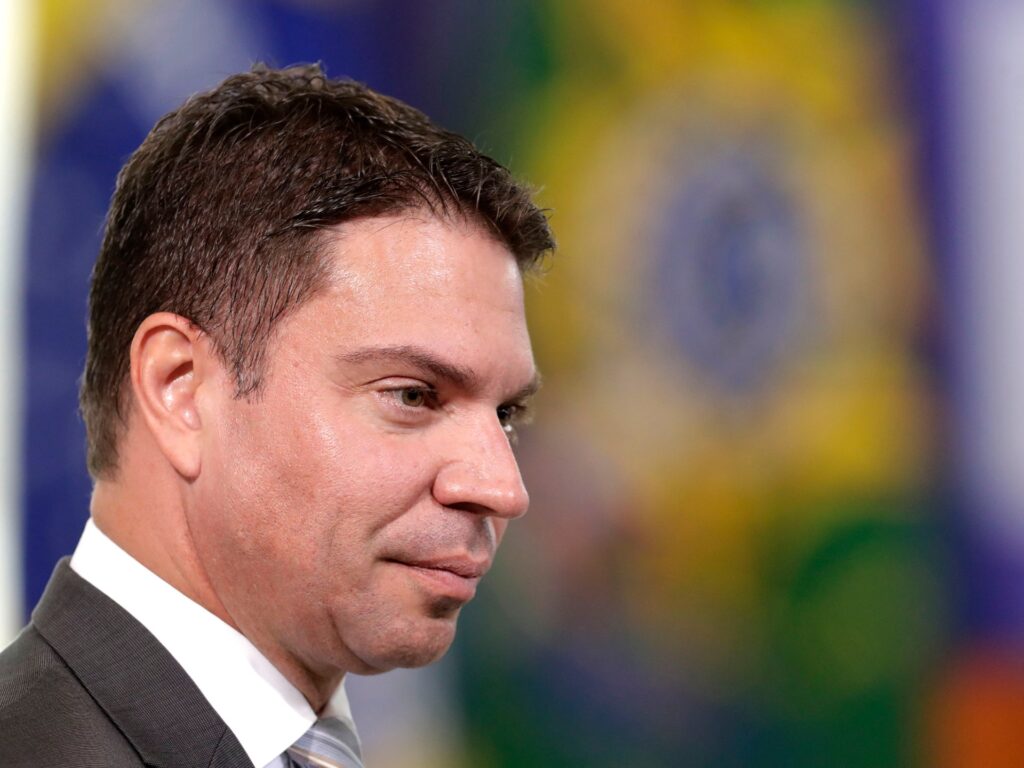
Alexandre Ramagem, the former head of Brazil’s intelligence service, has been detained by U.S. immigration authorities amidst reports that he fled Brazil following his conviction for involvement in a coup plot. Brazilian media outlets revealed that Ramagem, who once held a prominent security position in the country, became a fugitive after being found guilty of conspiring against the government.
Ramagem’s arrest by U.S. authorities marks a significant development in the ongoing investigations related to political instability in Brazil. The former intelligence chief had reportedly left Brazil to avoid arrest, raising concerns about the extent and ramifications of the conspiracy within the nation’s political and security apparatus.
The coup plot, which allegedly involved various high-ranking officials and operatives, aimed to undermine Brazil’s democratic institutions. Ramagem’s role as ex-intelligence chief put him at the center of the scandal, as he reportedly leveraged his access and influence within the intelligence community.
Brazilian authorities had issued alerts and sought international cooperation to locate and detain Ramagem after he went missing in the immediate aftermath of his conviction. His detention by U.S. immigration agents is expected to lead to his extradition, facilitating further legal proceedings.
Political analysts suggest that Ramagem’s capture could shed new light on the depths of the conspiracy and might implicate other individuals involved in the coup attempt. The scandal has already stirred significant political turmoil in Brazil, triggering debates over national security, government accountability, and the protection of democratic processes.
In response to Ramagem’s detention, Brazilian officials emphasized their commitment to pursuing justice and holding all those responsible for the destabilization efforts accountable. The government also reiterated its focus on safeguarding constitutional order and reinforcing the rule of law.
The international community closely watches these developments, understanding their implications for Brazil’s political stability and regional security. Ramagem’s case exemplifies the challenges faced globally in combating political conspiracies and ensuring the integrity of democratic institutions.
As proceedings move forward, further investigations are expected to reveal the full scope of the conspiracy, potentially linking additional players across various sectors. Ramagem’s detention represents a crucial step in addressing the attempted coup and restoring trust in Brazil’s political and intelligence systems.
This incident underscores the necessity for vigilance against threats to democracy and highlights the importance of cooperation between nations in addressing transnational fugitives involved in political crimes. The unfolding situation serves as a reminder of the ongoing struggles within nations to defend democratic governance against internal threats.
Law enforcement agencies from both Brazil and the United States are currently coordinating efforts to process Ramagem’s detention and plan the next phases of his extradition and trial. Observers anticipate rigorous legal battles ahead, considering the high-profile nature of the case.
The Brazilian public remains attentive to the case, with many hoping for thorough accountability and systemic reforms to prevent similar crises in the future. The government has pledged to enhance transparency and strengthen mechanisms that protect against breaches of security and constitutional order.
Ramagem’s detention by U.S. immigration authorities not only highlights cross-border cooperation in law enforcement but also signals a warning to others who might consider undermining democratic governance through unlawful means. The case continues to evolve, drawing international attention and influencing Brazil’s political landscape profoundly.