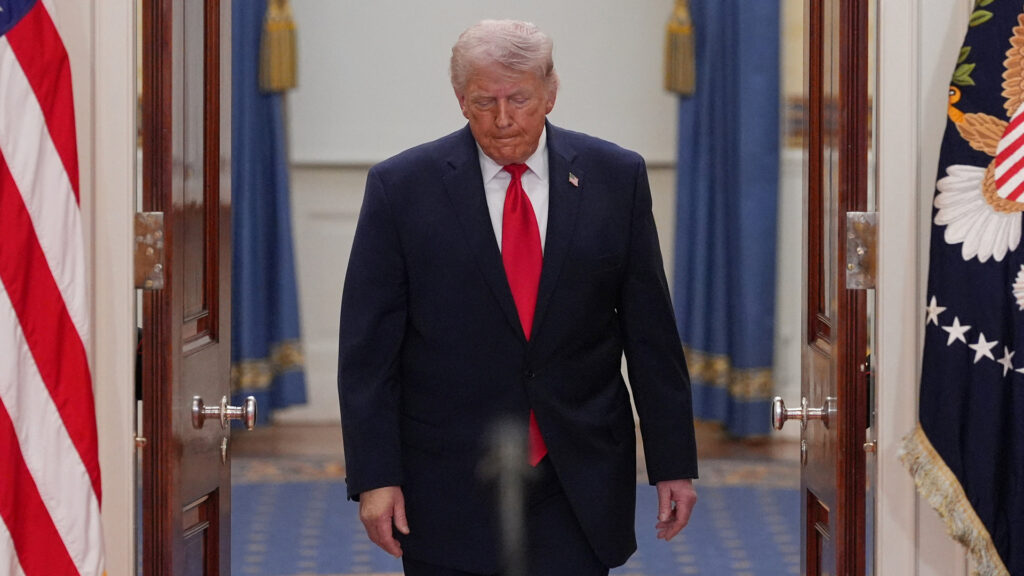
President Donald Trump arrives to speak about the Iran war from the Cross Hall of the White House on Wednesday, April 1, 2026, in Washington. Alex Brandon/Pool via REUTERS
In a recent statement, US President Donald Trump declared a significant achievement in dealing with Iran, asserting that the country’s status as the ‘bully of the Middle East’ has been effectively challenged and that Iran is ‘no longer a threat.’ Trump highlighted that this progress was accomplished in just 32 days, a stark contrast to the prolonged and costly conflicts the United States has historically faced in the region.
Trump’s remarks come amid ongoing tensions between the US and Iran, framed by concerns over regional security and diplomatic negotiations. Emphasizing the swiftness of the US approach under his administration, Trump portrayed the rapid shift in Iran’s posture as a notable victory for American policy and military strategy.
The President’s comments suggest a pivot from the traditional, extended military engagements that have characterized US involvement in the Middle East over the past decades. Instead, this new approach prioritizes decisive actions and quick results, aiming to reduce the human and financial toll associated with prolonged wars.
Critics of Trump’s statement caution that while the short-term outcomes may appear favorable, the long-term implications of US-Iran relations remain complex. They point out that sustainable peace and stability require ongoing diplomacy and multilateral cooperation, not just rapid military or strategic victories.
Supporters, however, praise the administration for demonstrating strength and effectiveness in confronting Iran’s regional ambitions, particularly regarding its influence in neighboring countries and its nuclear program.
Trump’s declaration follows a series of US measures aimed at curbing Iran’s regional influence, including sanctions, military presence adjustments, and international diplomatic efforts. The announcement serves both as a political message and a signal to allies and adversaries about the US commitment to countering perceived threats.
The Middle East remains a focal point of global geopolitical interest, with various actors vying for influence and security assurances. The US stance on Iran continues to be a key aspect of this dynamic.
President Trump’s claim of success in just over a month reflects a strategic shift and reinforces his broader narrative of achieving strong results through unconventional means.
As this situation develops, analysts and policymakers will be closely monitoring the impacts of this rapid approach and its effects on regional stability and US foreign policy.