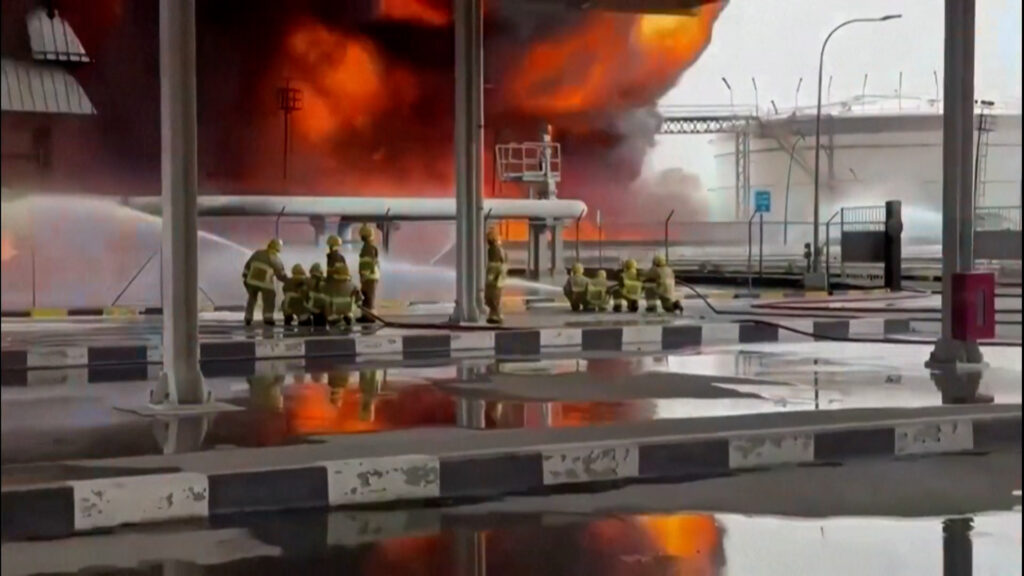
On Saturday, Kuwait International Airport was significantly impacted by suspected drone strikes attributed to Iranian forces. Thick, black smoke was seen billowing from the airport, highlighting the extent of the damage caused during the assault. The attack has raised concerns over regional security and the potential escalation of conflicts in the Gulf area.
According to eyewitness accounts, the drones struck key sections of the airport, disrupting both civilian and cargo operations. Authorities responded promptly to contain the situation and ensure the safety of all airport personnel and travelers. Emergency services were deployed immediately to extinguish fires and provide aid to those affected.
This incident marks a serious escalation in tensions between Kuwait and Iran, following a period of relative calm. The use of drone technology in such attacks underscores the growing complexity and modernization of regional conflicts, with non-traditional methods posing significant threats to critical infrastructure.
Kuwaiti officials condemned the drone strikes and vowed to strengthen their defensive capabilities to prevent future attacks. International allies expressed solidarity with Kuwait and called for restraint and peaceful dialogue to resolve underlying disputes.
The regional security situation remains fragile as diplomatic channels work to address the fallout from the attack. Meanwhile, investigations are underway to confirm the origins and motivations behind the drone strike, as well as assess the full extent of the damage inflicted on the airport.
Kuwait International Airport plays a vital role in the country’s connectivity and economy, serving millions of passengers annually. Any disruption to its operations has immediate local and global repercussions, affecting travel, trade, and logistics in the region.
The global community watches closely as Kuwait navigates the aftermath of the drone strikes and seeks to restore stability. The incident highlights the persistent threats that critical infrastructure faces amid geopolitical rivalries, emphasizing the need for enhanced security measures and robust international cooperation.
Authorities have urged the public to remain calm and vigilant while assuring that all necessary actions are being taken to safeguard national interests. The airport’s full restoration is a top priority, with repair teams working round the clock to resume normal operations as swiftly as possible.
This attack is likely to influence future regional security policies, prompting neighboring nations to reconsider their defense strategies against drone warfare. It also serves as a reminder of the evolving nature of conflict, where technology plays an increasingly critical and disruptive role.
As investigations continue, questions remain about Iran’s strategic intent and the broader implications for Middle Eastern stability. The international community calls for dialogue and de-escalation to prevent further incidents that could lead to wider conflict.
In the meantime, Kuwait remains resilient, committed to overcoming this challenge and maintaining its position as a central hub in the Gulf. The resilience of its people and institutions will be key in navigating this crisis and emerging stronger.
Further updates will follow as more information becomes available, and authorities provide ongoing assessments of the situation.