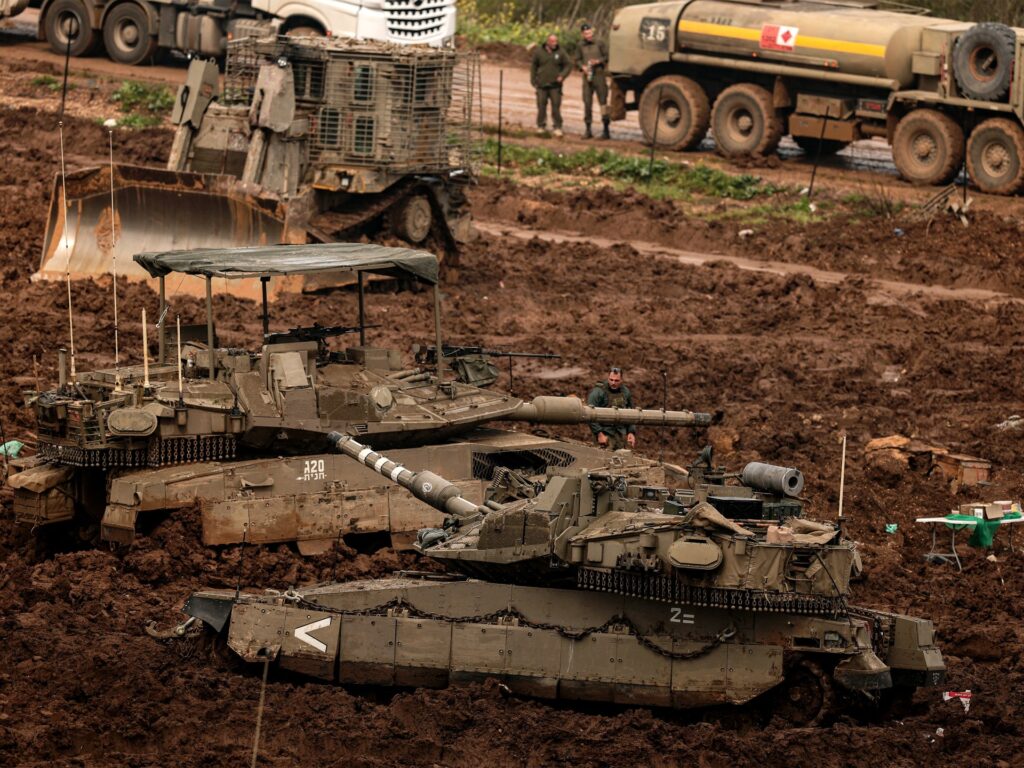
Amid escalating tensions in the region, Israel has dispatched additional troops into southern Lebanon, marking a significant expansion of its ongoing ground invasion. This military movement comes in response to recent security threats, with Israeli forces aiming to strengthen their foothold and control in strategically vital areas along the Lebanon border.
The development has sparked widespread concern among political leaders and international observers, as the situation on the ground continues to grow more volatile. Lebanese Prime Minister has issued a stern warning, condemning the Israeli military actions. He highlighted that such maneuvers and accompanying statements from Israeli officials pose a grave threat to Lebanese sovereignty, potentially destabilizing the region further.
The Prime Minister emphasized that Israel’s incursion into southern Lebanon not only infringes upon the country’s territorial integrity but also constitutes a violation of international law. He urged the global community to recognize and address these breaches, calling for diplomatic interventions to de-escalate the conflict.
The region has witnessed a surge in confrontations following earlier skirmishes and rocket fire exchanges. Israel’s decision to escalate its military presence in southern Lebanon reflects its strategic intent to dismantle militant groups operating near its borders and prevent further attacks.
Military analysts note that the ground invasion aims to create buffer zones to enhance Israel’s national security. However, the move risks inflaming sectarian tensions within Lebanon, where various factions hold divergent views on the conflict.
International bodies, including the United Nations, have expressed deep concern over the rising hostilities. Efforts to broker ceasefires and facilitate dialogue have so far been hindered by mutual distrust and ongoing military operations.
The civilian population in southern Lebanon faces increasing hardships as a result of the conflict. Displacement, infrastructure damage, and interruptions to daily life are among the growing challenges. Humanitarian groups have called for immediate access to affected areas to provide relief and support.
The United States and European allies have called for restraint from all parties involved, underscoring the importance of maintaining regional stability. Diplomatic channels remain active as the international community seeks to prevent further escalation.
As Israel continues to deploy additional forces, the prospects for a swift resolution appear uncertain. The situation remains fluid, with ongoing military engagements and political rhetoric contributing to a complex and precarious landscape.
Observers highlight the necessity of upholding international norms and respecting national sovereignty to avert a broader conflict. The Lebanese government is under pressure to navigate this crisis while maintaining internal cohesion and responding to external aggression.
In summary, the expansion of the Israeli ground invasion into southern Lebanon marks a critical juncture in the longstanding conflict between the two nations. The international community faces the challenge of promoting peace and stability in a region fraught with deep-rooted historical tensions and contemporary geopolitical struggles.