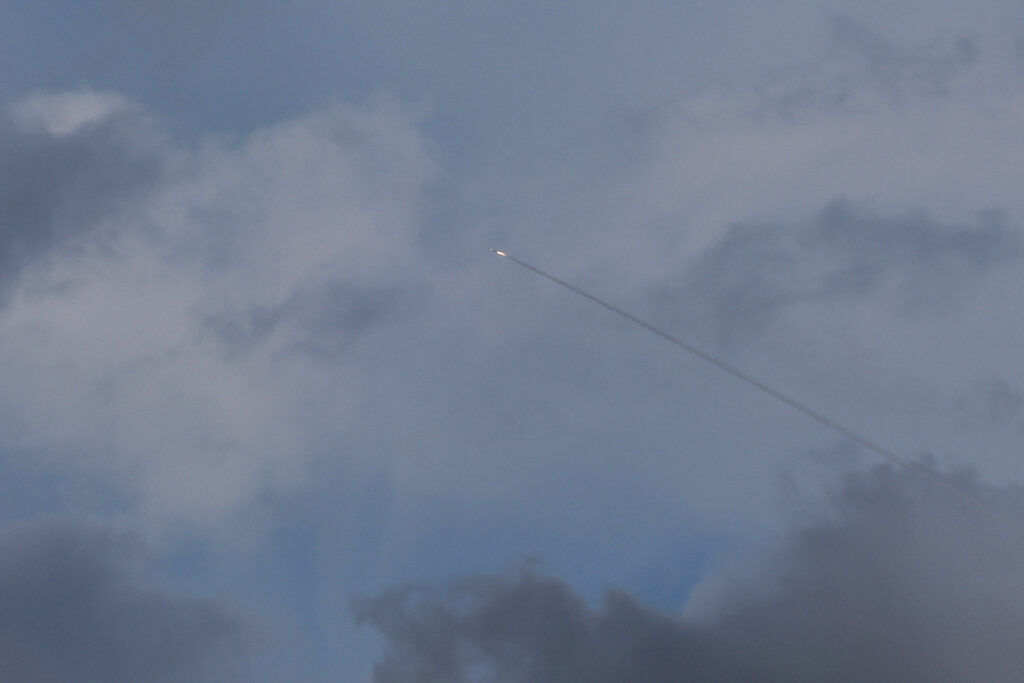
Israel's Iron Dome anti-missile system operates for interceptions as projectiles are launched towards Israel, near the Israeli side of the border with Lebanon, amid escalation between Iran-backed Hezbollah and Israel and the U.S.-Israeli conflict with Iran, in northern Israel, March 22, 2026. REUTERS/Tyrone Siu
In a significant escalation of tensions in the Middle East, Iran has claimed responsibility for launching multiple ballistic missile and drone attacks targeting key military bases in Israel, as well as facilities in the United Arab Emirates (UAE) and Kuwait. According to Iranian sources, these strikes were coordinated and aimed at military installations deemed critical to Israeli defense capabilities.
The announcement marks a notable development in the ongoing regional conflicts involving Iran and its allies against Israeli interests. Iran’s use of ballistic missiles combined with drone technology demonstrates an evolution in their tactical approaches, potentially increasing the threat level to regional security.
Official statements from Tehran indicated that the attacks were a response to recent events and provocations, with the intent to send a clear message of deterrence against further aggression. While Iran did not disclose specific details about the targets within the Israeli military, multiple reports suggest damage was inflicted on strategic bases known for intelligence and military operations.
This development raises concerns about the potential for broader conflict, given the involvement of multiple countries in the region. Israel has historically responded firmly to Iranian military actions, and the inclusion of the UAE and Kuwait in these attacks could further complicate diplomatic relations and alliances in the Gulf.
The international community has called for restraint from all parties, warning of the dangers of escalation which could destabilize an already volatile region. Diplomatic efforts are expected to intensify in the coming days to prevent further military exchanges and to encourage dialogue.
Experts note that the use of drones alongside ballistic missiles indicates advancements in Iran’s military capabilities, posing new challenges for defense systems across the region. The strikes illustrate the complex and multifaceted nature of modern warfare in the Middle East, where technology and strategy rapidly evolve.
Regional powers, including the Gulf Cooperation Council (GCC) countries, are likely to reassess their security postures following these attacks, potentially leading to increased military collaboration or heightened alert levels.
As the situation develops, intelligence agencies and defense analysts worldwide are closely monitoring the repercussions of Iran’s actions. The outcome of this event could influence future geopolitical dynamics in the Middle East and impact international efforts to negotiate peace and stability.
Overall, the claimed missile and drone strikes by Iran represent a critical flashpoint in Middle Eastern affairs, underscoring the fragile state of security and the urgent need for diplomatic resolution amidst escalating military confrontations.