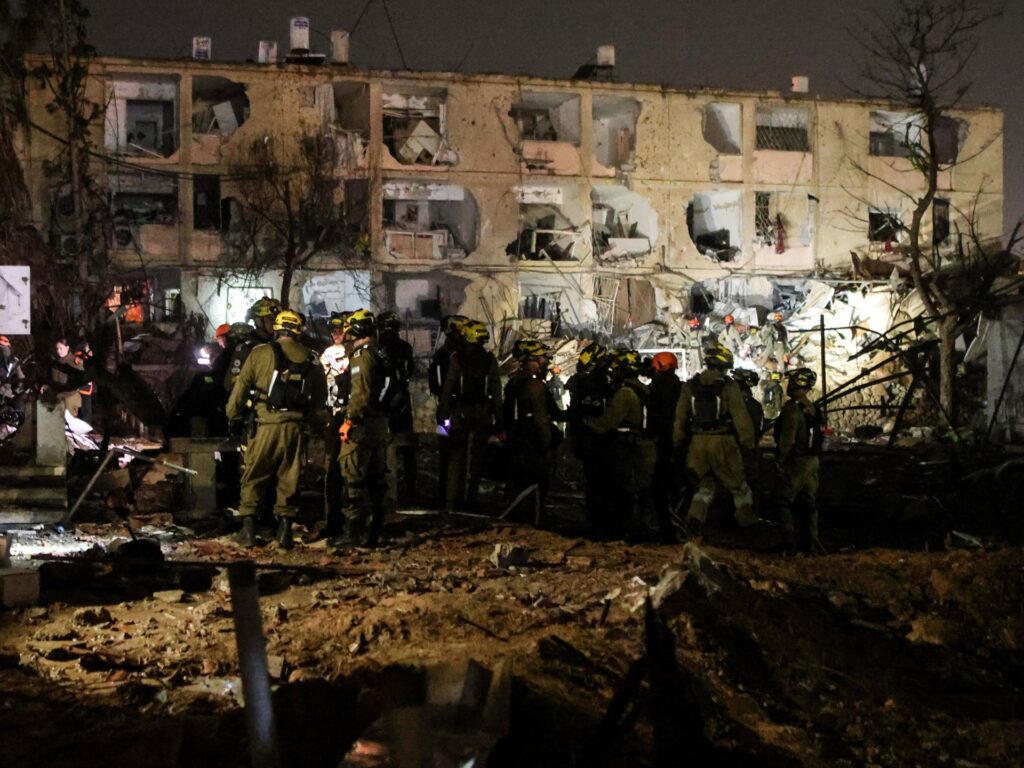
In a significant escalation in the ongoing tensions between Iran and Israel, Iran has launched strikes targeting towns near Israel’s nuclear facility. The missile attack focused on areas in proximity to the Dimona nuclear reactor and the town of Arad, resulting in injuries to nearly 100 people.
This military action by Iran came as a direct retaliation for a recent attack on the Natanz nuclear site, which is a key part of Iran’s nuclear program. The Natanz facility has been a focal point of international scrutiny and conflict due to concerns over Iran’s nuclear ambitions.
The strikes represent a sharp intensification of the tit-for-tat conflict that has been escalating over recent weeks. Both nations have exchanged allegations of covert operations and attacks, with significant security implications for the broader Middle East region.
Dimona, known primarily as a strategic nuclear site in Israel, holds paramount importance due to its role in Israel’s nuclear program. The nearby town of Arad also suffered from these missile attacks, highlighting the reach of Iran’s strike capabilities.
Emergency services report that nearly 100 individuals have been injured in these attacks, with local hospitals mobilizing to provide urgent care. The full extent of the damage to infrastructure and civilian property is still being assessed.
The international community has expressed concern regarding the potential for further escalation following these attacks. Diplomatic efforts are ongoing to de-escalate tensions, though both Iran and Israel have remained defiant in their rhetoric.
Analysts warn that the conflict over nuclear facilities could lead to a broader regional confrontation if not carefully managed. The Natanz attack that precipitated Iran’s retaliatory strikes is believed to have involved sophisticated sabotage, though the exact perpetrators remain officially unconfirmed.
Israel has frequently cited threats from its neighbors regarding its nuclear capabilities, emphasizing the need to protect its strategic assets. Iran, on the other hand, views its nuclear program as a sovereign right and a critical element of its national security.
The escalation also raises fears about the safety of nuclear sites themselves, given the risks of accidents and wider contamination in the event of missile strikes near such facilities.
Global powers, including the United States and European nations, have called for restraint and urged both Iran and Israel to return to diplomatic negotiations. The renewed conflict echoes previous cycles of violence that have underscored the fragile nature of security in the Middle East.
As the situation develops, the international community monitors closely, hoping for a halt to the hostilities and a return to dialogue that could prevent further loss of life and instability in the region. The recent strikes near Israel’s nuclear sites serve as a stark reminder of how nuclear tensions can quickly escalate into broader military confrontations, with far-reaching consequences.
In summary, Iran’s retaliatory missile strikes on towns near Israel’s Dimona nuclear facility mark a dangerous escalation in the conflict sparked by the attack on the Natanz nuclear site. With nearly 100 injured and regional tensions heightened, the path forward remains uncertain as both nations grapple with the implications of their actions on regional and global security.