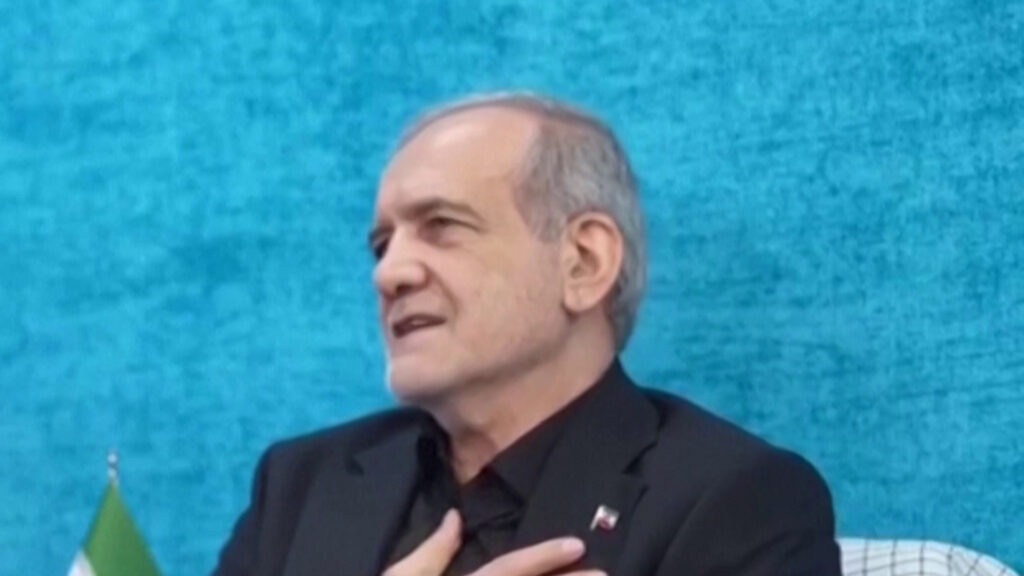
In a recent statement that has captured regional attention, Iran’s President Masoud Pezeshkian emphatically declared that Iran is not seeking war with its Muslim neighbours. This announcement comes at a crucial time when tensions in the Middle East often run high, and diplomatic relations can be fragile.
President Pezeshkian’s assertion of peaceful intent underscores Iran’s position on maintaining regional harmony and prioritizing diplomatic engagement over conflict. The statement highlights the government’s commitment to fostering cooperation and peaceful coexistence with neighbouring countries, which share not only geographical proximity but also cultural and religious ties.
Throughout his address, President Pezeshkian emphasized the importance of unity among Muslim nations, pointing out that mutual respect and dialogue are essential for overcoming challenges faced by the region. He reiterated that Iran seeks to play a constructive role in regional affairs, focusing on building alliances rather than engaging in confrontations.
The Iranian leadership’s message appears aimed at calming any apprehensions among neighboring states and the international community regarding Iran’s military intentions. This is particularly significant given the often complex geopolitics of the Middle East, where misunderstandings can escalate into tensions.
Analysts note that Iran’s stance on peace may also be a strategic move to counteract sanctions, promote economic development, and improve its diplomatic relationships globally. By reassuring its neighbours of its peaceful intentions, Iran hopes to create an environment conducive to trade, cultural exchange, and collective security.
President Pezeshkian also addressed internal audiences, affirming that Iran’s strength lies in its unity and its ability to defend itself if necessary, while still prioritizing peace and dialogue as the foundation of its foreign policy.
The president’s comments have been received with cautious optimism by some regional leaders, who acknowledge the importance of de-escalation and working towards common goals such as economic stability and counterterrorism efforts.
However, the road ahead remains complex, with many geopolitical factors influencing relations among countries in the Muslim world. Despite this, President Pezeshkian’s message serves as a hopeful reminder that dialogue and diplomacy could pave the way for a more peaceful and cooperative regional future.
In conclusion, Iran’s clear declaration of not seeking war with its Muslim neighbours represents a significant statement of intent in a region often marked by conflict and tension. It signals a preference for peace, unity, and collaboration, offering a beacon of hope for a more stable and harmonious Middle East.
As regional dynamics continue to evolve, the international community will be watching closely to see how these declarations translate into tangible actions that support peace and prosperity for all nations involved.