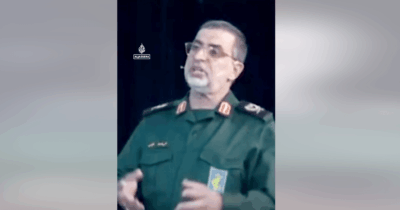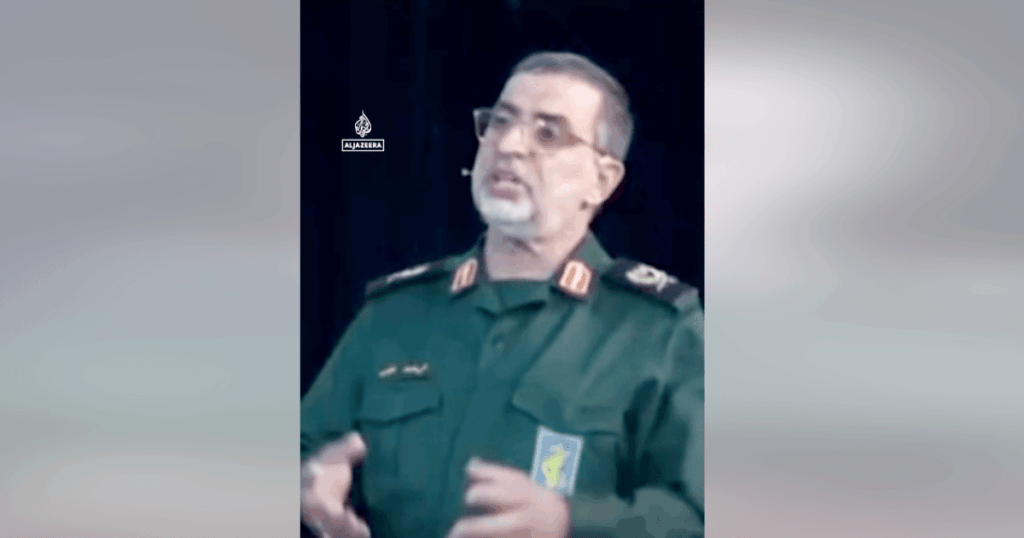
The Islamic Revolutionary Guard Corps (IRGC) of Iran has announced the death of its spokesman, Ali Mohammad Naini, in a joint air attack carried out by Israeli and US forces. This incident marks another significant development in the continuing assassination campaign targeting Iran’s leadership by Western and Israeli entities.
According to official IRGC statements, the attack was executed with precision as part of a broader series of airstrikes against key Iranian military and strategic targets. The killing of Naini signifies a steep escalation in hostilities and reflects the intensifying efforts to disrupt Iran’s command infrastructure.
This episode comes amid heightened tensions in the Middle East, where Iran has been subjected to a string of covert and overt operations aimed at weakening its regional influence and military capabilities. The US and Israel have publicly acknowledged their concerns over Iran’s nuclear ambitions and its support for proxy forces across the region, which they cite as justification for aggressive actions.
The recent airstrikes have reportedly targeted multiple locations within Iran, focusing on IRGC installations deemed vital to the country’s defense framework. The loss of Ali Mohammad Naini is a serious blow to the IRGC’s communication and operational coordination, potentially impacting their strategic responses going forward.
International reactions have been mixed, with some countries condemning the strikes as a breach of international law and an act of war, while others have expressed tacit support for efforts to curb Iran’s military expansion. The United Nations and other diplomatic bodies have called for restraint and urged all parties to seek dialogue to avoid further escalation.
Iran’s government has vowed to retaliate and reinforce its defensive measures. Public sentiments across the country have surged with calls for unity and resistance against foreign aggression. The IRGC itself has intensified security protocols and increased military readiness in anticipation of potential retaliatory measures by the US and Israeli forces.
Analysts warn that this cycle of violence could undermine regional stability, potentially triggering a broader conflict with far-reaching consequences. The assassination campaign signals a shift towards more direct confrontations as diplomatic options appear increasingly sidelined.
In summary, the killing of IRGC spokesman Ali Mohammad Naini in the latest US-Israeli air attack underscores the precarious state of security in the Middle East. It highlights the lethal measures employed to influence Iran’s strategic posture and the profound risks associated with continued military confrontations. The situation remains fluid, with global powers closely monitoring developments and preparing for possible ramifications of this critical event.