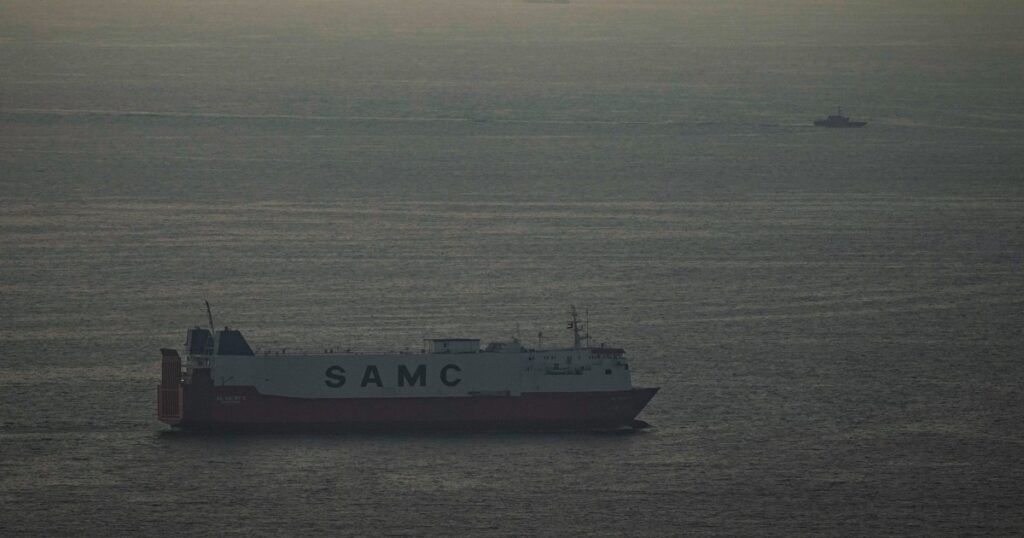
Iran is reportedly devising a new ‘vetting system’ for vessels transiting the strategically critical Strait of Hormuz, according to a recent report by Lloyd’s List. This development could introduce a ‘safe corridor’ for ships, contingent upon obtaining prior approval from Iran’s Islamic Revolutionary Guard Corps (IRGC).
The Strait of Hormuz is one of the world’s most vital maritime chokepoints, linking the Persian Gulf with the Gulf of Oman and the Arabian Sea. It facilitates the passage of a significant portion of the global oil trade, making it a focal point of geopolitical maneuvering and maritime security concerns.
The proposed vetting system aims to monitor and regulate the transit of ships through the Strait more closely. Under this framework, vessels wishing to pass through would need to secure clearance from the IRGC, which exercises considerable control over Iran’s territorial waters and has a prominent security role in the region.
According to Lloyd’s List, vessels that have received such authorization would be allowed to travel through a designated ‘safe corridor.’ This corridor would theoretically enhance navigational safety and reduce risks of maritime incidents or conflicts in the area.
The vetting mechanism reflects Iran’s intent to assert stronger oversight and manage maritime traffic in its vicinity of influence. It may also be seen as a response to increasing tensions and incidents involving foreign naval forces in the Gulf.
The IRGC’s vetting process could involve thorough checks, including ship inspections, crew background verifications, and scrutiny of cargo manifest to ensure compliance with Iranian security regulations. Details about how the approval procedure would be administered or the criteria for acceptance remain unclear.
This initiative also signals Iran’s desire to maintain sovereignty over its coastal waters while attempting to secure its maritime interests amidst external pressures and sanctions.
However, the development raises questions about international shipping and commercial logistics. Maritime operators and global traders could face operational delays or complications if the vetting process is cumbersome or highly selective.
International maritime law, particularly the United Nations Convention on the Law of the Sea (UNCLOS), guarantees the right of transit passage through international straits like Hormuz. Iran’s proposed system could provoke diplomatic challenges if it is perceived as restricting free navigation.
The United States and other Western countries have often criticized Iran’s naval maneuvers and its tightening grip over the Strait of Hormuz, fearing disruptions to the free flow of energy resources vital to global markets.
Analysts suggest that the vetting system might also be part of Iran’s broader strategic posture to deter hostile actions, manage its maritime borders, and leverage its geographical position in geopolitical negotiations.
The Strait has been a flashpoint historically, with incidents including tanker seizures, naval confrontations, and threats to commercial shipping during periods of regional conflict and international sanctions.
Iran’s move to formalize transit approvals could be aimed at reinforcing its control while signaling to global stakeholders the conditions under which maritime traffic is conducted.
Maritime insurers and shipping companies are closely monitoring these developments. The establishment of a safe corridor could potentially reduce insurance risks if it leads to fewer incidents, yet apprehension remains regarding the added regulatory burden.
Stakeholders emphasize the need for clear communication and coordination between Iran and the international maritime community to avoid misunderstandings or escalations.
If implemented transparently and fairly, Iran’s vetting system might contribute to safer navigation through one of the world’s busiest shipping lanes, but the international community is urged to engage diplomatically to safeguard open sea lanes.
The evolution of security protocols in the Strait of Hormuz will likely be a significant topic at future regional security dialogues and could influence maritime law discussions globally.
As Iran proceeds with this plan, the coming months will reveal how it balances national security priorities with international maritime trade imperatives.
In summary, Iran’s reported vetting system for the Strait of Hormuz transit represents an important development in regional maritime governance. It underscores the complexities of maintaining security and sovereignty while accommodating the vital economic interests of global shipping and energy supply chains.