IRAN-CRISIS/USA-INTELLIGENCE
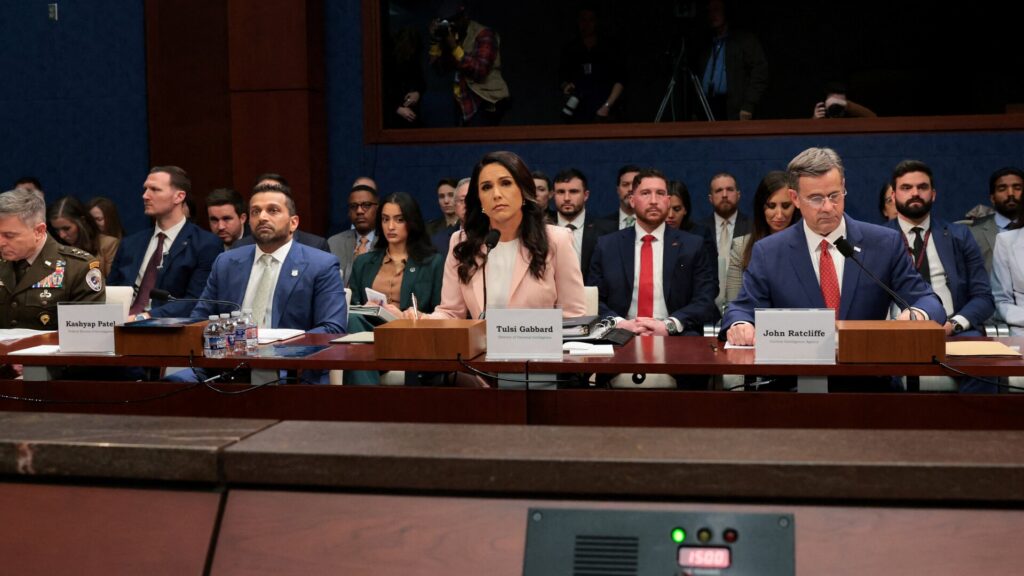
In a significant revelation, the Director of National Intelligence (DNI) of the United States has openly acknowledged that the strategic goals of the US and Israel concerning the ongoing conflict with Iran do not fully align. This admission highlights the complexity and nuances inherent in the geopolitical landscape surrounding Iran, a country long at the center of international tensions due to its nuclear program and regional influence.
The DNI’s statement underscores that while the United States and Israel share concerns about Iran’s potential to destabilize the Middle East, their approaches and end objectives differ. The US has historically pursued a combination of diplomatic engagement, economic sanctions, and measured military readiness to curb Iran’s nuclear ambitions and limit its influence.
Conversely, Israel has often advocated for more direct and immediate actions, including military strikes, to neutralize what it perceives as existential threats posed by Iran’s regime. Israeli leadership has been particularly vocal about the dangers of a nuclear-armed Iran, viewing it as a direct menace to its security.
These differing priorities have impacted the coordination between the two allies, necessitating careful diplomatic navigation. Analysts note that while both nations aim to prevent Iran from gaining nuclear weapons and disrupt its support for militant groups, the timelines and strategies they prioritize do not always coincide.
The DNI’s comments come at a time when tensions in the Middle East remain high, with recent escalations in Iran’s missile tests and proxy conflicts in neighboring countries such as Syria and Yemen. The acknowledgment of non-aligned goals signals to the international community that despite being close allies, the US and Israel maintain independent policy frameworks tailored to their respective national interests.
This development has implications for future negotiations and responses to Iran’s actions. It suggests that any concerted effort to address the challenges posed by Iran must account for differing perspectives and seek a balanced approach that respects the strategic calculations of all involved parties.
The United States continues to emphasize diplomatic channels and is invested in reviving talks that could lead to agreements limiting Iran’s nuclear capability. At the same time, it remains prepared to counter any aggressive moves by Iran through coalition-building and maintaining robust military capabilities in the region.
Israel, meanwhile, is expected to maintain its readiness posture and has not ruled out unilateral operations should diplomatic efforts fail to deter Iran’s nuclear ambitions or hostile activities. The Israeli government’s approach reflects a prioritization of immediate security concerns and deterrence.
The divergence in goals also reflects broader regional dynamics, where the US and Israel must balance their defense commitments with efforts to reshape alliances and address the broader strategic environment, including the roles of other regional actors like Saudi Arabia and the Gulf states.
In conclusion, the US Director of National Intelligence’s admission sheds light on a critical aspect of Middle East geopolitics, revealing the challenges faced by allies in formulating unified policies against a common adversary. This candid acknowledgment encourages a more transparent dialogue about the complexities of the Iran issue and highlights the importance of nuanced, multifaceted strategies in addressing one of the most enduring flashpoints in contemporary international relations.