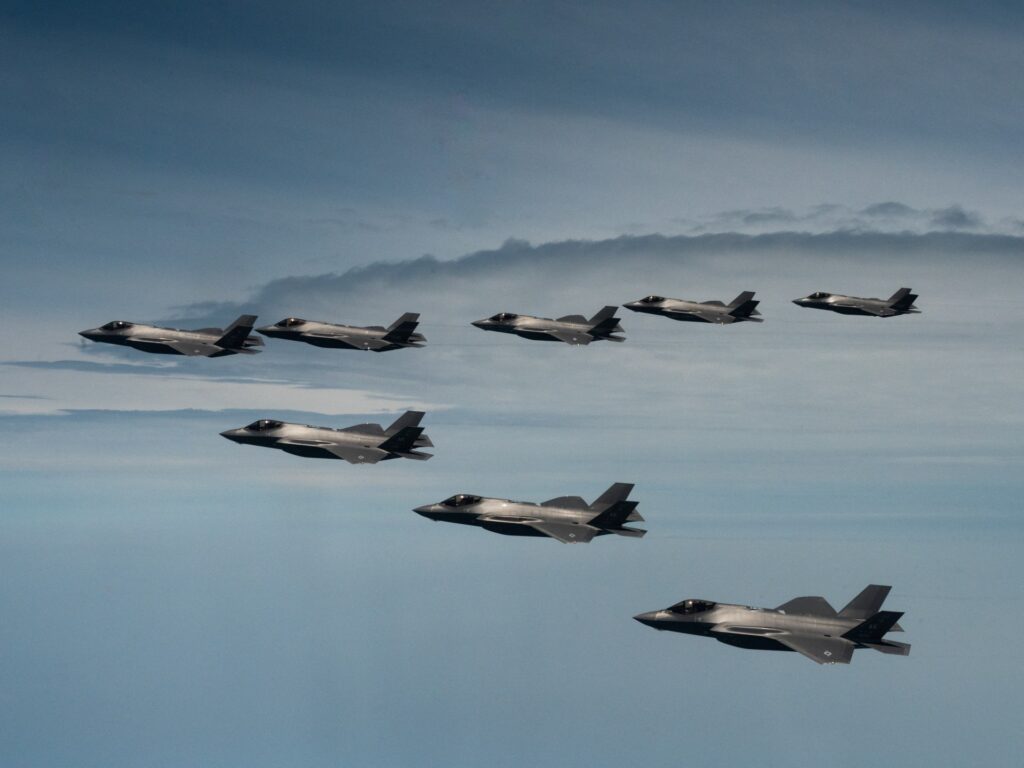
A recent incident involving a US F-35 fighter jet has drawn significant attention as the aircraft made an emergency landing shortly after completing a combat mission over Iran. The event underscores the ongoing complexities and risks faced by military operations in sensitive regions. According to CENTCOM spokesman Captain Tim Hawkins, the F-35 pilot managed to land the aircraft safely after the mission, and is currently reported to be in stable condition.
The F-35, known for its advanced stealth capabilities and versatility in modern combat, was on a mission that involved operations over Iranian airspace. Although details regarding the exact nature of the mission remain classified, the emergency landing points to either a technical malfunction or possibly damage sustained during the sortie.
Military officials have not yet disclosed whether there was any combat engagement that led to the emergency, but the incident raises questions about the risks US forces face in hostile environments. The F-35 is one of the most sophisticated jets in the US arsenal, designed to project air superiority through advanced sensors, stealth, and weapon systems.
The pilot’s safety has been a priority for officials, reflecting the importance of safeguarding personnel amid challenging missions. Quick response by support teams ensured the landing was successful without further incident, preventing potential loss of life or equipment.
This occurrence comes at a time of heightened tension between the US and Iran, with both nations maintaining a wary stance towards each other’s military activities. Any military mission over Iranian airspace can escalate diplomatic and security concerns, making such incidents key points of interest for global observers.
Experts note that the reliability of the F-35 is continuously being tested in real-world operations, which, while proving the aircraft’s capabilities, also expose it to the inherent dangers of combat missions. The US military’s commitment to recovering and analyzing the incident swiftly shows the importance of lessons learned to improve future mission safety and jet performance.
Briefings from CENTCOM emphasize that no additional injuries were reported and that the incident did not lead to broader conflict escalation. The US Department of Defense is expected to conduct a thorough investigation to determine the exact causes and to assess any potential risks to ongoing operations.
In the geopolitical context, the emergency landing of a stealth fighter inside or near Iranian territory highlights the delicate balance of power and the constant vigilance required in maintaining regional stability. The F-35’s role as a critical asset in enforcing US defense strategies in the Middle East is reaffirmed despite the technical setback.
Moving forward, military analysts and policymakers will closely monitor the findings from this incident to better understand the capabilities and limitations of advanced military technology in active conflict zones. The safe recovery of the pilot allows for continued focus on mission objectives while ensuring the well-being of personnel remains paramount.
This event serves as a reminder of the challenges inherent in modern aerial warfare and the ongoing efforts to enhance both pilot safety and aircraft reliability amidst geopolitical tensions. As investigations progress, further updates are anticipated that will shed more light on the circumstances surrounding the emergency landing of the US F-35 fighter jet over Iran.