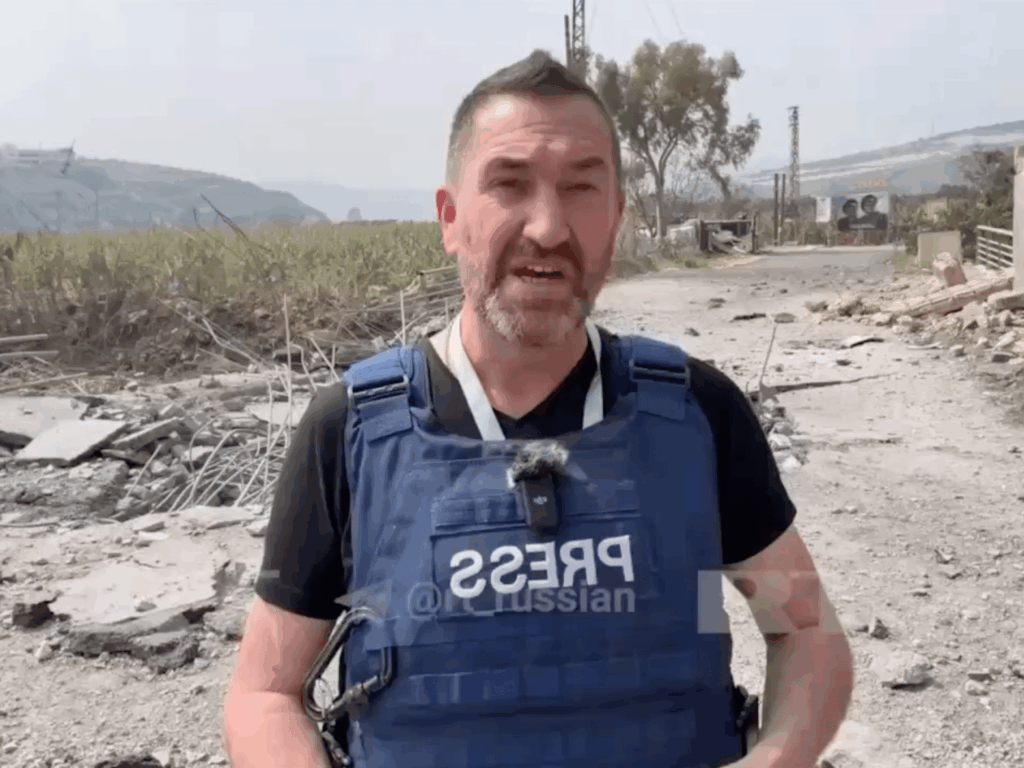
During ongoing Israeli military operations in southern Lebanon, a missile struck just meters away from a Russia Today reporter covering the events on the ground. The close proximity of the missile explosion highlights the extreme danger journalists face while reporting from conflict zones. The reporter, who was actively documenting the attacks aimed at various targets in southern Lebanon, narrowly escaped harm. This incident sheds light on the volatile and perilous conditions under which media personnel operate in areas of active conflict. Israeli forces have intensified attacks in southern Lebanon amid escalating tensions, prompting urgent calls for caution among civilians and press members in the region. The missile’s close strike exemplifies the unpredictable and hazardous environment journalists must navigate to bring real-time updates to international audiences. The situation underscores the importance of protecting journalists and press freedom in zones of military conflict, as their reporting remains critical to global understanding of the situation. This episode draws attention to the risks entailed in conflict coverage and the dedication required by reporters who work to deliver news despite life-threatening dangers. The incident also raises concerns from humanitarian and media organizations about the safety protocols for journalists in active war zones. International bodies remain vigilant about ensuring combatants respect press personnel’s safety under international law. The missile strike near the Russia Today reporter was part of a broader Israeli campaign targeting various strategic sites in southern Lebanon. Regional security analysts warn of escalating violence and highlight the potential for further destabilization in the area. This event is one of several recent occurrences where journalists have come under direct threat while covering conflicts. Global media outlets have called for strengthened measures to safeguard journalists and to condemn acts that endanger media workers. The precariousness of frontline reporting continues to challenge press freedom and jeopardizes vital information flows essential for public awareness. As Israeli forces continue operations, the international community watches closely, urging restraint and the protection of civilian and journalistic lives. The near-miss incident involving the Russian reporter during Israeli attacks poignantly illustrates the hazards of war journalism and the resilience of those risking everything to capture the truth. It serves as a stark reminder of the violent realities of conflict and the ongoing importance of independent reporting in such tumultuous circumstances.