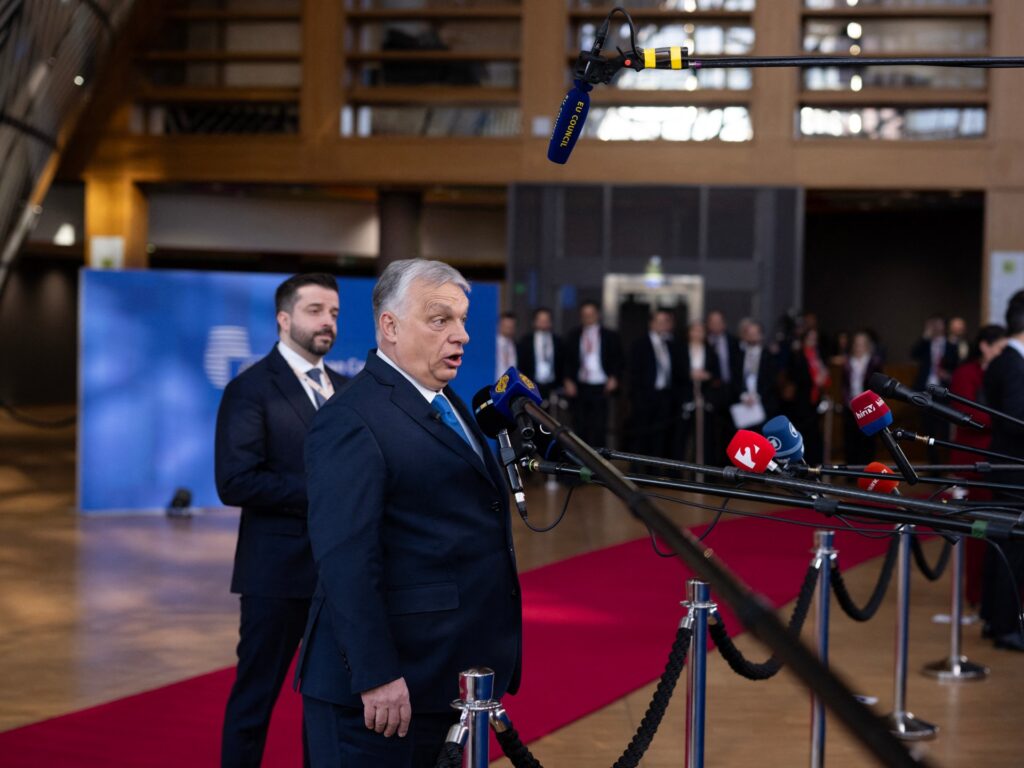
As Russia’s war on Ukraine enters its fifth year, Hungary’s Prime Minister Viktor Orban continues to impede the European Union’s efforts to provide financial aid to Ukraine. During a recent EU summit, Orban maintained his bloc on a critical loan intended to support Ukraine’s economic stability and recovery amid escalating conflict. This obstruction has drawn significant attention and criticism from other EU member states and international observers, as Ukraine faces immense challenges amidst ongoing military aggression. Orban’s decision reflects a complex political stance, potentially influenced by Hungary’s geopolitical interests and relations with Russia. Despite pressure from allies advocating for solidarity with Ukraine, the Hungarian leader’s veto demonstrates the persistent divisions within the EU regarding the approach to the conflict and the support for Kyiv. The blocked loan is part of a broader financial package designed to aid Ukraine’s war-torn economy, rebuild infrastructure, and provide humanitarian relief. The delay in assistance risks further exacerbating Ukraine’s hardships, including economic instability and reduced capacity to sustain its defense efforts. The EU remains committed to supporting Ukraine but must navigate internal disagreements among member states, which complicate coordinated action. Orban’s maneuvering signals challenges in unifying the EU response against Russian aggression, highlighting divergent national interests and political strategies. The ongoing impasse underscores the importance of diplomatic engagement and negotiation to overcome obstacles and ensure that Ukraine receives the necessary backing to withstand and eventually overcome the conflict. As debate continues, the international community closely watches the EU’s next moves, mindful of the devastating human and economic toll of the war. The resolution of this standoff at future summits will be critical in shaping the course of aid to Ukraine and the broader geopolitical dynamics in Europe.