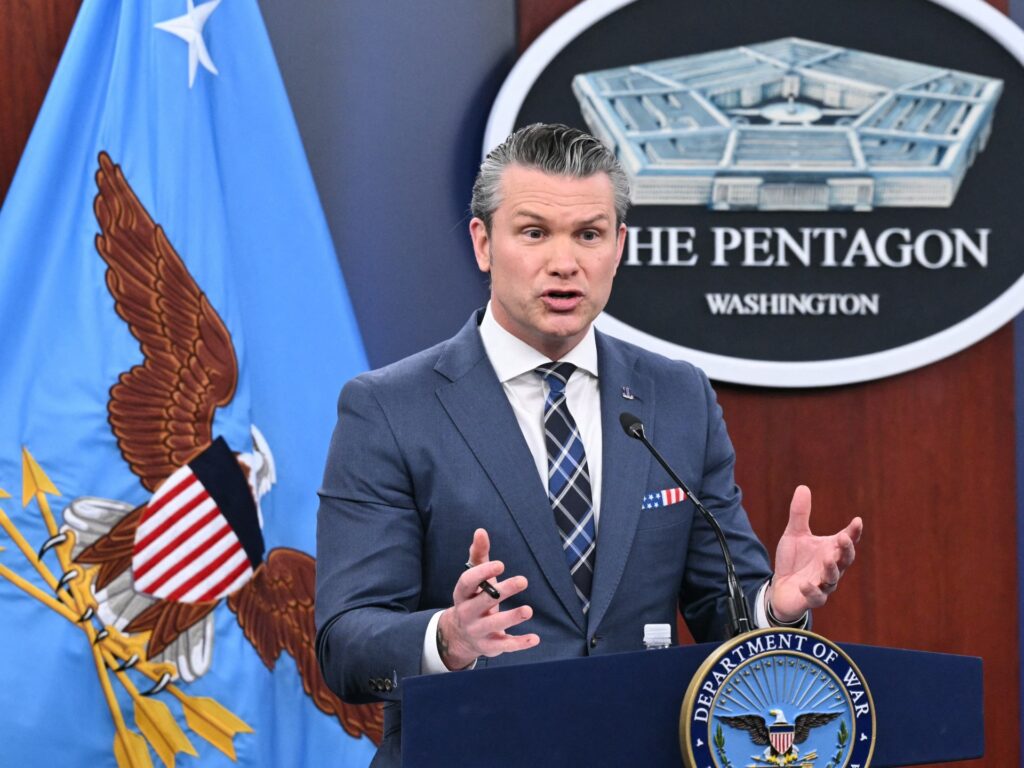
In recent statements, Defense Secretary Pete Hegseth has made it clear that there is no specific timeframe set for a potential war against Iran, underlining the complexity and uncertain nature of the ongoing tensions between the two nations. Hegseth emphasized that decisions regarding the timing of any military action would ultimately rest with President Trump, highlighting the executive branch’s central role in such critical matters.
The announcement came as the Pentagon formally requested a staggering $200 billion in funding, aimed at bolstering the U.S. military’s capabilities amidst rising concerns about Iran’s regional behavior and nuclear ambitions. This request reflects the administration’s intent to prepare for a broad range of contingencies, including the possibility of direct military engagement.
Hegseth’s comments suggested that while the Pentagon is actively seeking resources to strengthen defense infrastructure and readiness, the timeline for any engagement remains fluid. He pointed out that the war funding request might evolve based on strategic needs and political considerations.
The defense secretary’s remarks also underscore the heightened state of alert within U.S. military circles, as diplomatic efforts to address tensions with Tehran have shown limited progress. The ambiguous stance on timing intends to maintain strategic flexibility, enabling the U.S. to respond effectively to any developments on the ground.
The $200 billion funding request represents one of the largest in recent memory, signaling a major investment in military hardware, personnel, and operational readiness. Analysts speculate that this budget would cover an array of initiatives, from advanced weapons systems to increased troop deployments in key regions.
President Trump’s administration has faced criticism and support in equal measure regarding its approach to Iran, with hawkish voices urging swift action while others advocate for sustained diplomatic engagement. Hegseth’s remarks appear to balance these divergent views by deferring final decisions on military action to the president.
Experts note that the lack of a defined timeframe allows the administration to navigate the complex geopolitical landscape with a degree of openness, avoiding premature commitments that could constrain U.S. options.
The international community closely watches the developments, wary of the potential ramifications of escalating conflict in the Middle East, a region already beset by instability. The prospect of increased U.S. military spending and potential conflict with Iran remains a focal point in global security discussions.
In summary, Defense Secretary Pete Hegseth’s announcement signals a cautious but prepared posture by the U.S. government amid rising tensions with Iran. The substantial Pentagon funding request underscores readiness for various scenarios, while the absence of a fixed war timeline emphasizes strategic flexibility and deference to presidential authority on such critical decisions.