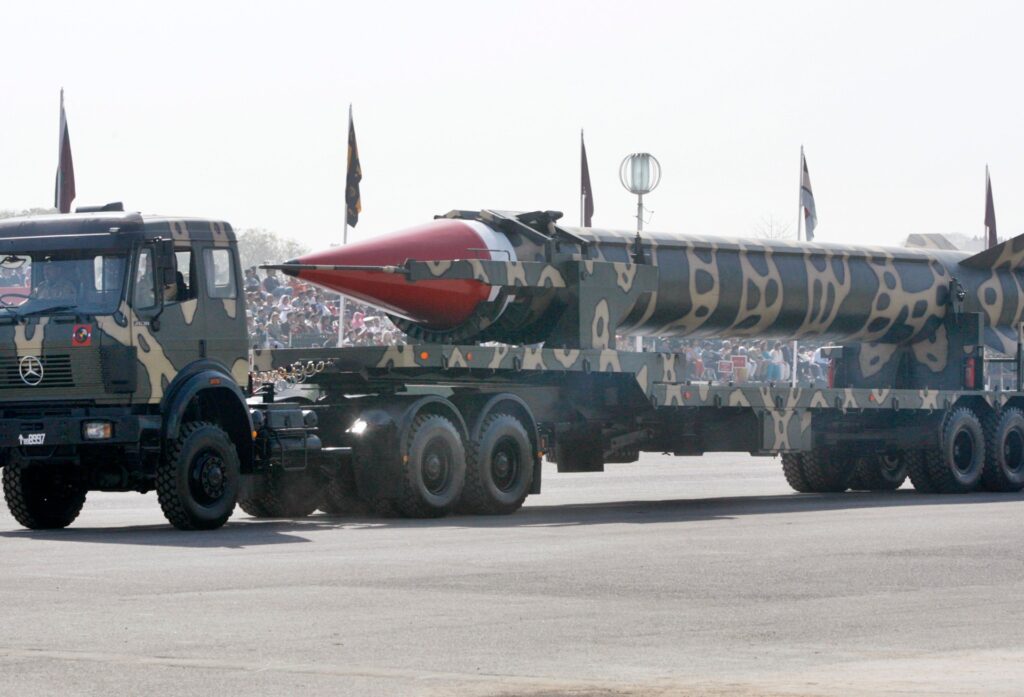
Tulsi Gabbard, a former U.S. Congresswoman and presidential candidate, recently brought attention to Pakistan’s missile capabilities, labeling them as a future threat to the United States. Her comments have sparked debate among security experts and analysts about the real intent and reach of Pakistan’s missile program.
Gabbard’s remarks underscore increasing American concerns regarding the proliferation of missile technologies in South Asia. She emphasized the need for the U.S. to monitor all potential missile threats globally, including those emanating from Pakistan.
However, many defense and regional experts argue that Pakistan’s missile development is primarily driven by its longstanding rivalry with India. Pakistan sees India as its main strategic competitor, and its missile arsenal, according to these analysts, is designed mainly to counterbalance Indian military power.
India, possessing longer-range missile systems and a more extensive military infrastructure, is viewed by Pakistan as the primary threat in the region. This perspective is reflected in the nature and capabilities of Pakistan’s missile arsenal, which largely focuses on regional deterrence rather than global reach.
Experts emphasize that Pakistan’s missile program is tailored to deter and respond to Indian military actions rather than to target the United States or other distant countries. The missiles deployed and tested by Pakistan are generally short to medium-range, suitable for regional defense strategies.
Moreover, security analysts caution against alarmist interpretations that could escalate geopolitical tensions unnecessarily. They highlight that while vigilance is necessary, understanding the strategic intentions behind missile development in South Asia is crucial for crafting balanced foreign policy and security measures.
The discussion around Pakistan’s missile capabilities also ties into broader issues relating to nuclear proliferation and stability in the South Asian region. Both Pakistan and India maintain nuclear arsenals, and missile developments by either side are closely watched by international observers.
In response to Gabbard’s statements, U.S. officials reaffirm their commitment to regional security and counter-proliferation efforts but stress the importance of diplomatic engagement with South Asian nations to maintain stability.
This debate reflects the complexity of regional security in South Asia, where historical animosities, military capabilities, and strategic posturing are closely interwoven. As the U.S. continues to monitor developments, it will likely balance its concerns about missile threats with the need to engage constructively with Pakistan and India.
In conclusion, while Gabbard’s concerns highlight the potential risks of missile proliferation, expert analyses suggest that Pakistan’s missile program remains primarily a regional deterrent focused on India, rather than a direct threat to the United States. Ongoing dialogue and cooperation in the region are vital to preventing misunderstandings and ensuring long-term peace and security.