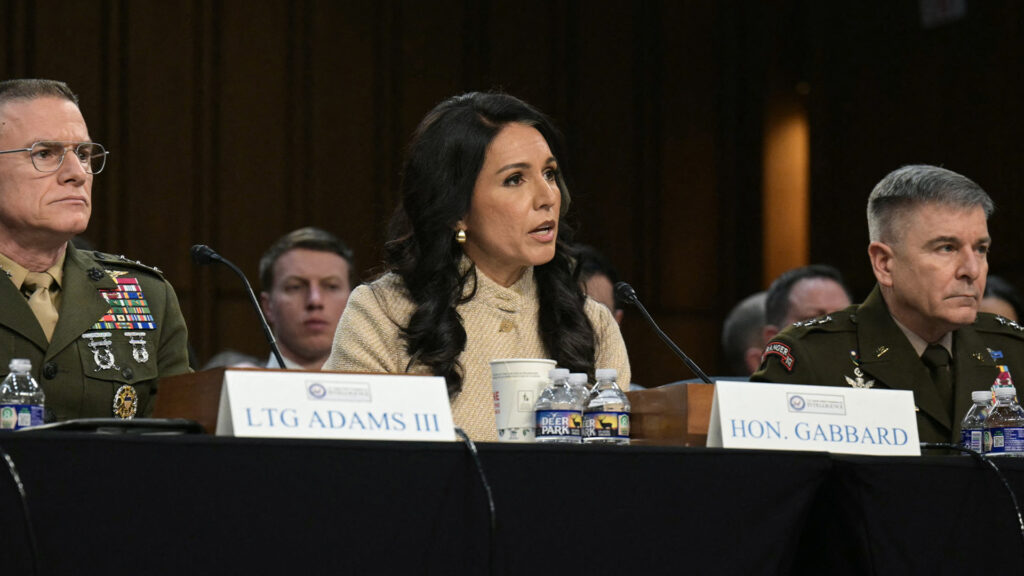
A top U.S. intelligence official has come under scrutiny for allegedly omitting critical details in testimony related to Iran intelligence, details that reportedly contradict assertions made by former President Donald Trump. The accused spy, a senior figure in one of America’s key intelligence agencies, is said to have altered or withheld information that challenges the narrative put forward by Trump about Iran’s threats to the United States.
The controversy centers around conflicting intelligence reports concerning Iran’s actions and intentions, which have been a focal point of U.S. foreign policy discussions. The omission has raised questions about the integrity of intelligence communications presented to lawmakers and the public.
During testimony before congressional committees, it is alleged that the official failed to provide a full account of Iran-related intelligence, specifically downplaying or excluding evidence that could undermine Trump’s claims of imminent threats from Iran. This has sparked concerns among politicians and analysts about the potential politicization of intelligence.
Critics argue that such omissions can lead to misguided policy decisions and erosion of trust between intelligence agencies and government branches. They emphasize the importance of transparency and accuracy in intelligence reporting to ensure that national security policies are grounded in factual evidence rather than political agendas.
Supporters of the official suggest that intelligence assessments often involve complex judgments and that some information may be withheld for security reasons or due to ongoing investigations. They caution against rushing to conclusions without a full understanding of the classified nature and context of intelligence work.
This incident comes amid ongoing tensions between the U.S. and Iran, with episodes of conflict and diplomatic stand-offs impacting global geopolitics. The reliability of intelligence on Iran remains a critical component in shaping U.S. responses and international relations.
Congressional leaders have called for a thorough review to assess the accuracy and completeness of the intelligence shared. The investigation aims to determine whether there was intentional manipulation of information and what implications this might have for future intelligence disclosures.
The debate highlights the delicate balance intelligence agencies must maintain in providing unbiased information while navigating political pressures. It also underscores the challenges in evaluating intelligence that can have profound consequences on foreign policy and national security.
As the investigation proceeds, the broader intelligence community is expected to reaffirm commitments to integrity and objectivity. The situation serves as a reminder of the vital importance of trust and accountability in the national security infrastructure.
Stakeholders from multiple sectors including intelligence oversight bodies, lawmakers, and policy experts continue to monitor developments closely. The outcome may influence reforms in how intelligence is handled and communicated to ensure more transparent and reliable processes in the future.
In sum, the accusation against the top U.S. spy has ignited a significant debate about the role of intelligence in politics, the safeguarding of truthful communication, and the impact on U.S.-Iran relations. The unfolding story will likely have consequences for intelligence practices and U.S. foreign policy for years to come.