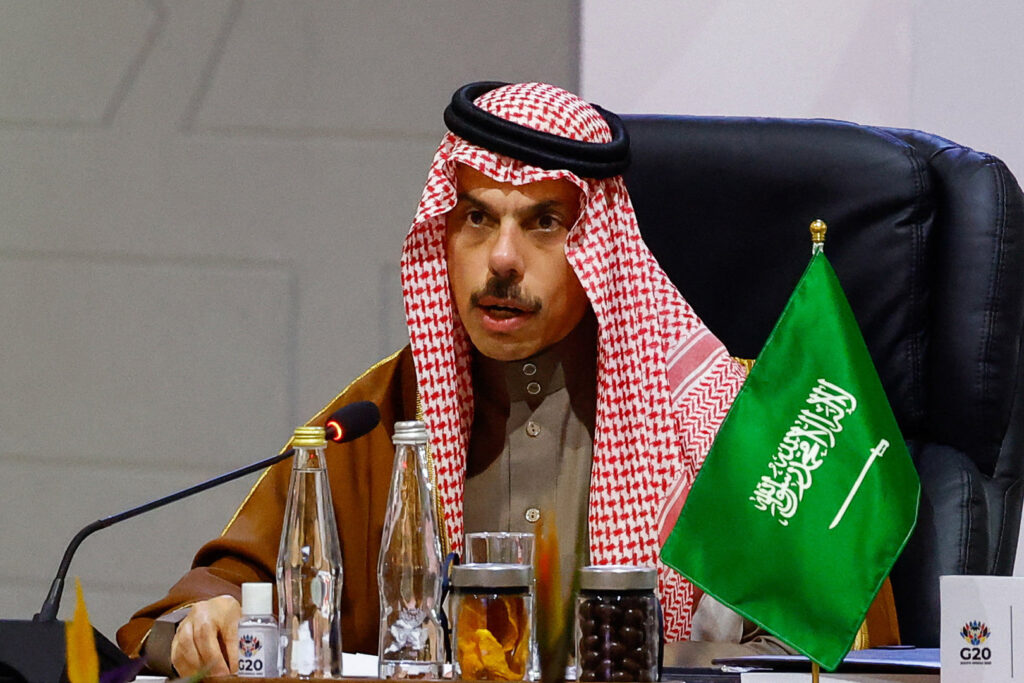
Saudi Arabia’s Foreign Minister has issued a stern warning to Iran amid escalating tensions in the Gulf region. Highlighting recent attacks attributed to Iranian-backed groups, the minister emphasized that the patience of Gulf states is not limitless and cautioned Tehran against further provocations.
The foreign minister articulated that regional neighbors possess “significant” capabilities to respond effectively to any aggressive actions. This statement underscores the growing frustration within Gulf nations regarding Iran’s involvement in destabilizing activities, particularly the repeated attacks carried out by proxies in Yemen and beyond.
Saudi Arabia, a key player in the Gulf Cooperation Council (GCC), has been actively working with its allies to counter Iranian influence in the region. The minister’s warning comes at a time when diplomatic efforts to ease tensions have shown little progress, and incidents of violence continue to disrupt peace and security.
In recent months, the Gulf has witnessed increased drone strikes and missile attacks targeting Saudi infrastructure and civilian populations. These attacks have been linked to groups supported by Iran, further straining bilateral relations and regional stability.
The Saudi foreign minister’s declaration signals a shift towards a more assertive posture, signaling that the Kingdom and its neighbors are prepared to use all necessary means to defend their sovereignty and maintain security.
Analysts interpret this warning as a clear message to Iran that the status quo of proxy conflicts is unsustainable. The Gulf states are not only prepared to bolster their defensive capabilities but also to take strategic measures to discourage further aggression.
Iran, which has long denied direct involvement in proxy attacks, faces increasing international pressure to curb the activities of allied militias. The Saudi stance reflects a broader regional consensus that deterrence and readiness are crucial in preventing escalation.
The warning also serves as a reminder of the fragile geopolitical balance in the Gulf, where the interplay of power and influence continues to shape the security landscape. With diplomatic channels being tested, the potential for miscalculation remains high, making such declarations significant in signaling intent.
In conclusion, the Saudi Foreign Minister’s warning to Iran highlights the urgency of addressing the ongoing violence through diplomatic engagement and mutual restraint. However, the clear message is that the Gulf states’ patience is finite, and they are equipped and willing to respond decisively to protect their interests and maintain regional stability.