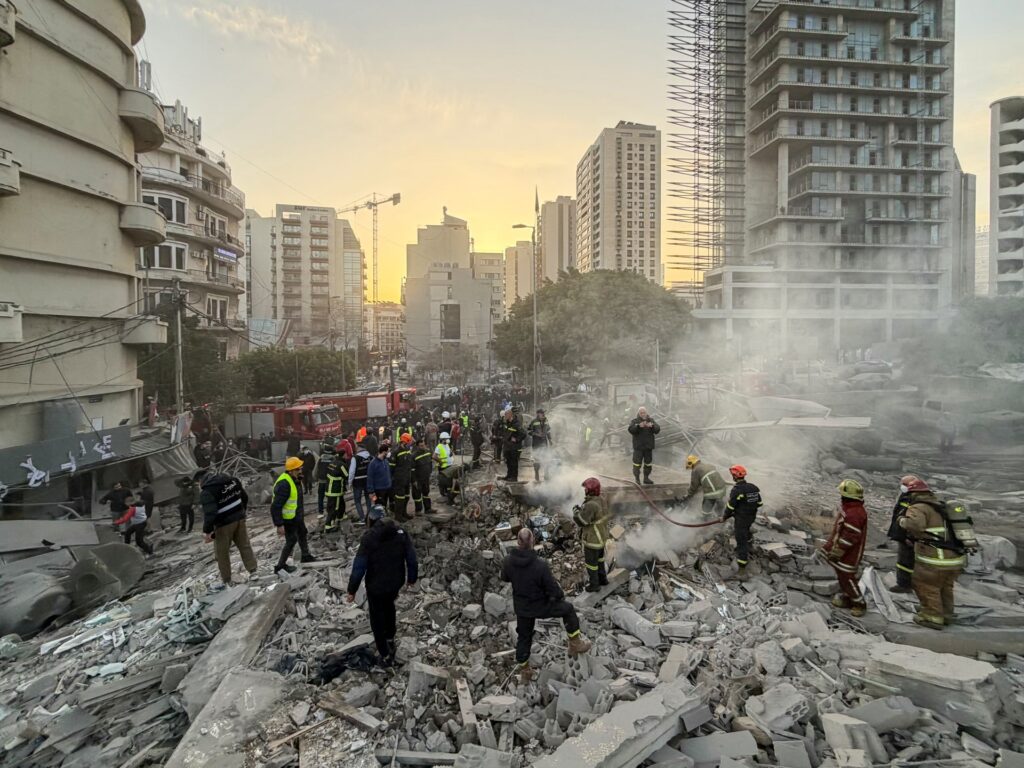
In a significant escalation of conflict, Israel launched a series of airstrikes targeting central Beirut and multiple locations in southern and eastern Lebanon. The wave of attacks has resulted in over 20 deaths, intensifying the already volatile situation in the region.
The air raids come as part of a broader ground offensive by Israeli forces in southern Lebanon, where fierce fighting continues with Hezbollah militants. The ground operations are reported to be expanding, signaling an intensification of military engagements in the area.
The bombings in central Beirut mark a severe development, striking the heart of Lebanon’s capital. Meanwhile, the southern and eastern regions have been subjected to strafing runs, increasing casualties and infrastructure damage.
Officials from Israel have stated that these operations are aimed at weakening Hezbollah’s military capabilities and infrastructure, which they accuse of launching attacks against Israeli territory.
The targeting of central Beirut suggests an escalation beyond the usual frontier border areas, which could have severe implications for Lebanon’s civilian population and the city’s stability.
International observers have expressed concern over the rapid deterioration of security and the potential for further regional destabilization. The United Nations and various humanitarian organizations have called for an immediate cessation of hostilities to prevent escalation into a larger conflict.
Lebanese authorities report that emergency services are struggling to cope with the casualties and damage resulting from the airstrikes. Hospitals in Beirut and southern Lebanon are reported to be overwhelmed with the wounded.
Hezbollah has vowed to resist the Israeli offensive, and the group’s fighters remain entrenched in southern Lebanon, engaging Israeli forces in intense combat situations.
The current wave of attacks represents one of the most violent episodes in recent years between Israel and Lebanon, raising fears of a prolonged conflict.
Analysts warn that the escalation could spark wider involvement from other regional actors, potentially drawing in neighboring countries and complicating peace efforts.
The international community faces mounting pressure to intervene diplomatically to de-escalate tensions and promote a return to negotiations.
In summary, the Israeli airstrikes on central Beirut and southern Lebanon, coupled with the expanding ground offensive, have resulted in significant casualties and destruction, marking a dangerous phase in the ongoing conflict in the region. Efforts toward ceasefire and diplomatic resolution are urgently needed to prevent further loss of life and regional instability.