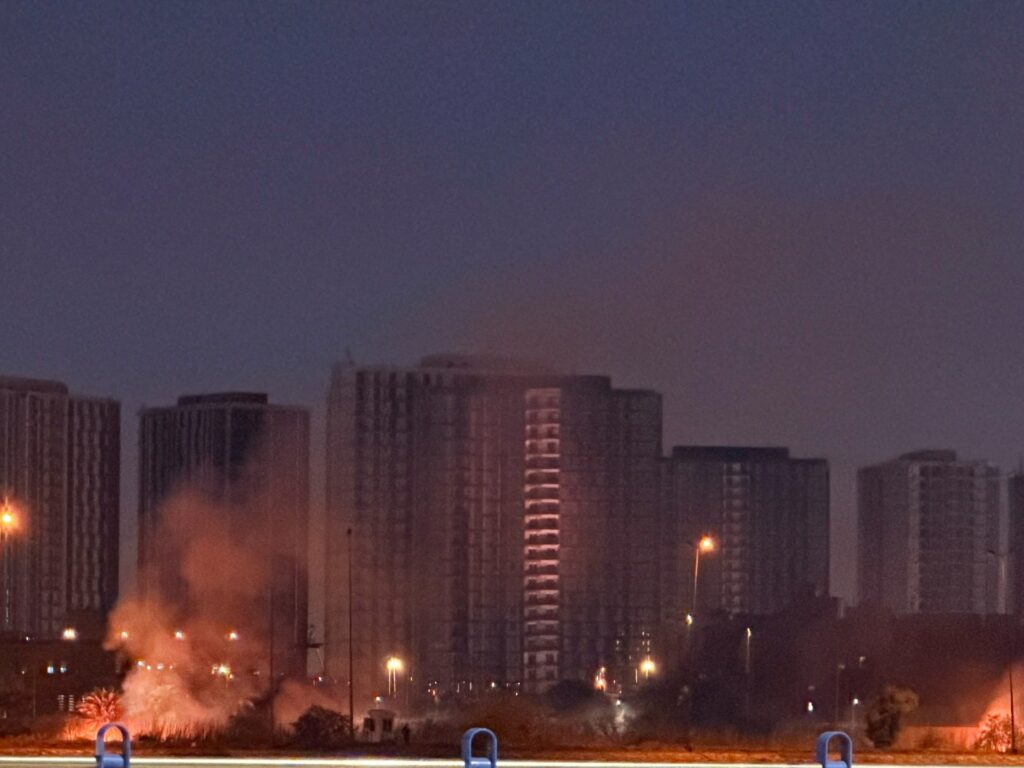
Baghdad, Iraq – The capital city of Iraq was shaken by a series of powerful blasts near the US embassy, marking a significant escalation in the ongoing cycle of violence between US forces and Iraqi groups aligned with Tehran. The explosions occurred in close proximity to the heavily fortified diplomatic compound, raising security concerns for foreign missions and residents alike.
This latest attack is part of a broader pattern of confrontations that have intensified over recent months, as Iraqi militia groups allied with Iran continue to challenge US military presence in the country. The blasts caused substantial damage to nearby infrastructure and instilled widespread fear among the local population, highlighting the fragile security situation in the capital.
The US embassy in Baghdad has been a frequent target of missile and drone strikes orchestrated by Iran-backed factions, who view the American military presence as an infringement on Iraqi sovereignty. These groups have repeatedly warned of increased hostilities if US forces do not withdraw from Iraq.
Authorities in Baghdad have condemned the attack and pledged to enhance security measures around key sites in the city. Iraqi security forces, often stretched thin and facing internal political challenges, have struggled to contain violent incidents that threaten stability.
Meanwhile, the United States government reaffirmed its commitment to protecting its personnel and facilities in Iraq. The US military has increased intelligence and surveillance operations to identify and neutralize threats posed by militia groups. Washington also continues to engage diplomatically with Baghdad to address security concerns and facilitate a reduction in hostilities.
The cycle of violence between US forces and Iran-aligned Iraqi militias is deeply intertwined with broader regional dynamics, including Iran’s strategic interests in Iraq and the ongoing tensions between Washington and Tehran. The situation complicates efforts to achieve long-term peace and stability in Iraq, which remains a key battleground for influence among regional and global powers.
Residents of Baghdad have expressed growing anxiety over the escalating violence, fearing further attacks that could destabilize their neighborhoods and disrupt daily life. Humanitarian organizations are also concerned about the impact of continued conflict on vulnerable populations across Iraq.
Analysts warn that without concerted efforts by both Iraqi authorities and international stakeholders to address the root causes of the violence, the security situation could deteriorate further, potentially triggering a broader conflict.
As the dust settles on the recent blasts near the US embassy, the international community watches closely, urging restraint and dialogue to prevent further bloodshed in a country already beset by decades of war and turmoil. The coming weeks will be critical in determining whether diplomatic initiatives can succeed in de-escalating tensions or if the cycle of violence will persist, further undermining Iraq’s path toward peace and reconstruction.