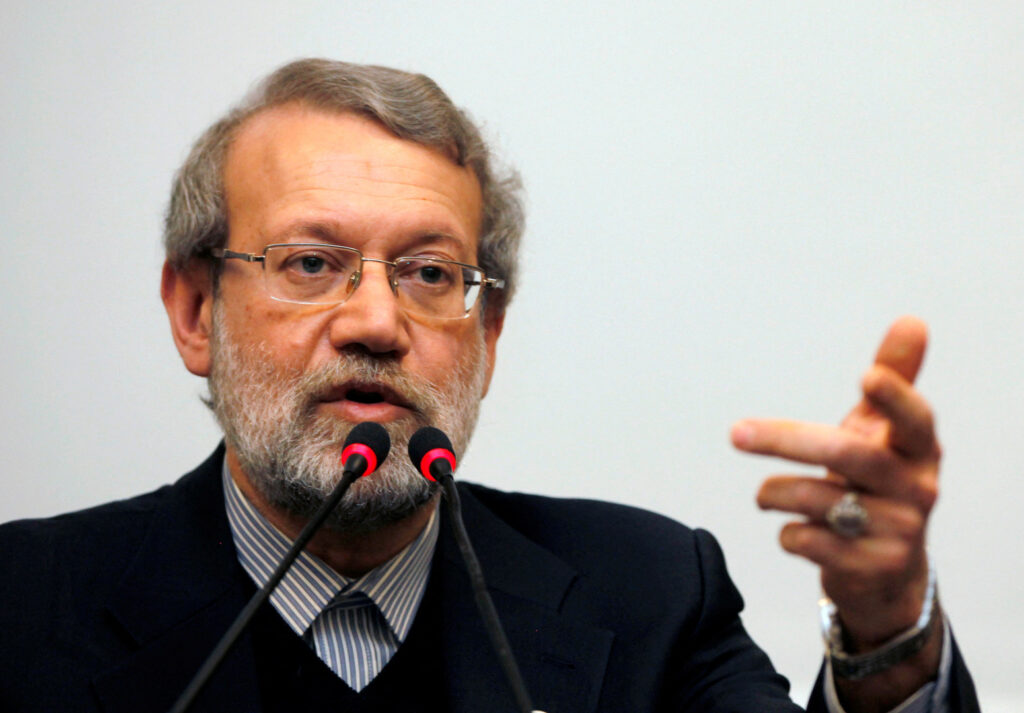
FILE PHOTO: Iran's parliament speaker Ali Larijani holds a news conference in Istanbul, Turkey January 22, 2015. REUTERS/Osman Orsal/File Photo
The recent assassination of a senior Iranian official, Ali L, has sparked intense discussion among experts regarding the strategy employed by Israel and its implications for U.S.-Israeli relations and broader geopolitical dynamics.
Ross Harrison, a noted analyst in Middle Eastern affairs, recently joined a panel of experts to dissect the motivations and potential outcomes of the joint U.S.-Israeli approach in targeting high-ranking Iranian leaders. The panel emphasized that the operation represents a critical juncture in the ongoing confrontation between Iran and its rivals in the region.
Experts highlighted that the killing of Ali L was not an isolated event but part of a broader Israeli strategy aimed at disrupting Iran’s command structure and deterring further hostile actions against Israel and its allies. This approach also aligns with the US’s objective of curbing Iran’s nuclear ambitions and regional influence without escalating into full-scale conflict.
Ross Harrison noted that Israel’s precision strike capabilities and intelligence-sharing with the U.S. have enhanced the effectiveness of such operations. The panel agreed that this collaboration underscores the deep strategic partnership between the two nations, united in their objective to contain Iranian aggression.
The experts also discussed the potential repercussions of the assassination. While the move sends a clear message of deterrence, it could provoke retaliatory actions by Iran, risking escalation in an already volatile region. The panelists underscored the importance of careful calibration in future moves to avoid broader conflict.
Internationally, the killing has drawn mixed reactions. Some countries view it as a justified measure against terrorism and destabilizing activities, while others condemn it as an act of extrajudicial assassination increasing regional instability.
The panel drew attention to the timing of the strike, which coincides with heightened tensions over Iran’s nuclear program and ongoing proxy conflicts in the Middle East. Analysts opine that this timing was a calculated decision to weaken Iran’s leadership amid these strategic pressures.
Further discussions revolved around the impact on Iran’s internal politics. The elimination of a senior figure like Ali L could lead to power struggles within Iran’s military and political spheres, potentially altering the country’s policy directions and engagement with neighboring countries.
Ross Harrison emphasized that such operations also carry risks of unintended consequences, including rallying nationalist sentiments within Iran and consolidating hardline factions. This complex dynamic necessitates ongoing monitoring and strategic adjustments by both Israel and its allies.
Overall, the expert panel concluded that the Israeli strategy in killing senior Iranian officials like Ali L demonstrates a nuanced approach combining military precision, intelligence acumen, and geopolitical calculation. However, the long-term consequences remain uncertain, requiring vigilant diplomacy and preparedness for potential fallout.
This development marks a significant chapter in the complex and often shadowy conflict between Israel and Iran, reflecting broader regional power struggles and the intricate balance of international relations in the Middle East.