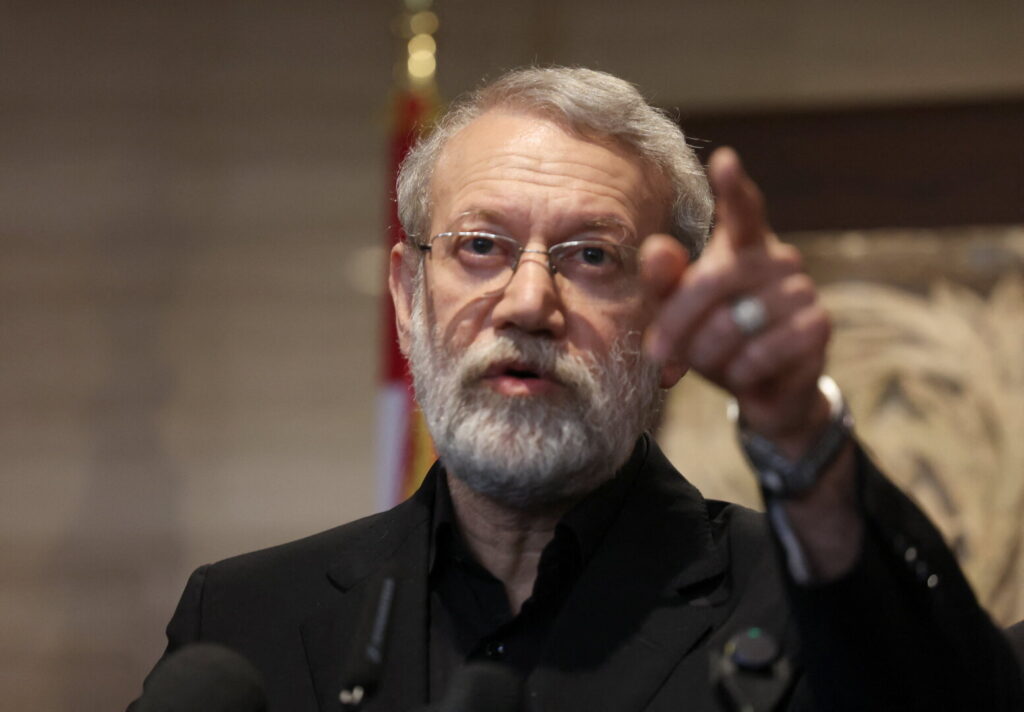
Iran's Supreme National Security Council Secretary Ali Larijani speaks after meeting with Lebanese Parliament Speaker Nabih Berri, in Beirut, Lebanon August 13, 2025. REUTERS/Aziz Taher
Ali Larijani was a significant and influential figure within Iran’s political and security landscape. Serving as a key insider, Larijani held various high-ranking positions that shaped Iran’s domestic and foreign policies over the years. His extensive career spanned multiple decades, during which he was known for his deep connections within the political elite and his strategic roles in national security.
Born into a prominent family with strong political ties, Ali Larijani was well-educated and began his career early in the Iranian revolutionary and political fields. He initially gained prominence through his involvement in the judiciary and legislative branches, holding various positions such as the Speaker of the Parliament (Majlis) for several consecutive terms, which positioned him as a central figure in legislative decision-making.
Larijani was also closely associated with Iran’s nuclear policy and negotiation teams, often playing a critical role in shaping the country’s stance on international issues. His expertise in security and strategic affairs made him a trusted figure among Iran’s conservative establishment.
In recent years, Ali Larijani served as a top security official, where his influence expanded into Iran’s intelligence and security apparatus. This role made him a pivotal insider in matters related to Iran’s internal security, counterintelligence, and regional influence.
On top of his official duties, Larijani was known for his ability to navigate the complex political environment in Iran, balancing between reformist and conservative factions. His leadership style and networks allowed him to be a behind-the-scenes power broker who managed sensitive issues with discretion.
The confirmation of his death marks a significant moment in Iran’s political sphere. Given his stature and the roles he played, Larijani’s passing is likely to create ripples across the security and political domains in the country. His absence might open the door for shifts in power dynamics within Iran’s intricate system of governance and security management.
Overall, Ali Larijani was more than just a security chief; he was a symbol of the deep-rooted elite that has shaped Iran’s governance for many years. His career reflected a blend of political acumen, strategic thinking, and unwavering commitment to the ideals of the Islamic Republic, leaving a legacy that will be studied for years to come.