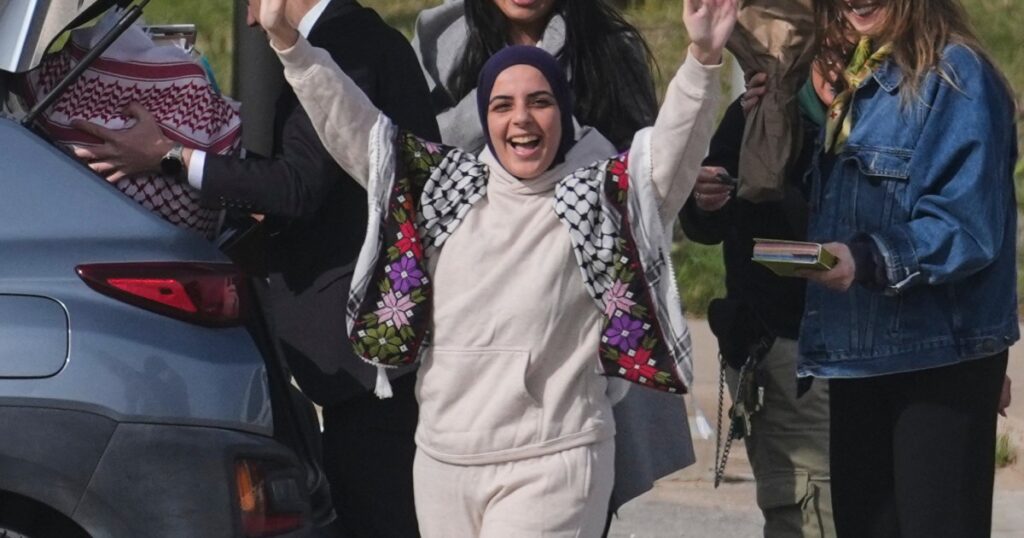
Leqaa Kordia, a prominent Palestinian activist, has been released from an ICE detention facility in Texas after spending an entire year in custody. Her detention had drawn significant attention from human rights organizations and activists worldwide, who advocated for her release, citing concerns about her treatment and the legal grounds for her prolonged detention.
Kordia’s case highlights ongoing issues related to immigration enforcement policies in the United States, particularly the treatment of detainees and the length of time individuals may be held without resolution. Throughout her detention, Kordia maintained her activism, drawing attention to the plight of Palestinians and broader issues of justice and human rights.
Her release marks a notable moment for advocates who have campaigned tirelessly for detainee rights and immigration reform. While details about the conditions of her release have not been fully disclosed, her freedom is seen as a victory for her supporters and a call to re-examine ICE’s detention practices.
Leqaa Kordia’s journey underscores the complex intersection between political activism, immigration enforcement, and human rights. Her detention has served as a rallying point for international solidarity movements and has shed light on the challenges faced by many activists who encounter legal hurdles abroad.
The one-year period Kordia spent in detention reflects broader systemic issues within immigration enforcement in the US, including lengthy detention periods and the impact on mental health and wellbeing of detainees. Advocates argue that such cases necessitate urgent reforms aimed at ensuring humane treatment and due process.
Kordia’s release has been met with statements of relief and calls for continued vigilance from human rights groups. They emphasize the importance of standing against arbitrary detention and supporting the rights of all individuals, regardless of their background or political views.
Her case also prompts a wider discussion about the role of activism in immigration proceedings and the potential risks faced by those who speak out against political oppression, whether in their home countries or in diaspora.
As Leqaa Kordia begins life outside detention, her experience remains a potent reminder of the resilience of activists and the ongoing struggle for justice and dignity worldwide. This development encourages ongoing dialogue on how immigration systems can be reformed to uphold human rights standards and protect vulnerable individuals.
The international community continues to watch closely as Kordia rebuilds her life post-detention, hopeful that her case can inspire change and greater protections for activists and immigrants globally. Meanwhile, ICE and immigration authorities face increasing pressure to address issues of detention fairness, transparency, and accountability.
Leqaa Kordia’s release may well be a catalyst for renewed efforts to address immigration detention policies and advocate for the rights of those caught in the bureaucratic and political complexities of international migration and activism.