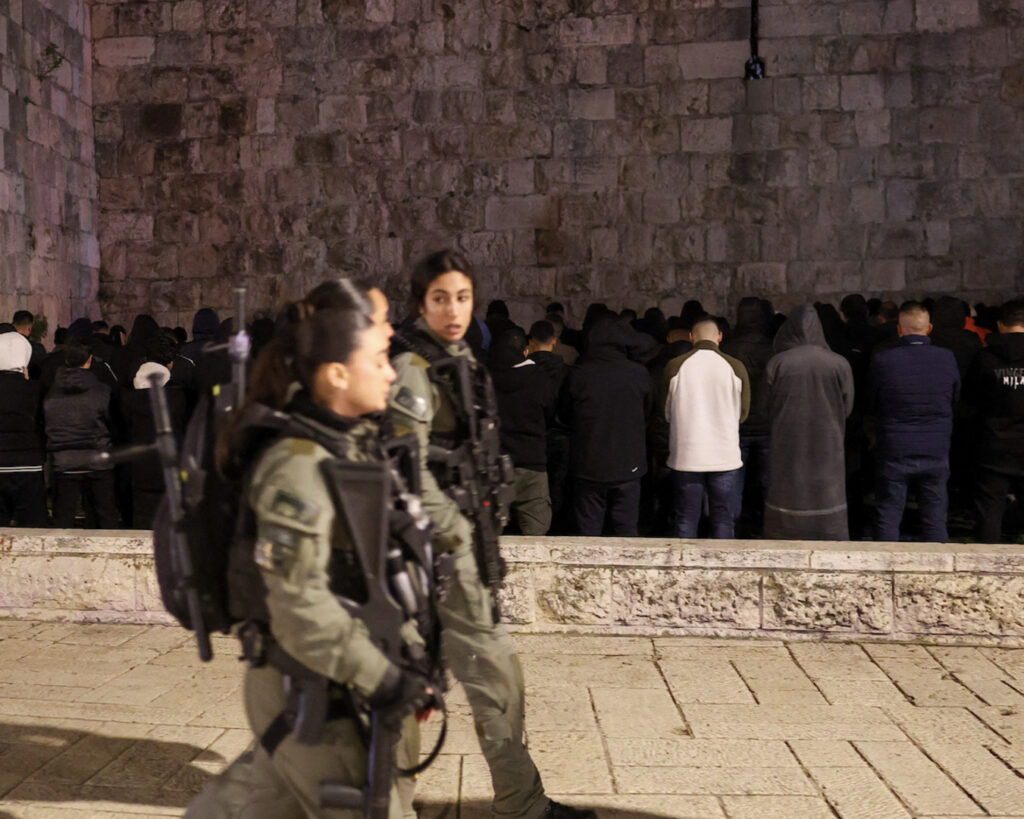
On a significant and solemn night during the holy month of Ramadan, Muslims gathered to pray near the closed gates of the Al-Aqsa Mosque, one of Islam’s most sacred sites. The closure of the mosque did not deter the faithful, who chose to perform their prayers in the surrounding streets, demonstrating their devotion and spiritual commitment.
The Al-Aqsa Mosque, located in the Old City of Jerusalem, holds profound religious significance for Muslims worldwide. It is considered the third holiest site in Islam, after the mosques in Mecca and Medina. Traditionally, during Ramadan—the ninth month of the Islamic lunar calendar and a time of fasting, prayer, reflection, and community—Al-Aqsa Mosque becomes a focal point for worship, especially on the holiest nights such as Laylat al-Qadr (the Night of Decree).
However, in recent times, the mosque has faced intermittent closures due to various political and security tensions in the region. Despite these challenges, the Muslim community has continued to find ways to observe their religious practices, often gathering outside the mosque to maintain the spiritual atmosphere and collective worship.
The night prayers, or Taraweeh, usually conducted inside the mosque, hold a special place in Ramadan observances. On this particular night, worshippers spread out on the streets and open areas adjacent to the mosque, praying together in unison, echoing the call to faith that transcends physical barriers.
Community leaders and religious figures highlighted the resilience and unity displayed by the Muslims praying outside the mosque, noting that the act of coming together in faith during trying times strengthens communal bonds and reaffirms religious identity.
The closure of Al-Aqsa Mosque has raised concerns within the international community, with calls for respecting the religious freedoms of all people and ensuring access to holy sites without obstruction. Various organizations have reiterated the importance of maintaining peace and dialogue to avoid escalating tensions in the region.
Despite the physical barriers, the spiritual connection to Al-Aqsa remains unbroken. The prayers held outside serve as a powerful reminder of the mosque’s enduring significance and the unwavering faith of the Muslim community. This night of devotion and reflection amid adversity exemplifies the spirit of Ramadan—a time of perseverance, hope, and deepened faith.
Looking forward, there is hope among worshippers and leaders alike that Al-Aqsa Mosque will remain accessible throughout Ramadan and future religious observances. The collective prayers outside the mosque not only symbolize resistance but also highlight the importance of peaceful coexistence and respect for sacred traditions.
In summary, the sight of Muslims praying near the closed Al-Aqsa Mosque on the holy night of Ramadan is a testament to enduring faith in the face of hardship. It underscores the vital role of religious freedom and the unyielding human spirit that continues to uphold the sanctity of sacred spaces.