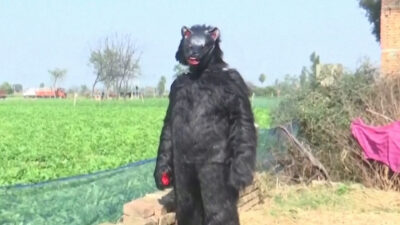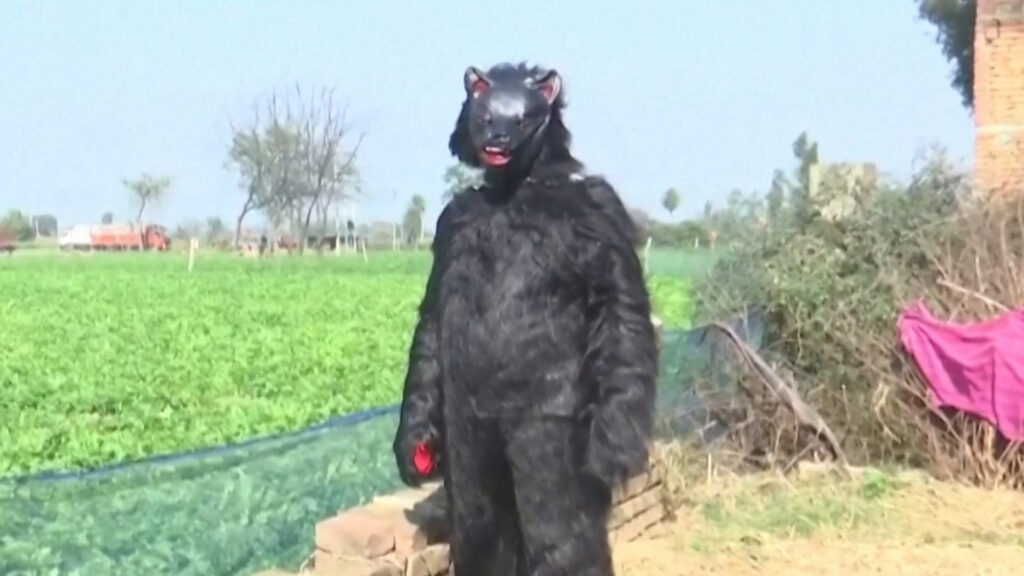
In an innovative and unusual method to deter monkeys from damaging their crops, farmers in northern India have started dressing up in bear costumes. This creative approach is gaining attention as it addresses a common agricultural problem faced by farmers across the region — crop depredation by monkeys.
Monkeys, known for their playful yet destructive behavior, often invade farmlands to feed on fruits and vegetables, leading to significant crop losses. Traditional methods like scarecrows and noise-makers have had limited success in protecting the fields. The new tactic involves farmers donning full bear costumes to scare off these primates.
The choice of a bear costume is strategic. Bears are natural predators of monkeys, and the sight of a bear-like figure can intimidate them and reduce their incursions into cultivated areas. The farmers wearing these costumes patrol their fields, pretending to be bears, creating an imposing presence that keeps the monkeys at bay.
This initiative has originated in parts of northern India, where monkey populations are especially high and their interference in crop fields is a major concern. The farmers reported a noticeable decrease in monkey activity after adopting this method, which is both eco-friendly and cost-effective.
Experts suggest that this method boosts not only the farmers’ ability to protect their livelihood but also helps maintain ecological balance by avoiding harmful chemicals or traps that could injure wildlife. Community support has been strong, with many farmers sharing their experiences and encouraging others to try the bear costume strategy.
This practice showcases the creativity and resilience of Indian farmers in dealing with wildlife challenges. It is an example of how traditional knowledge combined with innovative thinking can offer practical solutions to persistent problems in agriculture.
The technique may inspire similar efforts in other regions facing animal-related agricultural challenges, potentially setting a precedent for humane and harmonious ways to coexist with wildlife while securing crops.
As this unique approach gains popularity, research may further refine the methods to optimize effectiveness and adapt to different environments. Meanwhile, the sight of farmers dressed as bears has also brought a sense of community spirit and some lighter moments to the hard work of farming.
In conclusion, the bear costume initiative by Indian farmers is a prime example of how simple, imaginative ideas can make a significant impact on agricultural practices and wildlife management. This story highlights the ongoing relationship between humans, their environment, and the wildlife around them, emphasizing coexistence and mutual respect.