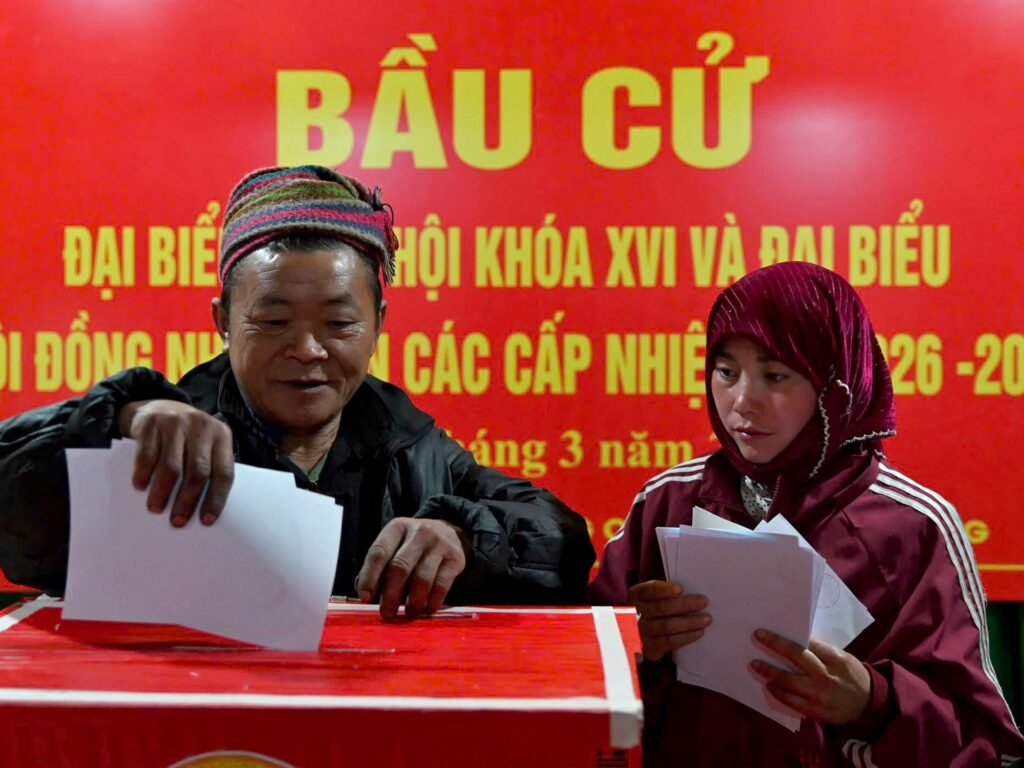
Vietnam recently conducted its general election to select members for its national parliament. This electoral process is distinctive, as candidates running for parliamentary seats predominantly come from the ruling Communist Party of Vietnam (CPV), reflecting the country’s political landscape.
In the election, a staggering 93% of candidates presented to the voters were affiliated with the Communist Party. This overwhelming majority underscores the centralized nature of political power in Vietnam, where the CPV maintains stringent control over the nation’s governance and policy direction.
The Vietnamese electoral system involves voters selecting members of parliament from a list of officially approved candidates. This list is largely curated by the Communist Party, limiting the presence and influence of opposition parties or independent candidates. The process aligns with Vietnam’s one-party state model, where the CPV is the sole legal party, aiming to maintain political stability and continuity.
Election officials reported a high voter turnout, indicative of the population’s engagement with the electoral process. Despite the lack of political pluralism, these elections serve as a mechanism for the CPV to renew its mandate and demonstrate popular support for its policies.
Analysts note that the dominance of CPV candidates reflects the party’s entrenched position and its ability to mobilize resources and infrastructure for election campaigns. However, this has also sparked discussions among international observers about the limitations on democratic practices and the absence of competitive electoral contests.
The general election results confirm the CPV’s continued governance and influence over Vietnam’s legislative agenda. The party’s majority in parliament empowers it to implement socio-economic reforms and development policies aligned with its strategic goals.
In summary, Vietnam’s recent general election was marked by the prominent presence of Communist Party candidates, constituting 93% of those running for parliamentary seats. While this ensures political stability under the one-party system, it also highlights the restricted political diversity characteristic of Vietnam’s electoral framework.