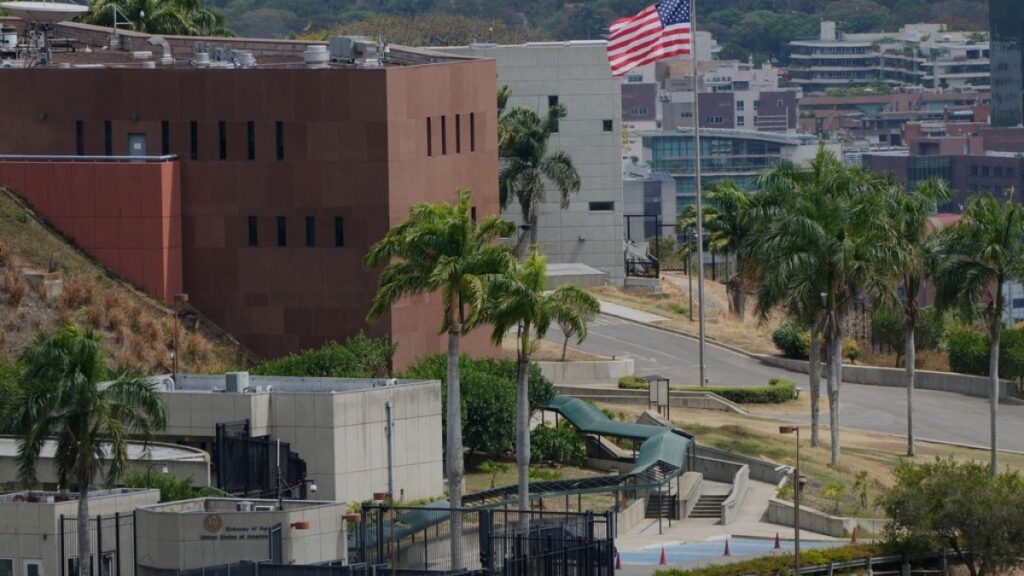
The United States embassy in Venezuela has officially reopened, marking a significant development in the complex relationship between the two countries. The reopening comes as the Trump administration intensifies efforts to gain access to Venezuelan resources, particularly focusing on the nation’s substantial oil reserves.
For years, the diplomatic ties between the US and Venezuela have been strained due to political turmoil and conflicting interests. The closure of the embassy was a symbol of this estrangement. However, recent shifts in Venezuela’s political landscape, including the establishment of an interim government recognized by the US, have paved the way for renewed diplomatic engagement.
The Trump administration has been actively pressing the interim Venezuelan government for concessions, particularly seeking access to oil resources that are crucial for energy markets. This push aligns with broader US strategic interests in the region, aiming to curtail the influence of adversaries and secure supply chains for energy.
Experts note that Venezuela holds some of the largest proven oil reserves in the world, making it a critical player in global energy dynamics. Access to these resources could provide economic and geopolitical advantages to the US while also offering the interim government leverage in the ongoing power struggle within Venezuela.
The reopening of the US embassy signals a willingness to engage diplomatically and potentially collaborate on resource management and economic reforms. It also reflects the US government’s approach of supporting the interim government as the legitimate authority in Venezuela while applying pressure on the previous regime.
Critics argue that such moves risk exacerbating Venezuela’s internal conflicts and may lead to intensified political instability. Nonetheless, the Trump administration appears committed to leveraging diplomatic channels to secure resource access, viewing it as a key component of US foreign policy in Latin America.
This development is being closely watched by international observers, as it may influence future negotiations, regional alliances, and the broader balance of power in Latin America. The embassy’s reopening is expected to facilitate more direct communication and coordination between the US and the interim Venezuelan government.
In summary, the reopening of the US embassy in Venezuela under the Trump administration’s directive marks a pivotal moment in bilateral relations. It underscores the strategic importance of Venezuela’s resources and highlights the complex interplay of diplomacy, resource politics, and regional stability.