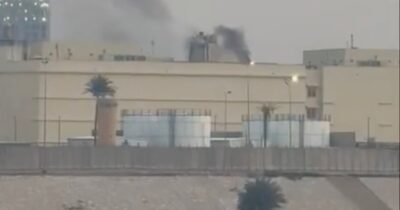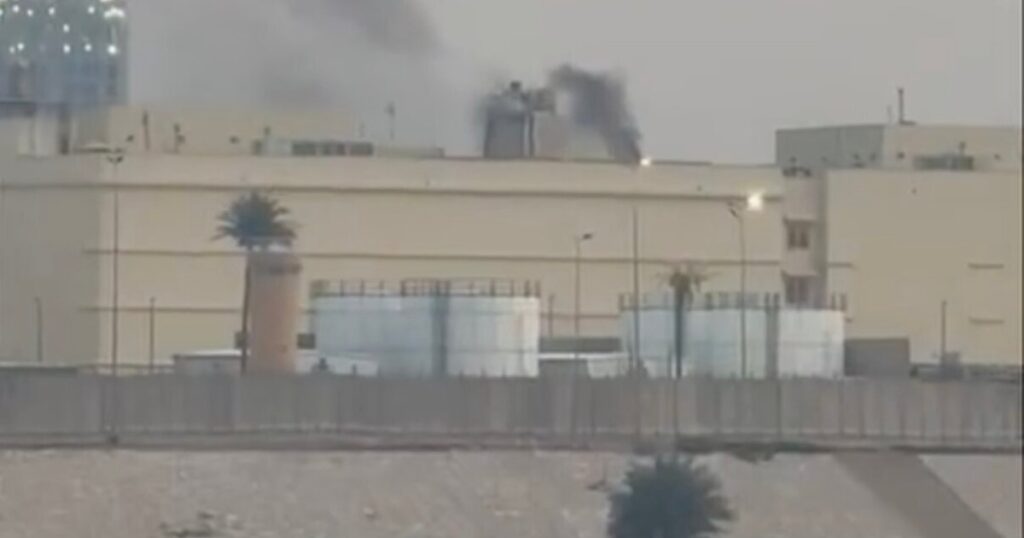
Smoke was seen rising from the US embassy in Baghdad, causing concern and drawing attention on social media. Videos shared by users online clearly showed plumes of smoke billowing from the embassy grounds after what has been reported as an attack. The incident has sparked international concern given the sensitive nature of the location and the potential implications for diplomatic relations and regional security.
Details about the nature of the attack, the parties involved, and possible casualties have not yet been fully disclosed by authorities. However, initial reports suggest that the embassy was targeted deliberately, raising questions about the security measures in place at one of the most important American diplomatic sites in the Middle East.
The US embassy in Baghdad has been a focal point in the complex geopolitical landscape of Iraq and the broader region, often serving as a symbol of American presence and influence. Attacks or threats against it tend to resonate deeply both domestically within Iraq and internationally.
Social media platforms have been instrumental in spreading real-time information about the event, with eyewitness clips capturing the moment the smoke began to rise. These videos have fueled discussions about the ongoing instability in the region and the risks faced by diplomatic personnel.
While the full context surrounding the incident remains to be clarified, the attack reflects ongoing tensions in Iraq. Various factions in the country have, in recent years, expressed opposition to foreign military presence, including that of the United States, sometimes escalating into violent confrontations.
The US government is expected to respond promptly to ensure the safety of its staff and to assess the damage inflicted. Moreover, diplomatic channels are likely to be engaged to address the aggression and prevent further hostilities.
The embassy attack underscores the fragile security situation in Baghdad and highlights the persistent challenges diplomats face while operating in volatile environments. Ensuring embassy security is paramount to maintaining diplomatic relations and continuing efforts toward stability.
International reactions may follow, with allies and global organizations condemning the attack and calling for restraint and de-escalation of tensions in the region. The incident might also influence ongoing dialogues related to US involvement in Iraq and broader Middle Eastern policy.
As investigations unfold, more concrete details are expected to emerge about the attack’s perpetrators, motives, and consequences. Meanwhile, the focus remains on securing the embassy complex, protecting diplomatic personnel, and restoring calm.
This event serves as a reminder of the enduring instability in parts of Iraq and the constant risks associated with diplomatic missions in conflict zones. The coming days will reveal how governments and international stakeholders respond to this provocative incident and what measures will be taken to prevent future attacks.