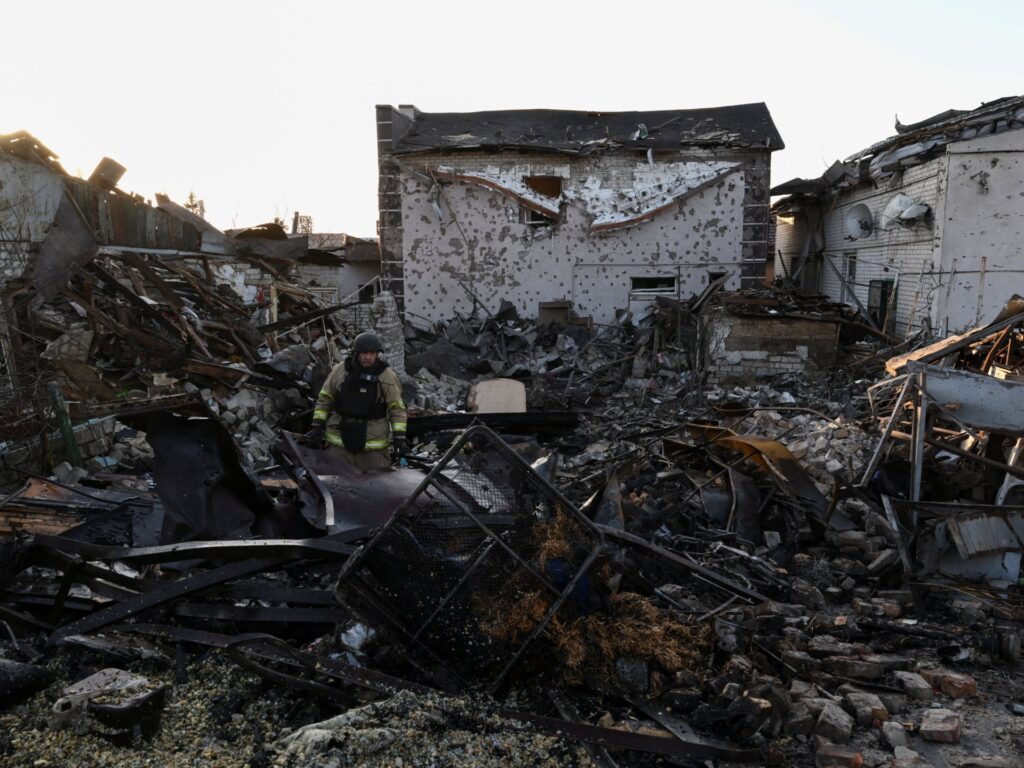
In a renewed wave of violence, six individuals were killed in attacks across Ukraine, escalating the long-standing conflict in the region. These attacks underscore the persistent instability and humanitarian challenges facing Ukraine as it continues to grapple with external aggression and internal strife.
In response to the ongoing conflict and in an effort to exert economic pressure, the European Union has announced an extension of sanctions against Russian individuals and entities. This move aims to tighten the economic constraints on Russia following its actions in Ukraine, reaffirming the EU’s commitment to support Ukrainian sovereignty and territorial integrity.
The extension of sanctions comes at a time of heightened global tensions, with the recent outbreak of war in the Middle East further complicating international relations. The EU’s decision to maintain and strengthen sanctions contrasts sharply with the United States’ recent choice to lift certain sanctions on Russian oil exports. This divergence highlights differing strategies among Western allies on how to address Russia’s influence and aggression.
EU officials emphasized that the sanctions are a critical tool to maintain pressure on Russia, seeking to deter further military aggression and to encourage a diplomatic resolution to the conflict. The sanctions cover a broad spectrum, including financial restrictions, travel bans, and curbs on business operations for key Russian figures and companies.
The continuation of sanctions also signals the EU’s commitment to stand in solidarity with Ukraine amidst the crisis, demonstrating a firm stance against violations of international law. The European bloc has consistently condemned Russia’s actions and called for an immediate ceasefire and withdrawal of Russian forces.
The recent attacks in Ukraine, resulting in six deaths, have triggered international concern and condemnation. Humanitarian organizations are calling for increased support for civilians affected by the fighting, with calls for access to aid and safe passage for refugees growing louder.
In the broader geopolitical context, the Middle East war has introduced new complexities, diverting international attention and resources. The EU’s actions are seen as an effort to ensure that the Ukrainian crisis remains a priority on the global agenda despite competing global conflicts.
Experts suggest that the continuation of sanctions alongside diplomatic efforts could increase pressure on Russia to reconsider its military strategy. However, the differing approaches between the EU and the US on sanction policies could pose challenges for a unified Western front.
As the situation unfolds, the international community remains watchful, emphasizing the need for dialogue, humanitarian support, and a coordinated strategy to address the intertwined crises in Ukraine and the Middle East. The EU’s steadfast stance on sanctions underlines its role in shaping the response to one of the most significant security challenges in recent years.