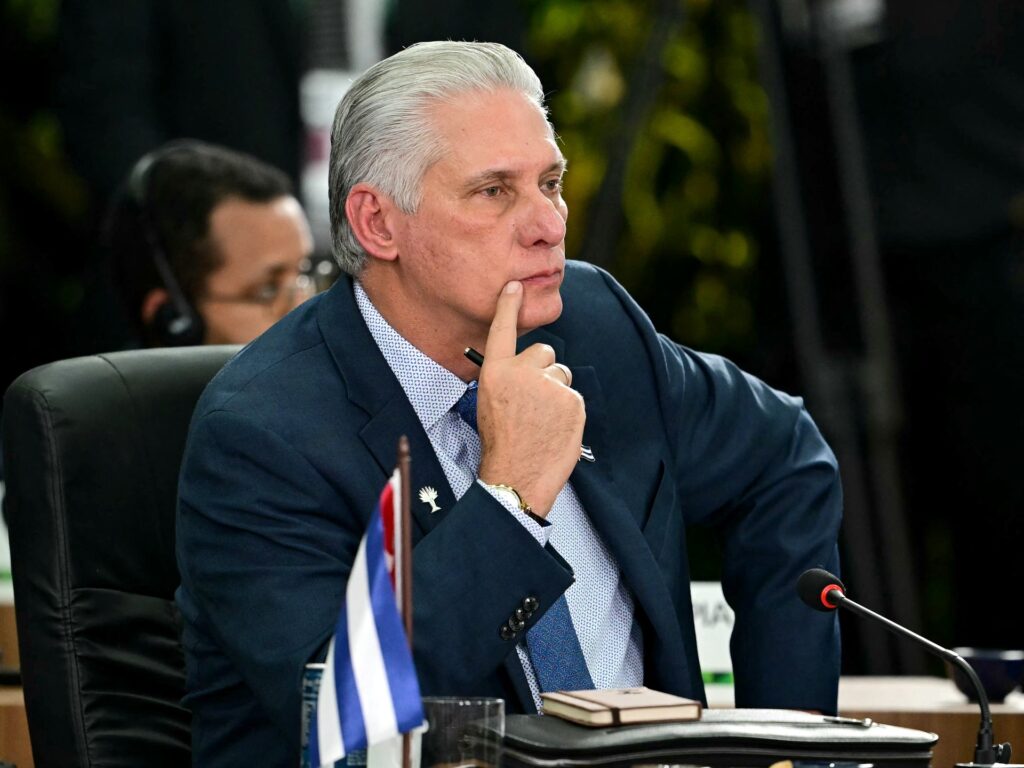
Cuban President Miguel Diaz-Canel has recently acknowledged holding discussions with the United States, aiming to find solutions ‘through dialogue’ despite escalating tensions and harsher US policies. This development comes in the backdrop of increasing hostility from Washington, particularly under the administration of former President Donald Trump, who intensified the oil blockade against Cuba.
The talks mark a significant moment as they indicate Cuba’s willingness to engage diplomatically with the US despite the historically strained relationship. Diaz-Canel stressed that these discussions are a step towards peaceful engagement and reflect Cuba’s commitment to resolving conflicts through conversation rather than confrontation.
The oil blockade, which has been tightened under Trump’s directives, poses substantial challenges for the Cuban economy, which heavily relies on fuel imports. The restrictions hinder Cuba’s ability to access oil, affecting transportation, energy production, and essential services, thereby exacerbating economic difficulties.
President Diaz-Canel’s announcement comes amidst international scrutiny over US policies in the region. Many global observers and organizations have criticized the tightening of the embargo, arguing that it disproportionately affects civilians and serves to escalate tensions rather than encourage peaceful resolution.
Cuba, under Diaz-Canel’s leadership, continues to advocate for the lifting of the embargo, emphasizing the need for mutual respect and cooperation between the two nations. The President’s remarks about engaging ‘through dialogue’ suggest a possible thawing in relations, or at least a desire to explore diplomatic avenues despite the harsh measures in place.
This move could potentially open doors for future negotiations aimed at addressing broader issues such as trade, travel restrictions, and the humanitarian impact of sanctions. It also signals Cuba’s strategic intent to pursue diplomacy even in adverse circumstances.
Overall, the dialogue between Cuban officials and US representatives represents a noteworthy development amid ongoing political and economic challenges. While the path to normalizing relations is fraught with complexities, this initiative highlights both countries’ acknowledgment of the importance of communication in resolving long-standing disputes.
As events continue to unfold, the international community will be watching closely to see if these talks lead to meaningful progress or if tensions will persist. The outcome will significantly impact the geopolitical landscape of the Caribbean and US-Latin America relations for years to come.