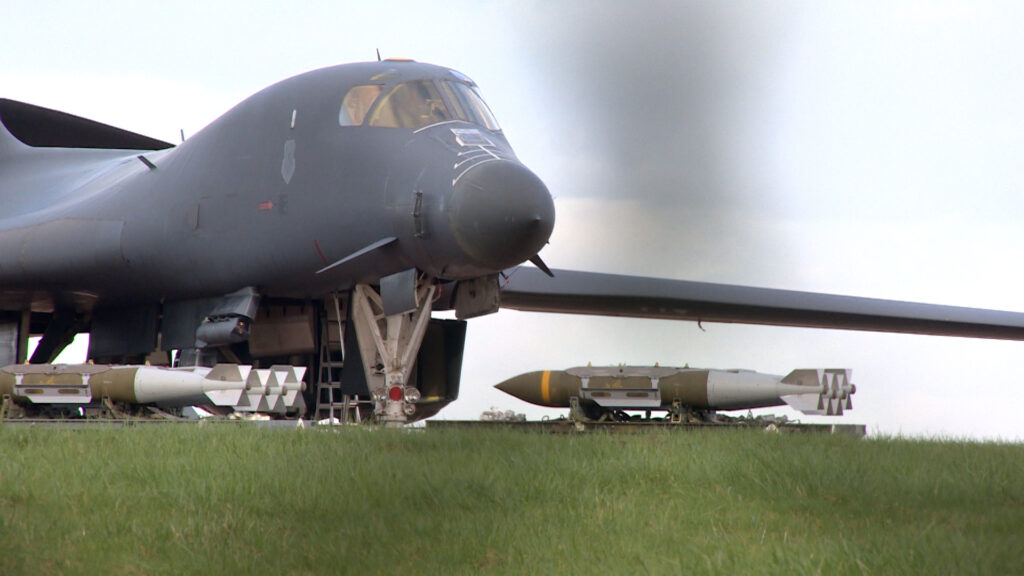
The recent loading of bunker-busting bombs onto US aircraft at RAF Fairford, a Royal Air Force base in the United Kingdom, signals a significant escalation in the military preparedness surrounding the ongoing conflict between the US, Israel, and Iran. This development highlights the UK’s increasingly active logistical and strategic support role in the tensions that have continued to escalate in the Middle East.
RAF Fairford has long been a critical base for the United States Air Force in Europe, serving as a forward operating location for strategic bombers involved in various global military operations. The arrival and arming of US planes with advanced bunker-busting munitions at this UK base underscore the readiness for potential aerial campaigns targeting hardened facilities within Iran.
Bunker-busting bombs are designed to penetrate deep underground before detonating, causing destruction to fortified military installations, command centers, and weapons storage sites. Their deployment serves a tactical purpose in undermining Iran’s capacity to sustain prolonged military engagement.
The US and Israel have been engaged in a complex and escalating conflict with Iran, primarily centered around Iran’s nuclear program and its influence in the region. Recent intelligence assessments suggest that the US military is positioning assets and munitions in strategic locations such as RAF Fairford to enable rapid response and precision strikes if hostilities intensify.
The utilization of British airbases not only enhances the operational reach of US forces but also signals the deepening military cooperation between the UK and the US amid the geopolitical crisis involving Iran. This cooperation marks a shift from previous UK engagements, reflecting a more robust alignment with American defense strategies in the Middle East.
For the UK, participation in this logistical operation indicates an escalation in its role in international military operations, moving beyond a primarily supportive stance to a more direct involvement in conflict scenarios tied to US and Israeli interests in Iran.
This development has elicited mixed reactions domestically within the UK, with some political groups expressing concern over the country’s involvement in potential future conflicts. Critics warn that the UK’s facilitation of US military operations could escalate tensions and increase the risk of broader regional instability.
In contrast, proponents argue that the enhanced cooperation protects UK interests by supporting allies and deterring potential aggression from Iran, which has been accused of destabilizing activities and threats against US and allied forces in the region.
Internationally, the deployment of bunker-busting bombs at RAF Fairford may be perceived as a preemptive posture by the US and its allies, signaling readiness to escalate military options. This posture is part of a complex strategy involving diplomacy, sanctions, and military preparedness aimed at regulating Iran’s nuclear ambitions.
Analysts caution that while the presence of these munitions ramps up military readiness, it also increases the stakes of miscalculation or accidental conflict. It is seen as a pivotal moment that could either constrain Iran through pressure or inadvertently trigger a broader armed conflict.
Overall, the loading of bunker-busting bombs at RAF Fairford highlights the escalating military dimensions of the US-Israeli confrontation with Iran and underscores the UK’s strategic role in this evolving conflict. It reflects a broader trend of alliances leveraging their military infrastructure to project power and preparedness amid continuing geopolitical tensions in the Middle East.