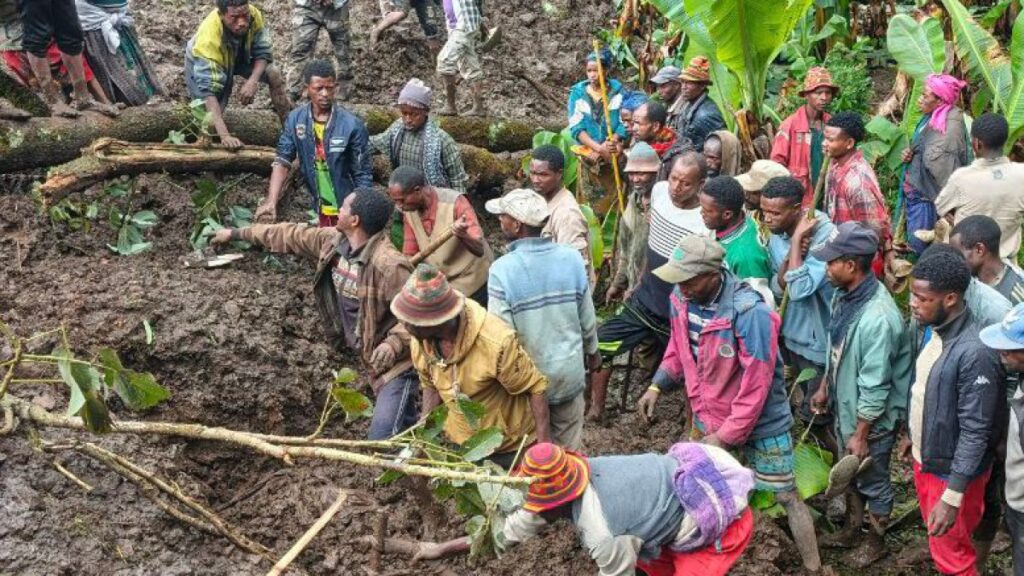
Ethiopia is grappling with a tragic natural disaster as at least 64 people have been confirmed dead due to severe landslides and floods that have swept through various regions of the country. Authorities have reported that the majority of those who lost their lives were found buried under layers of mud, highlighting the devastating impact of the calamity.
The heavy rains, which have persisted for several days, triggered massive landslides that engulfed homes, roads, and farmlands, leaving communities isolated and in urgent need of aid. Rescue teams have been deployed to search for survivors, yet dozens remain reported missing, raising fears that the death toll could rise further.
In response to the disaster, the Ethiopian government has declared a state of emergency in the affected areas and called for immediate assistance from international humanitarian organizations. Relief efforts are underway, focusing on providing shelter, medical care, clean water, and food supplies to the displaced populations.
Local authorities continue to monitor the situation closely, warning residents to remain vigilant as more rain is forecasted, which could exacerbate the already dire conditions. The landslides have also caused significant damage to infrastructure, complicating rescue operations and delaying the delivery of critical supplies.
Experts attribute the severity of the floods and landslides to a combination of heavy rainfall linked to climate change and deforestation, which has weakened soil stability. Environmentalists have called for urgent reforestation initiatives and better land management practices to mitigate future risks.
Communities affected by the disaster are coming together to support each other, with many volunteering in rescue operations and relief distribution. Donations and aid from both local and international donors are pouring in, underscoring the global solidarity in the face of this tragedy.
The Ethiopian Red Cross and other NGOs are working relentlessly to provide psychological support to survivors and families of the victims, helping them cope with the trauma and loss.
Authorities are conducting assessments to understand the full scale of the disaster, with the aim of implementing long-term recovery and rehabilitation plans. The government has also emphasized the importance of early warning systems and disaster preparedness to minimize such catastrophic impacts in the future.
This disaster is a stark reminder of the vulnerability of many Ethiopian communities to climate-induced hazards, reinforcing the urgent need for comprehensive strategies to enhance resilience and protect lives. As rescue efforts continue, the focus remains on saving lives, providing relief, and rebuilding shattered communities across Ethiopia.