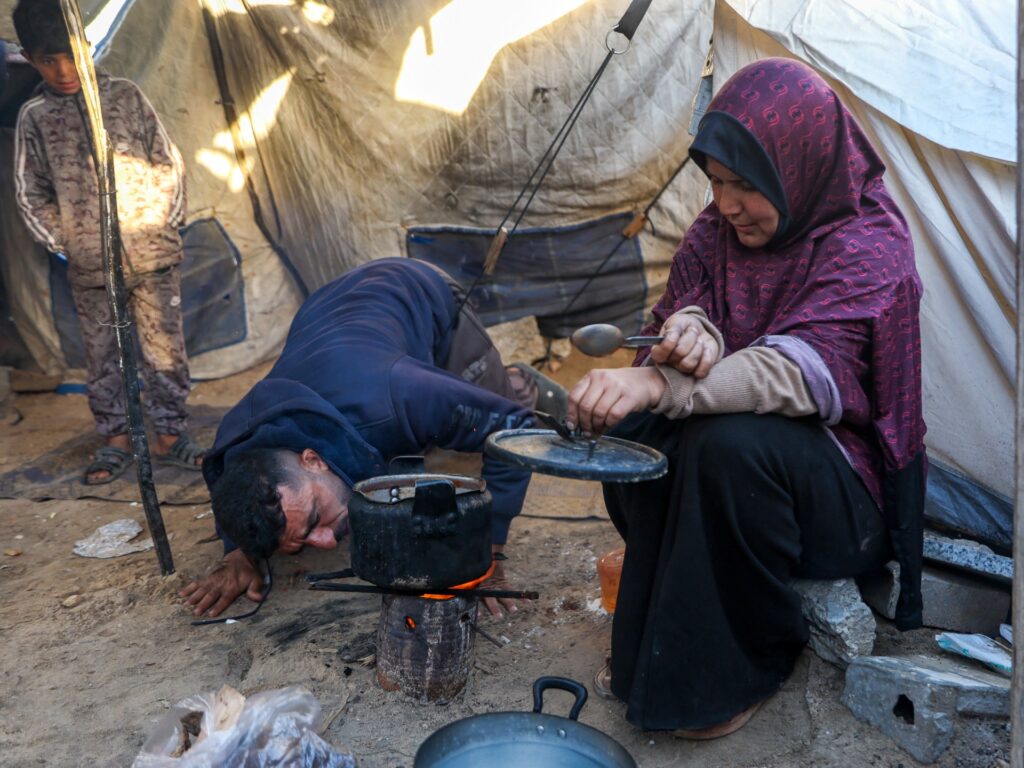
In the besieged Gaza Strip, a severe shortage of cooking gas has forced many families to resort to burning wood and even plastic to prepare their meals. This desperate situation not only highlights the ongoing humanitarian crisis but also exposes vulnerable populations, especially mothers and children, to hazardous smoke.
The lack of cooking gas is a direct consequence of persistent border closures and restrictions on fuel imports, which have crippled Gaza’s access to essential resources. Many residents describe daily life as covered in soot, inhaling thick black smoke while attempting to sustain their families. The crisis severely impacts their health and well-being.
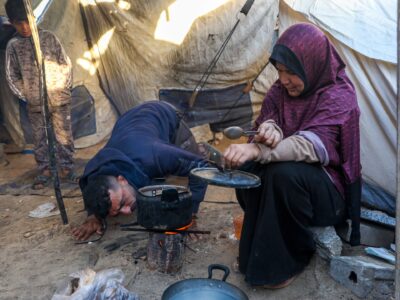
Families traditionally rely on cooking gas for their meals, but with dwindling supplies, they have no other option. Wood is often collected from scarce local sources, and the burning of plastic, while harmful, is turned to out of sheer necessity. Smoke from these materials contains toxic chemicals that can cause respiratory problems and long-term health consequences.
Mothers report coughing and difficulty breathing while working over smoke-filled rooms, and children playing nearby are similarly affected. Medical professionals warn of rising cases of respiratory illnesses linked to the smoke inhalation.
The gas shortage exacerbates hardships already felt due to high unemployment, poverty, and limited electricity in Gaza. The inability to cook safe and nutritious food impacts food security and overall quality of life.
Humanitarian organizations have called for urgent international intervention to ease import restrictions on cooking fuel and deliver assistance. Providing cooking gas supplies would help reduce health risks and alleviate some burden on families struggling in dire circumstances.
Despite the challenges, residents of Gaza show resilience and ingenuity in coping with scarce resources, though many live in constant fear of what further shortages might bring. The situation underscores the urgent need for lasting solutions to the humanitarian crisis faced by families in Gaza.