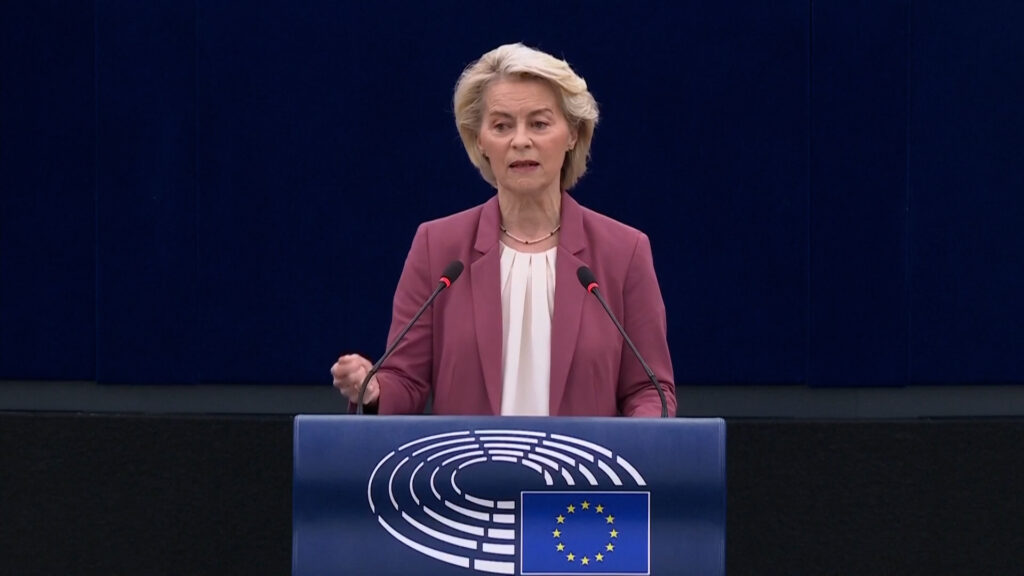
European Commission President Ursula von der Leyen has warned that returning to Russian fossil fuels would be a “strategic blunder” for the European Union. In the context of ongoing geopolitical tensions and the EU’s commitment to energy independence and sustainability, von der Leyen emphasized that relying once again on Russian energy sources would undermine the bloc’s long-term strategic goals.
Von der Leyen’s remarks come as some European countries face pressure to secure stable energy supplies amid fluctuating markets and the challenges posed by transitioning to cleaner energy alternatives. However, she stressed the importance of diversifying energy sources and investing in renewable technologies instead of reverting to fossil fuels supplied by Russia.
The top EU official highlighted that the bloc’s energy strategy aims to reduce dependency on external powers that could leverage energy supply as a political tool. Given the recent history of energy disputes and supply interruptions involving Russia, the European Commission views a shift back to Russian fuels as counterproductive to the EU’s security and climate objectives.
This stance is consistent with the EU’s broader plan to enhance energy sovereignty by bolstering local production of renewables, increasing energy efficiency, and supporting innovative energy infrastructure. Officials argue that long-term investment in green energy not only addresses environmental concerns but also fortifies economic stability and geopolitical autonomy.
Furthermore, von der Leyen underscored the symbolic importance of the EU leading the transition away from fossil fuels, signaling a commitment to climate action and reducing greenhouse gas emissions as outlined in the European Green Deal. The Commission is actively promoting policies that encourage member states to accelerate their clean energy transitions and phase out reliance on fossil fuels.
In conclusion, von der Leyen’s comments reflect the EU’s strategic vision to avoid reverting to past dependencies on Russian energy, opting instead for a forward-looking approach centered on sustainability, resilience, and energy diversification.