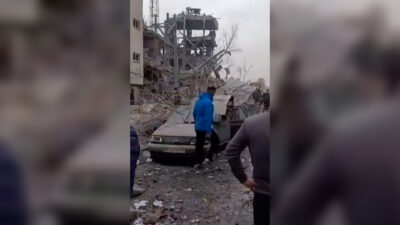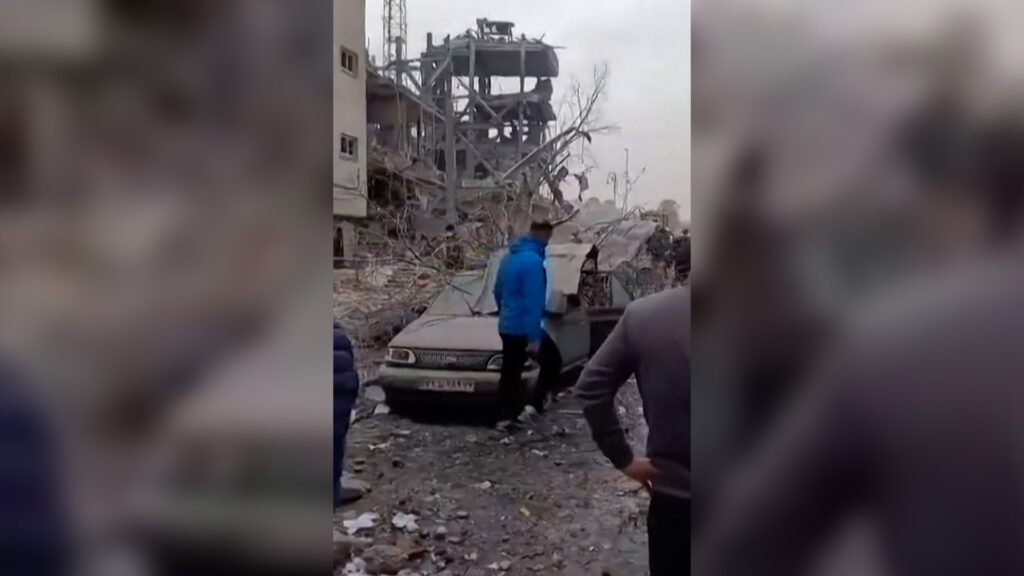
Recent reports and videos have surfaced showing significant damage to buildings in Tehran, Iran’s capital, following alleged airstrikes carried out by US-Israeli forces near Mehrabad airport. These strikes have resulted in visible destruction, raising concerns about the security situation in the region. Mehrabad airport, a key site in Tehran, was reportedly targeted, causing impact not only on the strategic infrastructure but also on the surrounding residential and commercial buildings. Eyewitness videos reveal collapsed structures, shattered windows, and debris scattered across the affected areas, highlighting the intensity of the explosions. The strikes have exacerbated tensions between Iran and its adversaries, with the Iranian government condemning the attacks as acts of aggression against its sovereignty. Emergency services were seen responding promptly to the damages, providing aid and assessing the extent of the destruction. While official casualty figures remain unconfirmed, the extent of property damage points to a significant impact on civilian infrastructure. This event underscores the ongoing volatility in the Middle East, where geopolitical conflicts often result in collateral damage to urban areas. The targeting of Mehrabad airport, crucial for Tehran’s connectivity and civilian transport, may disrupt air travel and economic activities in the capital. International reactions have been swift, with calls for restraint and dialogue to avoid further escalation. The incident also fuels concerns about future retaliatory measures and the potential for broader conflict escalation in the region. Analysis suggests that the timing and location of the strikes were strategic, aimed at sending a message to Iranian authorities. The damage visuals contribute to the narrative of increasing hostilities and the fragile state of peace in the area. As investigations continue, more details are expected regarding the precision and purpose of these attacks. The destruction at Mehrabad highlights the vulnerability of urban centers in modern conflicts and the challenges in protecting civilian lives and properties. Community efforts in Tehran are reportedly mobilizing to support affected residents and rebuild damaged infrastructure. The strikes have brought renewed attention to the complexities of regional security dynamics involving the US, Israel, and Iran. The incident serves as a stark reminder of the human and material costs resulting from geopolitical confrontations. Monitoring of the situation is ongoing as officials assess the implications for both local stability and international relations. Efforts to mediate and de-escalate tensions are critical in preventing further harm to Tehran and other urban centers in the region. The aftermath of the strikes is expected to influence diplomatic engagements and security policies moving forward. Overall, the damage to buildings in Tehran following the US-Israeli strikes near Mehrabad airport represents a significant episode in the broader context of Middle Eastern conflicts, highlighting the fragility and volatility that persist in the region.