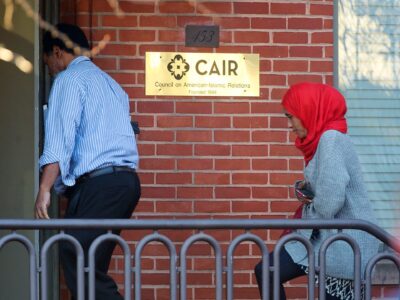
In its recently released annual report, the Council on American-Islamic Relations (CAIR), a prominent US civil rights group, highlighted a disturbing trend of widespread discrimination against Muslim communities across the United States in 2025. This report underscores what CAIR describes as a “broad attack on Muslim life,” documenting an increase in hate incidents, bias-related violence, and systemic discrimination targeting Muslims.
A key factor that CAIR identifies for this surge in anti-Muslim sentiment is the ongoing conflict involving Iran, which has ignited a new wave of hate speech and xenophobic rhetoric. The report warns that the war in Iran has exacerbated existing prejudices and fostered an environment of hostility towards Muslim Americans.
According to CAIR’s report, numerous incidents have been recorded, including verbal abuse, physical assaults, and targeted harassment at schools, workplaces, and public spaces. The group also noted a rise in hateful propaganda disseminated via social media platforms, which has further fueled fear and division.
CAIR asserts that this pattern of discrimination is not isolated, but rather part of a broader societal issue where Muslims are increasingly being scapegoated due to geopolitical conflicts abroad. The group has called on federal, state, and local governments to take stronger action to protect Muslim citizens’ civil rights and to address the root causes of hate speech and discrimination.
Experts cited in the report emphasize that while tensions related to the Iran conflict are a significant catalyst, they intersect with long-standing Islamophobic attitudes embedded in various institutions. This intersection makes it imperative to implement comprehensive policies that address not only immediate flare-ups of hate but also the systemic inequalities that allow such discrimination to persist.
Community leaders and advocates are urging for increased education and awareness programs that promote tolerance and understanding. They believe that preventing hate and dismantling prejudice requires collaborative efforts involving law enforcement, educators, policymakers, and civil society organizations.
CAIR also called on media outlets to exercise responsible reporting, urging them to avoid inflammatory coverage that could perpetuate stereotypes and incite further animosity towards Muslims.
The report provides detailed documentation and case studies illustrating the challenges faced by Muslim Americans, shedding light on the human impact of rising Islamophobia. It also offers recommendations aimed at policymakers and community stakeholders to foster a more inclusive and equitable society.
As the geopolitical situation remains volatile, CAIR warns that the likelihood of continued discrimination and hate crimes may persist throughout 2025 unless concerted efforts are made to counteract these harmful trends. The organization reaffirmed its commitment to protecting the civil rights of Muslims and promoting social justice in an increasingly divided environment.
This annual report from CAIR serves as a crucial reminder of the vital need for vigilance against hate and discrimination at a time when political conflicts abroad have direct and severe consequences on minority communities at home.