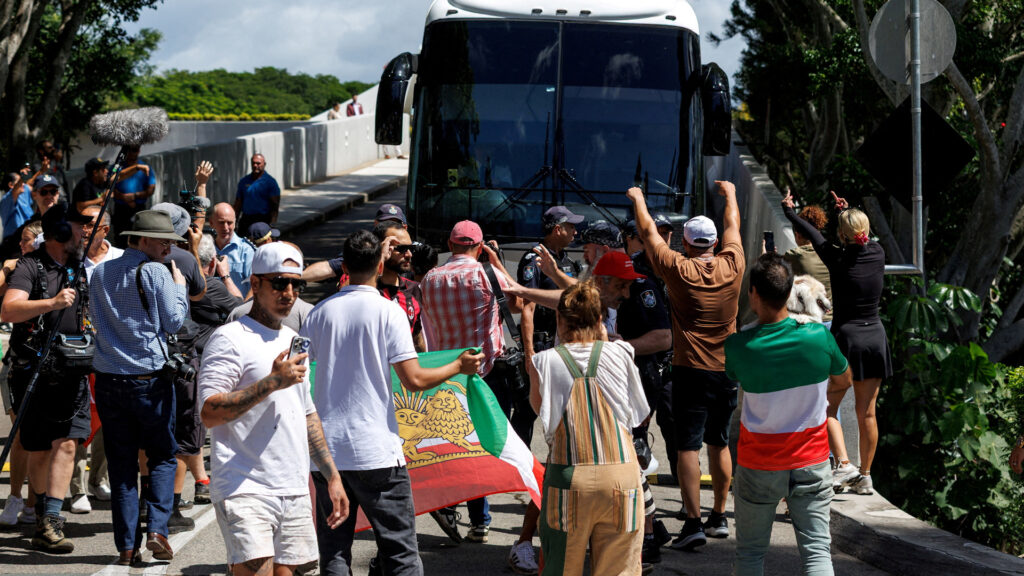
In a dramatic incident in Australia, protesters blocked a bus carrying Iran’s women’s football team, drawing international attention to the ongoing struggles faced by Iranian female athletes. This event unfolded shortly after five members of the team reportedly slipped away from their group and sought asylum, highlighting the complex intersection of sports, politics, and human rights.
The team was en route to the airport when the protesters intervened, demanding more visibility for the issues facing women in Iran, especially in relation to their participation in sports. The players who sought asylum did so in the context of ongoing repression and limited freedoms for women in Iran, where gender-based restrictions and political pressures have been widely reported.
This bold move by the athletes underscores their desire for safety and freedom, while also spotlighting the broader challenges facing Iranian women who push against societal limits. The protests in Australia served as a powerful demonstration of solidarity with the players and a critique of the Iranian regime’s policies.
International response has been mixed but largely sympathetic to the athletes, with calls for governments and sports organizations to do more to protect and support individuals who face persecution. The incident raises important questions about the role of sports as a platform for political expression and the responsibilities of host countries in safeguarding human rights.
Iran’s women’s football team has long been a symbol of resilience, striving to compete on the world stage despite significant obstacles. Their journey in Australia was intended to be another step forward in their athletic careers but instead became a focal point for activism and courageous decisions.
As the situation develops, it is expected that asylum processes for the players who escaped will be closely watched by international human rights groups. Meanwhile, the team must navigate the aftermath, balancing the pressures from their home country and the global community’s expectations.
This event has reignited discussions about women’s rights in Iran, particularly the freedoms of expression, movement, and participation in public life. It also highlights the challenges faced by refugee athletes who seek to continue their careers while rebuilding their lives abroad.
The blocking of the bus by protesters was not just a physical act but a symbolic gesture meant to draw attention to the plight of these athletes and the broader Iranian women’s rights movement. It serves as a stark reminder of the intersection of sport, politics, and human rights activism in a globalized world.
As awareness grows, the hope among advocates is that increased international support will lead to positive changes for the players and the millions of women in Iran who continue to fight for their rights every day.