In a significant escalation of hostilities in the Middle East, an Iranian missile has struck central Israel, intensifying ongoing conflict in the region. The missile attack marks a dangerous development amidst increasing tensions and violence between Iran and Israel.
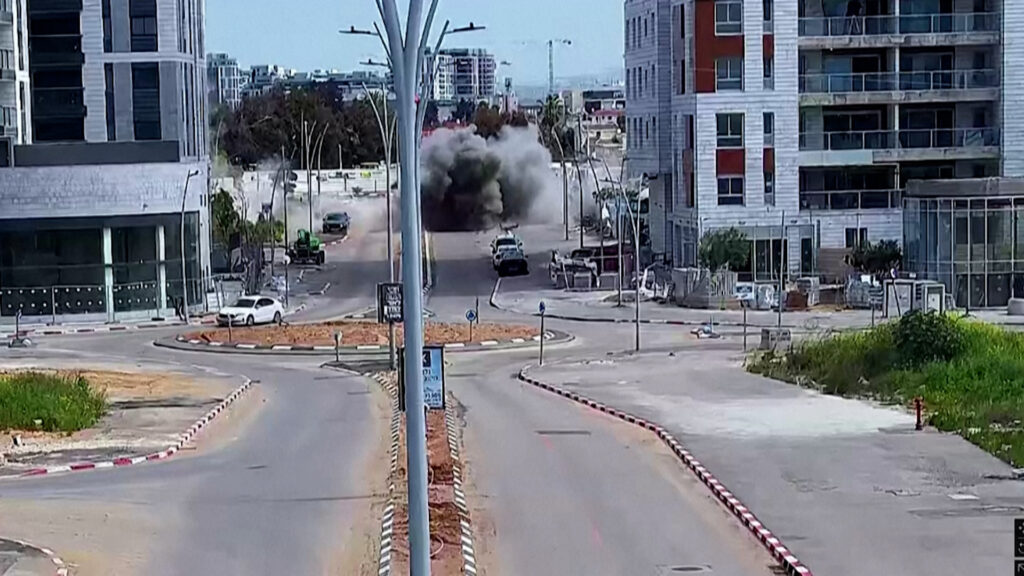
A video circulating on social media and news outlets captures the moment the Iranian missile hit its target in central Israel. The footage shows a sudden explosion followed by smoke and debris, underscoring the destructive impact of the strike.
This missile barrage resulted in the deaths of two people, highlighting the deadly consequences of the escalating attacks. The identities of the victims have not yet been disclosed, but the incident has sparked widespread concern and condemnation.
Iran’s involvement through missile strikes represents a direct confrontation with Israel, which has already been experiencing a surge in attacks from various groups linked to or supported by Iran. The geopolitical implications of this latest strike are profound, potentially leading to further military responses and a deterioration of regional stability.
Israeli defense forces are reportedly on high alert, ready to respond to any further aggression. The government has condemned the missile attack as an act of aggression and vowed to protect its citizens against such threats.
The international community has expressed alarm over the situation, with calls for restraint and dialogue to prevent further escalation. Analysts warn that continued military actions between Iran and Israel could ignite a broader conflict involving neighboring countries and global powers.
This incident adds to a long history of conflict and hostility between Iran and Israel, rooted in political, religious, and territorial disputes. Each side has accused the other of aggression, with proxy wars and covert operations frequently destabilizing the Middle East.
In recent months, there has been a noticeable increase in attacks and retaliations, leading to fears of an all-out conflict. The missile strike on central Israel is one of the most significant recent examples of this trend.
Israel’s Prime Minister has called an emergency meeting of national security advisors, and the government is expected to discuss possible military and diplomatic responses to the attacks. The situation remains fluid and tense.
The civilian population in central Israel has been urged to stay vigilant and follow safety protocols amid fears of further missile attacks. Emergency services are on high alert to respond to any incidents resulting from the heightened conflict.
The Iranian government has not officially commented on the missile strike, but state-controlled media has praised resistance efforts against Israel, further inflaming tensions.
Diplomatic channels remain open, with several countries seeking to mediate and reduce the risk of an expanded war. However, with each side entrenched in its positions, prospects for immediate peace seem slim.
The implications of this missile strike extend beyond the immediate casualties, potentially affecting global oil markets, international alliances, and the broader struggle for influence in the Middle East.
As the situation develops, the world watches closely, hoping for a de-escalation but preparing for the possibility of wider conflict. The recent attack serves as a stark reminder of the fragile peace in the region and the devastating impact of continued violence.