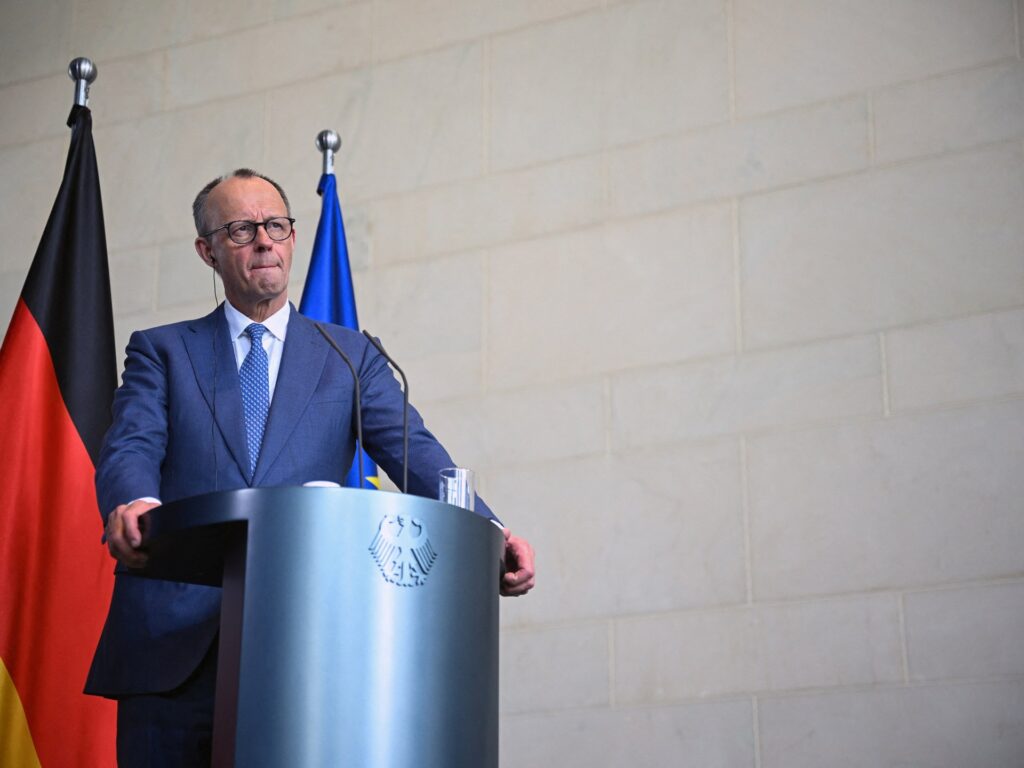
In recent remarks that have drawn international attention, the German Chancellor expressed deep concerns over what appears to be a significant strategic gap in the unfolding conflict involving Iran. According to the Chancellor, there is “clearly no joint plan” between the United States and Israel regarding how to bring their military and political engagement with Iran to a conclusion.
This statement underscores a growing worry among global leaders about the long-term ramifications of escalating tensions in the Middle East. The conflict, marked by a series of military operations and diplomatic stand-offs, has widened in scope but seemingly not in a coordinated exit strategy that ensures regional stability and peace.
The German Chancellor highlighted the critical need for a clear, coherent approach that not only addresses immediate security concerns but also plans for a sustainable resolution. The absence of such a plan could potentially exacerbate regional instability, inflame further conflict, and complicate diplomatic relations on a broader scale.
Historically, conflicts in the region have often seen quick escalations without clearly defined endpoints, leading to protracted struggles and humanitarian crises. The Chancellor’s remarks serve as a cautionary statement stressing the importance of strategic foresight and collaborative international efforts in conflict resolution.
International observers note that U.S. and Israeli policies toward Iran have largely focused on containment and pressure through sanctions, intelligence operations, and selective military actions. However, these measures appear to lack an integrated framework that specifies the criteria or conditions for ceasing hostilities.
Diplomatic sources suggest that the German Chancellor’s call for a joint exit plan aims to encourage both Washington and Tel Aviv to engage in deeper negotiations, not only with each other but also with other stakeholders in the Iran conflict. This would ideally facilitate a comprehensive peace process that includes Iran and neighboring countries.
The Chancellor’s concerns are also aligned with efforts from the European Union and the United Nations, which have repeatedly advocated for de-escalation and dialogue as means to peace. European nations, including Germany, have traditionally supported diplomatic solutions and multilateral talks to avoid military confrontations.
Security analysts warn that without a clear exit strategy, there is an increased risk of the conflict spiraling into wider violence that could draw in multiple countries and destabilize the entire region. The implications of such instability would not be confined to the Middle East but could have global economic and security repercussions.
In response to these concerns, some experts suggest that the U.S. and Israel need to outline explicit goals for their engagement in Iran and develop contingency plans for various scenarios, including diplomatic breakthroughs or unexpected escalations. The goal would be to avoid open-ended conflicts and mitigate human and economic costs.
The German Chancellor’s statement is a critical call for accountability and strategic planning, emphasizing international cooperation to address one of the most volatile and complex geopolitical issues of the current era. It serves as a reminder that military actions without a clear plan for peace carry risks that extend far beyond the immediate battlefield.
As global attention remains focused on Iran and its regional interactions, the international community awaits a more defined and constructive approach from key players, hopeful for pathways that lead to lasting peace and security in the Middle East and beyond.