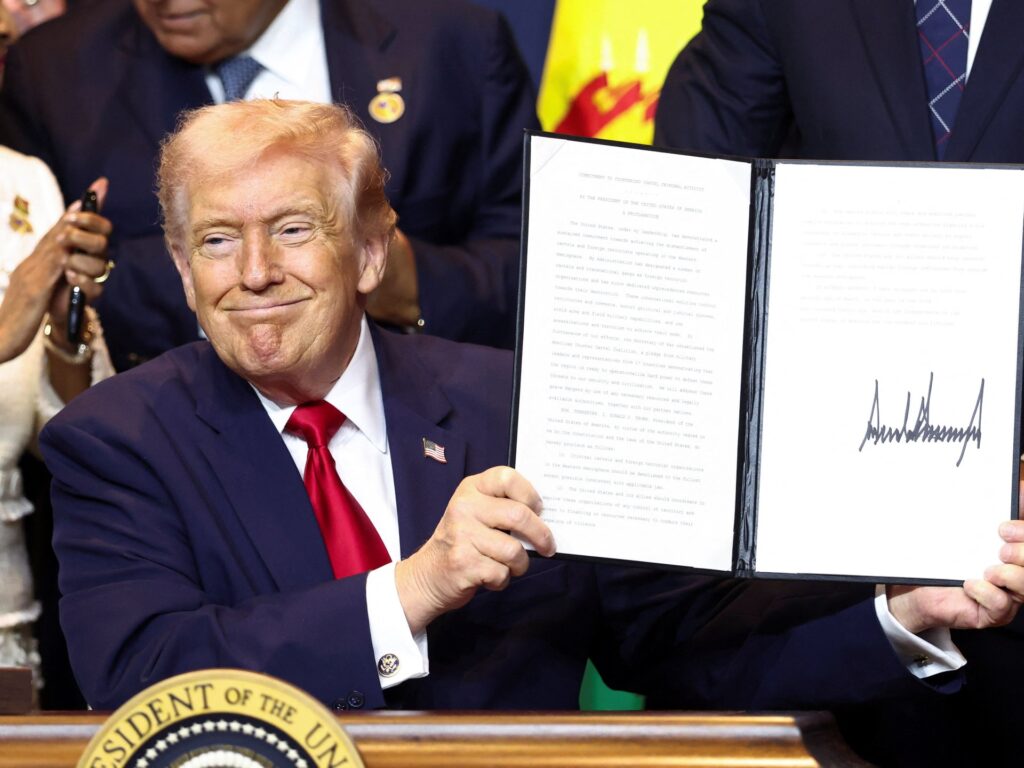
During a recent Latin American summit, former President Donald Trump issued strong warnings directed at drug cartels and Cuba, describing them as “cancer” to the region. Trump emphasized the severity of criminal violence fueled by these groups and conveyed his readiness to take aggressive military action to combat the scourge. In a striking declaration, he proposed the use of missiles against cartel operations and highlighted the necessity to “eradicate” drug trafficking networks that undermine regional stability.
Trump’s statement at the summit reflected heightened tensions regarding persistent criminal activities in Latin America, which have long posed challenges to the political and social fabric of many countries. His remarks also broadened the scope of concern beyond cartels to include Cuba, suggesting that the island nation plays a role in enabling or supporting illicit drug trafficking activities.
The former president’s rhetoric marked a return to his hardline stance on Latin America, where he has historically called for stringent policies to curb the influence of cartels and reduce the flow of illegal drugs into the United States. His suggestion to consider missile strikes signals a significant escalation in tactics, raising questions about the feasibility and implications of such military interventions in sovereign nations.
At the summit, leaders from various Latin American countries gathered to discuss regional cooperation on security, trade, and development. Trump’s comments injected a controversial and forceful perspective into the dialogue, potentially affecting diplomatic relations and the collaborative efforts to address crime and economic challenges.
The proposal to eradicate cartels through direct military action stands in contrast to other strategies that emphasize law enforcement, judicial reform, and community-based initiatives. Many experts warn that militarized responses can lead to unintended consequences, including increased violence and destabilization.
Furthermore, targeting Cuba highlights ongoing geopolitical tensions and the complex dynamics that influence drug trafficking routes and alliances. The Cuban government’s response to Trump’s declaration has not been detailed, but the accusation itself underscores long-standing suspicions and diplomatic friction.
Trump’s threat to deploy missiles against cartels and affiliated entities in Latin America resonates with his broader agenda of enforcing tough border controls and combating illegal immigration. The drug trade is often cited as a key factor contributing to cross-border crime and instability.
The summit’s outcome will likely be influenced by these assertive proposals, shaping future policies and cooperation frameworks in the region. Latin American leaders may need to navigate the balance between security concerns and respect for sovereignty while addressing the complex issue of organized crime.
In conclusion, Trump’s forceful rhetoric at the Latin American summit confirms his commitment to combating drug cartels and perceived regimes that enable criminal enterprises, even if it means endorsing military action. The international community will be watching closely to see how these threats translate into policy and what impact they will have on regional peace and security.